Untitled (circa 1990s)
Overview
Tags
On ViewDescription
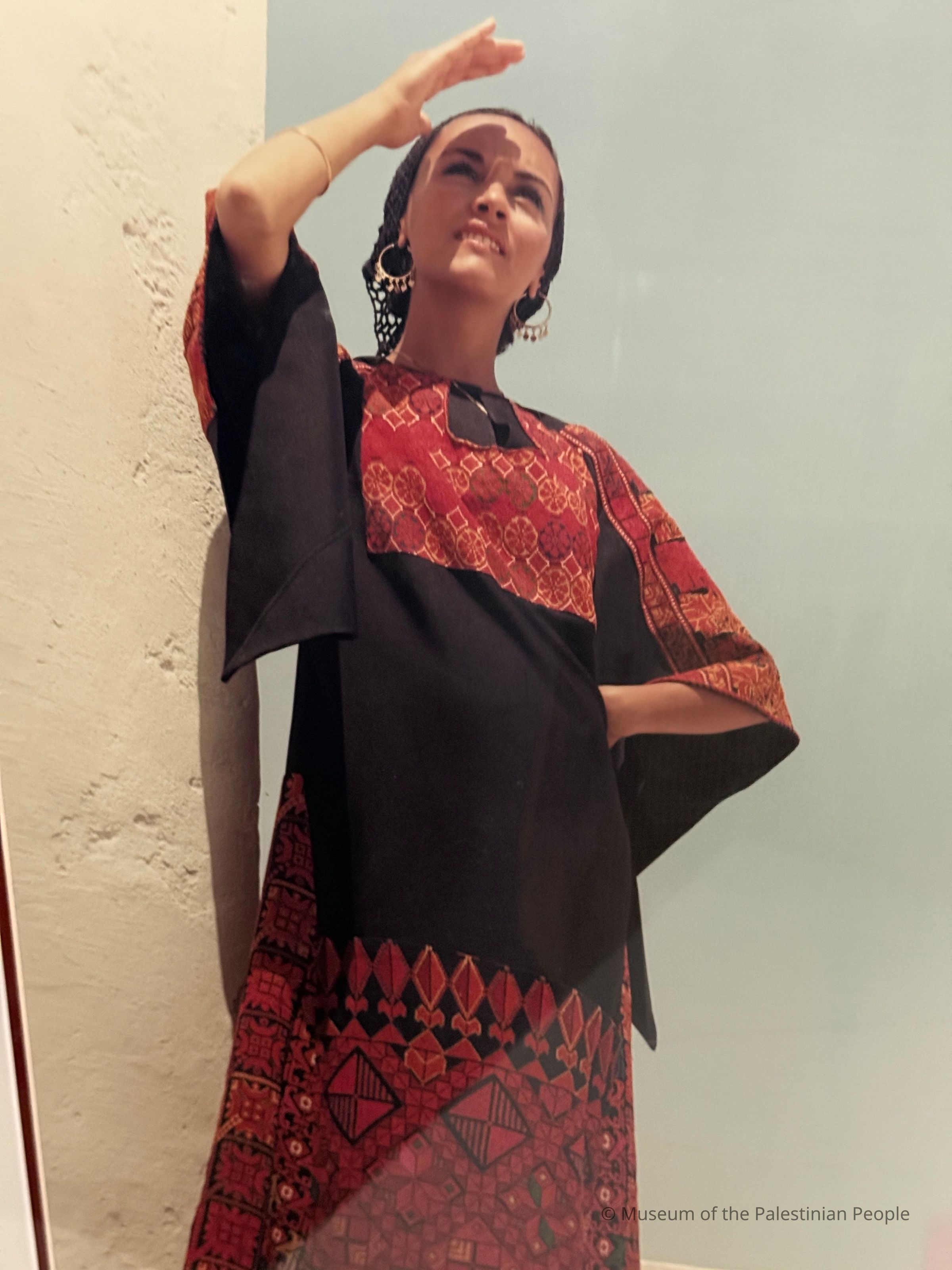
A clear blue sky and dry stone agricultural terraces form the backdrop of this photograph. With one hand shielding her eyes from the sun, the woman appears to gaze into the distance. Although the location of this photograph remains unknown, her traditional embroidered dress (thobe) reflects the dress traditions of southern Gaza, including Khan Younis and Rafah. Bandak's dedication to documenting traditional Palestinian dress during the 1990s underscores the urgency of preserving intangible cultural heritage during a period of profound political and social change. By the time this photograph was made, Palestine was undergoing a historic political transition following the signing of the Oslo Accords and the establishment of the Palestinian Authority. In 1995, the Oslo II Interim Agreement divided the West Bank into Areas A, B, and C, further fragmenting Palestinian communities and restricting movement. During this period, renewed efforts to document and safeguard Palestinian cultural heritage emerged both within Palestine and throughout the diaspora. Among the most influential initiatives was the Palestinian Heritage Center in Bethlehem, founded by Maha Saca, whose work has focused on preserving traditional dress, jewelry, and the practice of Palestinian embroidery for future generations. Based on the dress's construction and embroidered motifs, it was likely made during the mid-twentieth century, no earlier than the 1930s. Researched and written by Wafa GhnaimCollection
Permanent CollectionCataloged By
Wafa GhnaimPhotograph Details
Subject Place
Continent
Category
Photographs