Untitled (circa 1990s)
Overview
Description
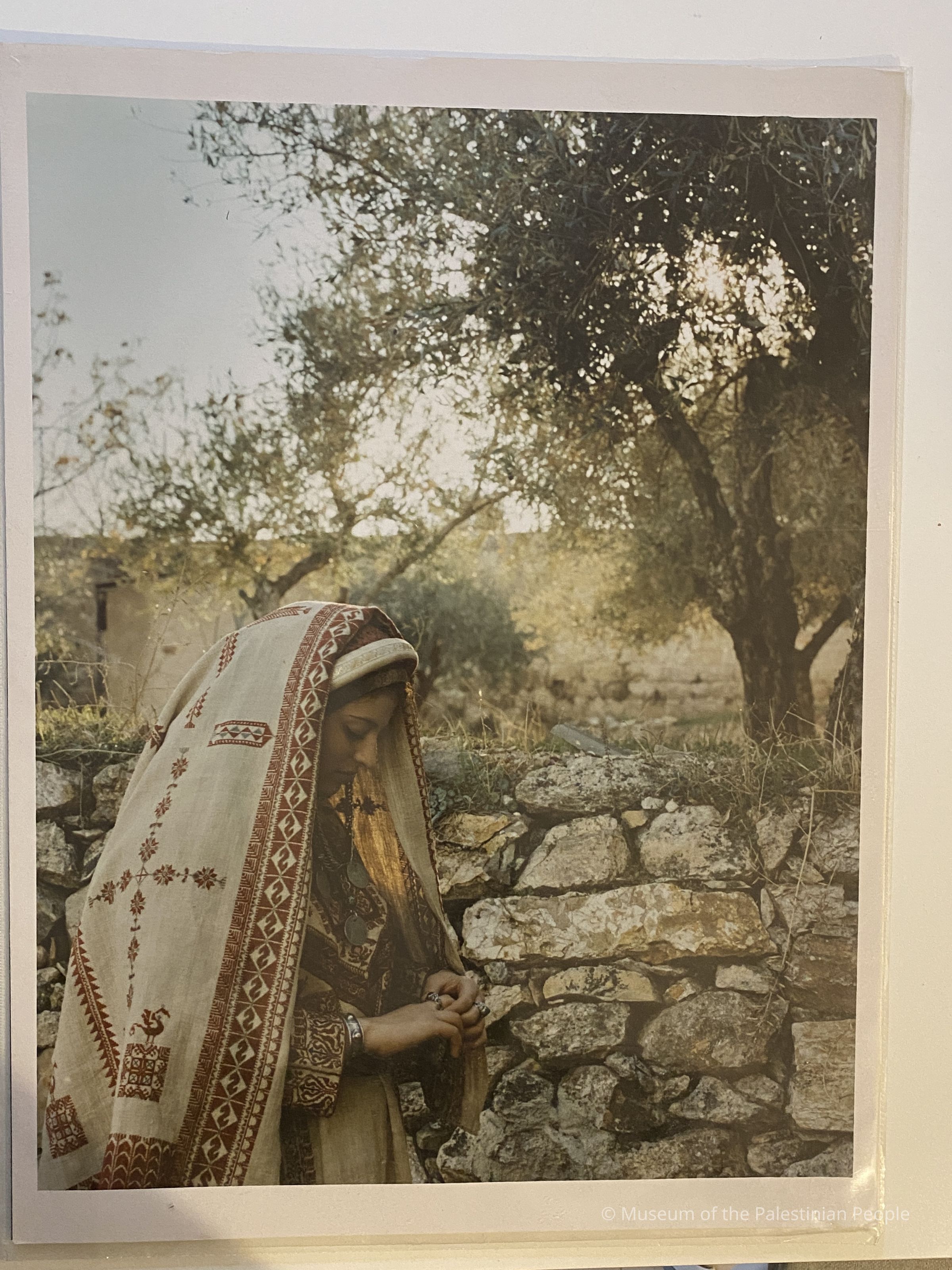
Dry stone terrace walls, such as those featured in this photograph, are as characteristic of the Ramallah landscape as the olive trees that grow behind them. In 2014, UNESCO recognized the cultural significance of Palestine's ancient agricultural terrace system by inscribing the "Land of Olives and Vines: Cultural Landscape of Southern Jerusalem, Battir" on the World Heritage List, acknowledging a tradition of terrace cultivation that dates back millennia. The woman wears a traditional ensemble from Ramallah, including a khirqa headscarf, a coin-adorned wuqāya headdress, and an embroidered dress (thobe). The dress is constructed from locally woven rūmī linen and was likely embroidered during the early twentieth century using silk or cotton thread. The woman's downward gaze towards the ring on her finger captures a glimpse of ordinary life. Positioned slightly off-center, she appears absorbed in a private moment, while Bandak's low vantage point, who photographed from a wheelchair, contributes to the intimacy of the portrait. (Related object 2022.15)Collection
Permanent CollectionCataloged By
Wafa GhnaimPhotograph Details
Subject Place
Continent
Category
Photographs