Name/Title
Bishop Dubuis and CCVI SistersEntry/Object ID
2026.9.1Description
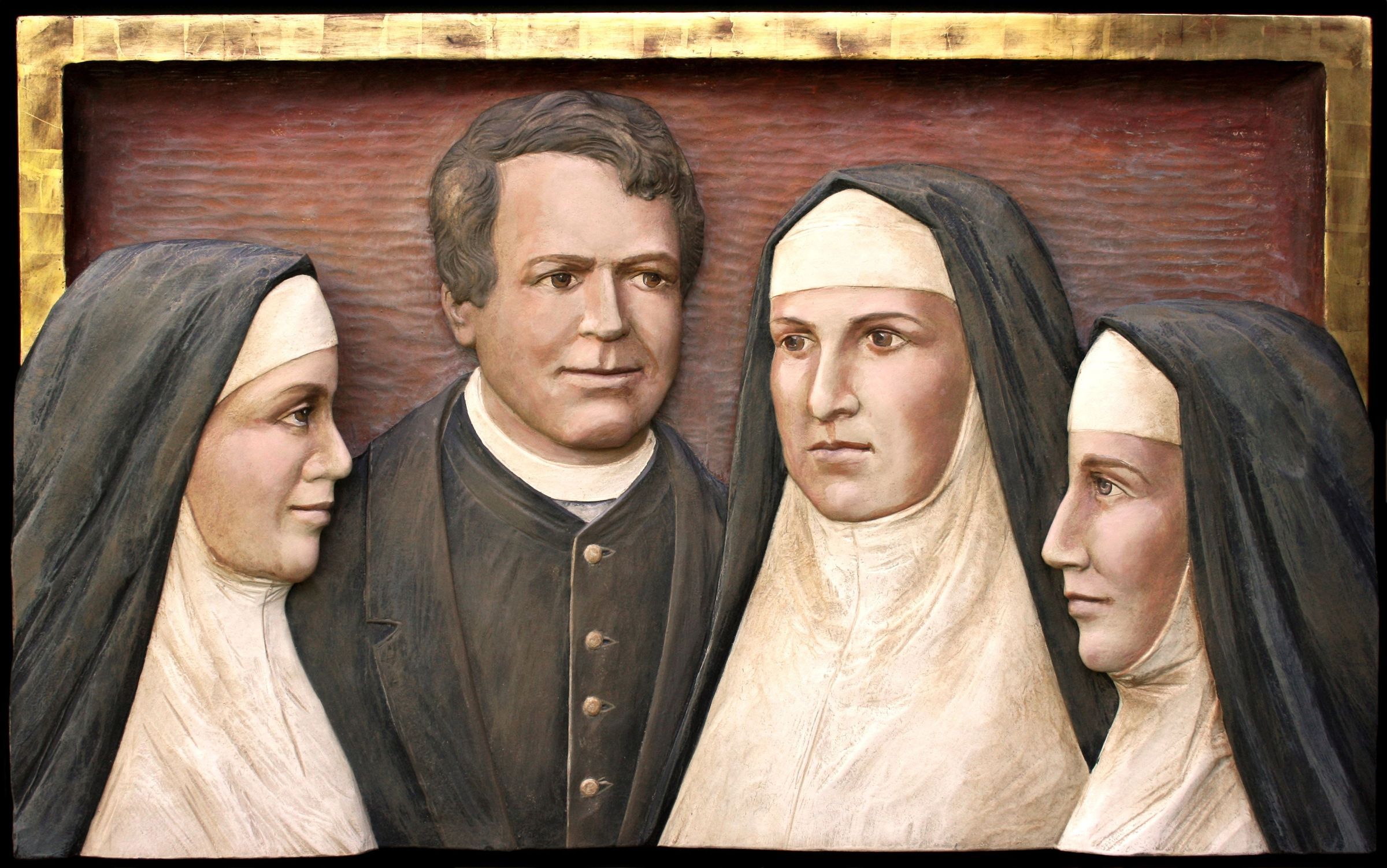
Title [assigned by archives]: Bishop Dubuis and CCVI Sisters
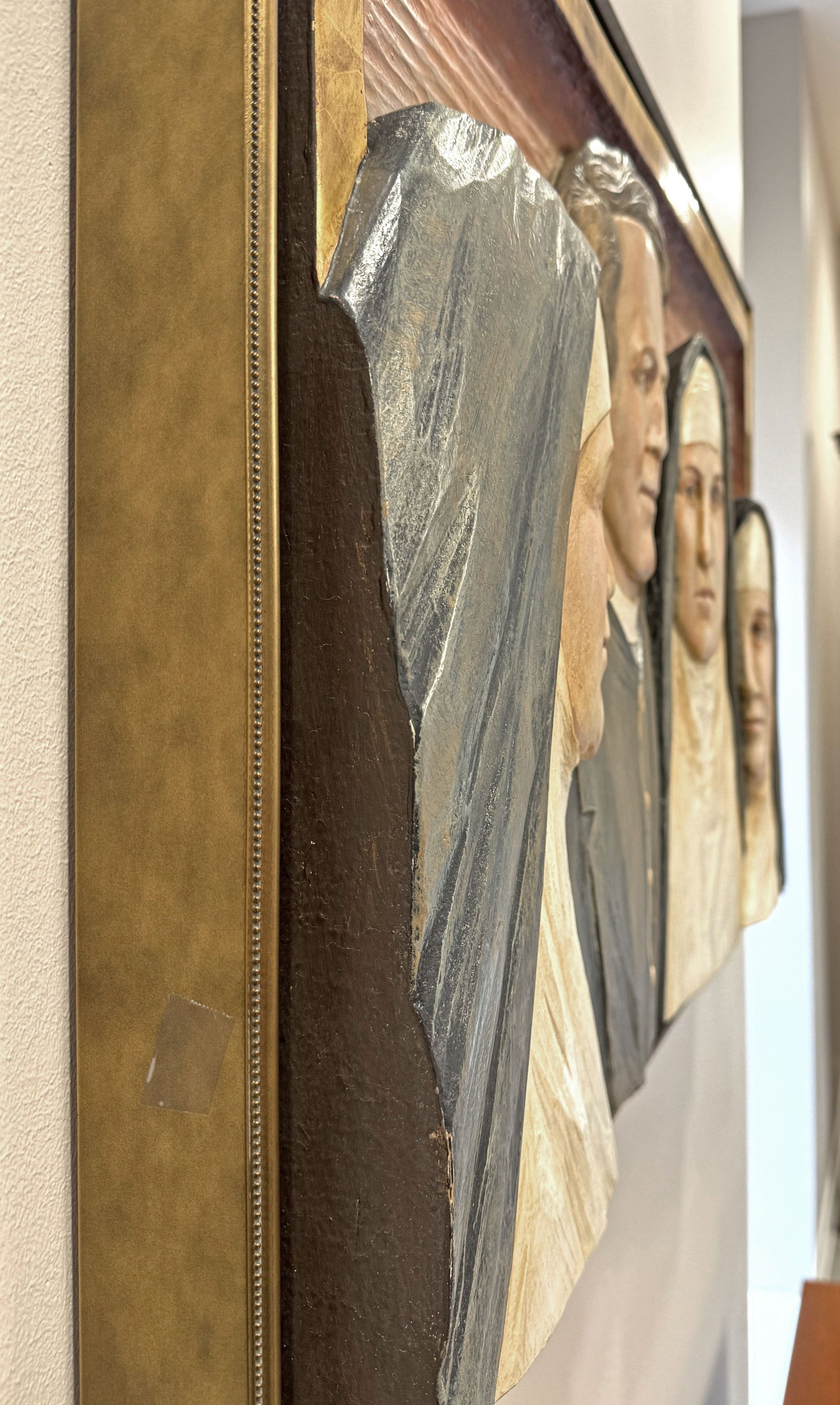
This low-relief niche carving depicts the founders of the Congregation of the Sisters of Charity of the Incarnate Word, Houston (CCVI). At the invitation of Bishop Claude Marie Dubuis (depicted at center), Sisters Mary Blandine Matelin, Mary Joseph Roussin, and Mary Ange Escude arrived in Galveston, Texas from Lyon, France on October 25, 1866. The Sisters started Charity Hospital, the first Catholic hospital in Texas. This carving honors these Sisters and Bishop Dubuis, who called the three founders of the Congregation of the Sisters of Charity of the Incarnate Word, San Antonio to Texas in 1869.
The CCVI San Antonio Sisters commissioned this carving as part of the 2006-2007 renovation of the Chapel of the Incarnate Word, which coincided with the 100-year anniversary of the Chapel’s opening in 1907. Today, the carving is displayed in the CCVI business offices.
Artist Renate Rohn designed and painted the carving. Using Rohn’s design, woodcrafter Edmund Rabanser carved the relief from German linden wood in his studio in Ortisei, Italy.
-----------------------------------------------------
Título [asignado por los archivos]: El obispo Dubuis y las Hermanas CCVI
Este bajorrelieve tallado en un nicho representa a las fundadoras de la Congregación de las Hermanas de la Caridad del Verbo Encarnado, Houston (CCVI). Por invitación del obispo Claude Marie Dubuis (representado en el centro), las hermanas Mary Blandine Matelin, Mary Joseph Roussin y Mary Ange Escude llegaron a Galveston, Texas, procedentes de Lyon, Francia, el 25 de octubre de 1866. Las hermanas fundaron el Charity Hospital, el primer hospital católico de Texas. Esta escultura rinde homenaje a estas hermanas y al obispo Dubuis, quien llamó a las tres fundadoras de la Congregación de las Hermanas de la Caridad del Verbo Encarnado a San Antonio, Texas, en 1869.
Las Hermanas CCVI de San Antonio encargaron este relieve como parte de la renovación de la Capilla del Verbo Encarnado en 2006-2007, que coincidió con el centenario de la inauguración de la capilla en 1907. Hoy en día, el relieve se exhibe en las oficinas administrativas de las CCVI.
La artista Renate Rohn diseñó y pintó la talla. A partir del diseño de Rohn, el artesano de la madera Edmund Rabanser talló el relieve en madera de tilo alemán en su taller de Ortisei, Italia.Type of Sculpture
ReliefCollection
HIM-US-Communities-MotherhouseMade/Created
Artist
Renate Rohn and Edmund RabanserDate made
2006 - 2007Time Period
21st CenturyLexicon
Nomenclature 4.0
Nomenclature Secondary Object Term
CarvingNomenclature Primary Object Term
SculptureNomenclature Class
ArtNomenclature Category
Category 08: Communication ObjectsLOC Thesaurus for Graphic Materials
Bas-reliefs, NunsDimensions
Height
24 inWidth
37-1/2 inDepth
1 inResearch Notes
Research Type
CuratorNotes
"Through a lifetime of professional art experience, Renate Rohn has brought her artistic skills to thousands of churches and historic art restoration projects. Her expertise includes custom murals, paintings and icons; statue and painting restoration; and artistic visions for paintings, statuary, mosaics and art glass."Research Type
CuratorNotes
"Nearly half a century ago, Rudolph Rohn discovered a brilliant young artisan whose God-given talent allowed him to carve masterpieces from wood. So strong was Rudolph’s faith in this gifted woodcarver that he entrusted him with his first major commission. That young artisan was Edmund Rabanser—who would go on to become one of the world’s preeminent master woodcarvers.
Today [05/28/2016], with heartfelt sympathy, Rolf Rohn shares the news of Edmund’s passing. A trusted collaborator and dear friend, Edmund was a true artist—devoted to creating one-of-a-kind sacred works through simple Old World craftsmanship in his treasured Ortisei studio, nestled in his home overlooking the Italian Alps."