Description
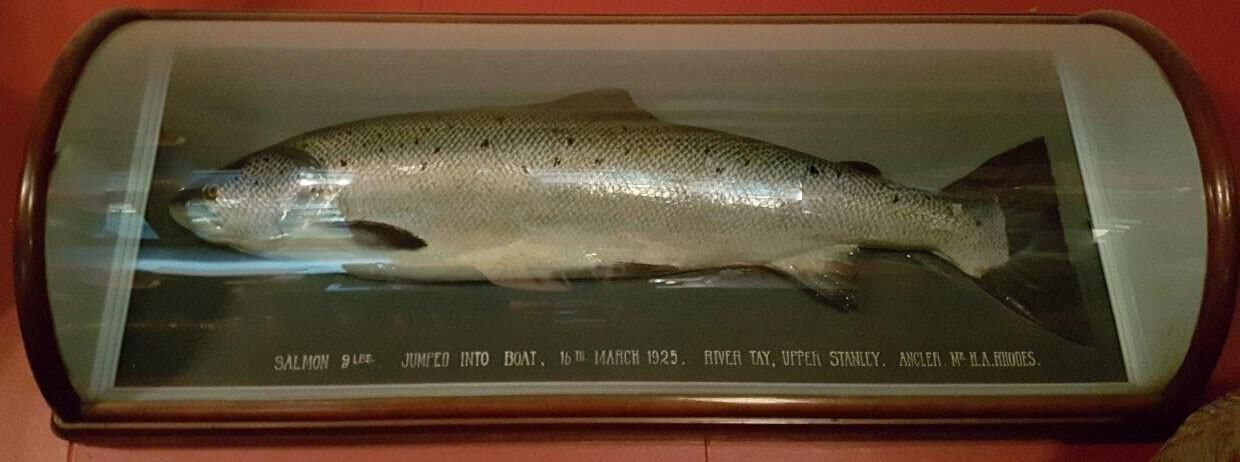
Taxidermy - Full specimen mount of fish
This fish, the Atlantic Salmon (Salmo salar), is found in the northern Atlantic Ocean and in rivers that flow into this ocean. They are also known as Bay Salmon, Black Salmon, Silver Salmon, Winnish, etc. and are the third largest in the Salmonidae family, growing up to a meter long. In Scotland, where this fish was caught, it is identified as the country's most iconic species. The easiest way to identify this species as an adult is by the black spots predominant above the lateral line of the body.
Atlantic Salmon spend on average two to four years at sea before returning to their freshwater home rivers to spawn. Atlantic Salmon have suffered from overfishing and habitat destruction, although conservation efforts have been somewhat successful. Fish farming is now a viable alternative to wild-caught fish, but is not without controversy.Context
The early members of the Union Club of British Columbia enjoyed the scenic splendours and the many opportunities for sports fishing and big game hunting across the province. Over time, the Club became noted for its outstanding collection of mounted taxidermy items. Of note, in 1910 the Club loaned its collection to the Dominion Government for international exhibition in Vienna (details unknown).
It appears that the mounted Wolf Eel (2001.01.100) may be the only survivor of the original early 20th century collection. For further detail - see Susan Mayse, "The Union Club of British Columbia - Our First 125 Years" (Victoria, B.C.: The Union Club of British Columbia, 2004):59, and Paul L. Bissley, "Early and Late Victorians: A History of the Union Club of British Columbia" (Sidney, B.C.: Review Printing and Publishing Co. Ltd., 1969). Both publications are available in the UCBC Library.