Artist Information
Attribution
Sophie Theresa Pemberton Beanlands Deane-Drummond RCA, (1869-1959)Role
PainterDate made
1895Time Period
19th CenturyNotes
ARTIST BIOGRAPHY
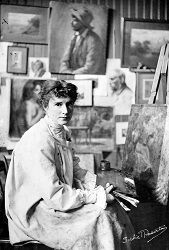
Born in Victoria, B.C., Sophie Theresa Pemberton Beanlands Deane-Drummond was considered to be B.C.'s first professional woman artist and one of the first Canadian women to seek a professional career abroad. She was one of the daughters of Joseph Pemberton, Surveyor-General, Crown Colony of Vancouver Island. She studied art in San Francisco, at the Slade School of Art in London, England then at the Académie Julian, Paris where in 1899 she was the first woman to receive the Gold Medal, an annual award for the best work done in all 27 student ateliers. The following year she was the first Canadian to win the Prix Smith-Julian for her portraiture.
Pemberton showed her work at the Royal Academy, the Paris Salon, and at the Louisiana Purchase Exhibition. Alternating between living in England and Victoria, she also had a solo show in Victoria in 1902 and 1904, and in Vancouver in 1904 at the studio of artist James Blomfield (1879-1951). She also had work in Island Arts and Crafts Society exhibitions in 1916, 1921, and 1922. She had many further solo exhibitions over the years, including at the Little Centre in Victoria; two shows at The Art Gallery of Greater Victoria; and a major retrospective at the Vancouver Art Gallery in 1954. Reportedly, she had 18 solo exhibitions.
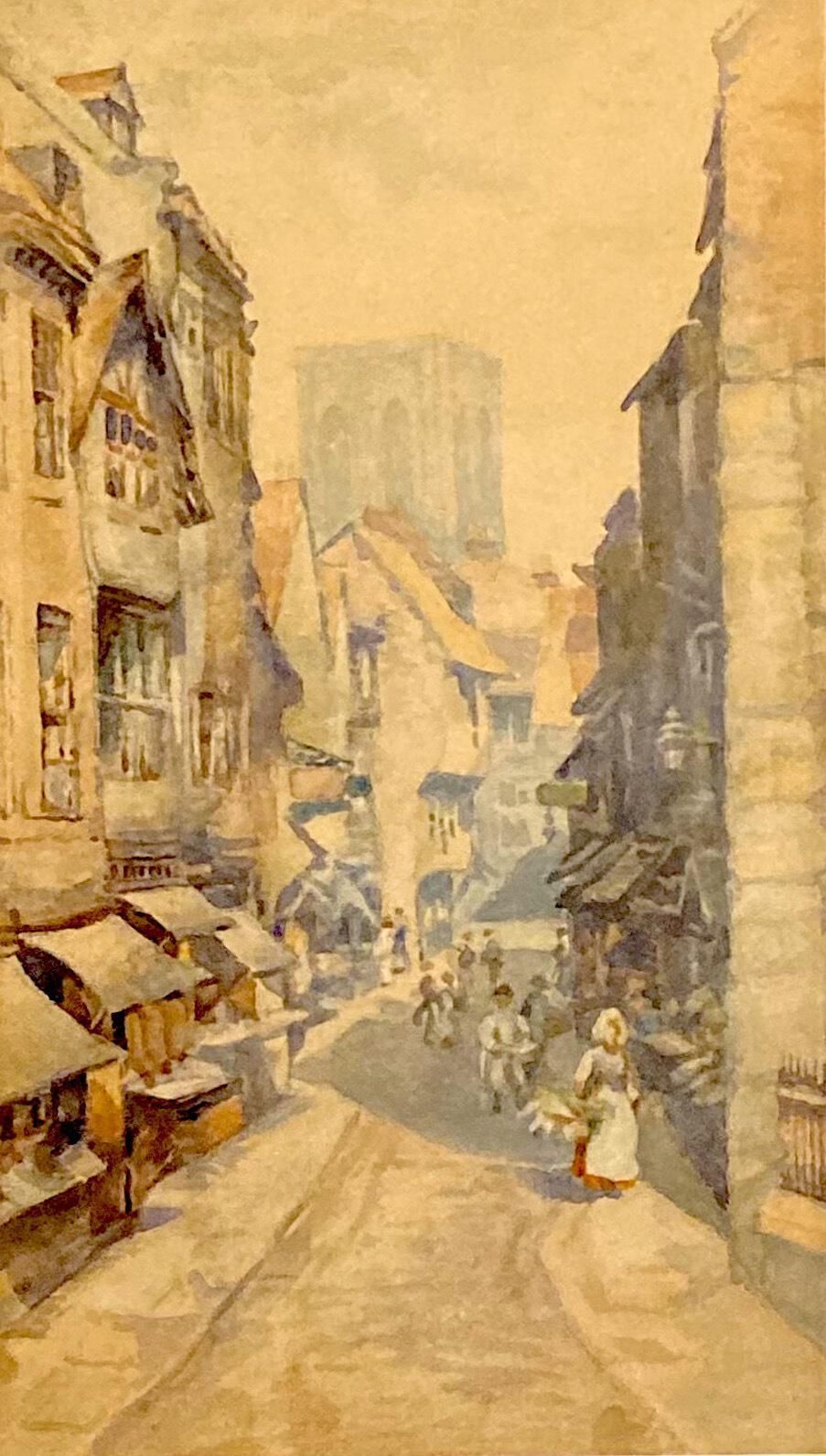
Pemberton moved from the academic realism she had been taught in various art schools to aspects of French Symbolism and Impressionism which she brought to Canada's West Coast. To her advantage, she had connections with numerous artist friends and patrons, and her exhibitions drew favorable reviews from both critics and the public. She painted portraits, landscapes, delicate watercolour botanicals and the occasional study of family life. Unfortunately, marriage and family demands, and her own ill-health were to draw her away from her art. Pemberton’s last major exhibition was a solo exhibition in 1909 at the Doré Gallery, New Bond Street in London, to display her new-found talent for “en plein air” landscape painting.
In 1921 Pemberton returned to Victoria and it was reported that she visited the studio of Emily Carr (1871--1945) alerting the photographer Harold Mortimer-Lamb (1872-1970) to the presence of a major and unrecognized talent living in the city; he in turn alerted Eric Brown, the then-director of the National Gallery of Canada in Ottawa, setting in motion a chain of events that eventually brought Carr’s work to light. Pemberton resettled in London, where she stayed for nearly 20 years surviving the Blitz of 1940. Eventually she returned to her home town on the Oak Bay waterfront.
The Art Gallery of Greater Victoria, the Vancouver Art Gallery and the Art Gallery of Hamilton hold Pemberton’s works. Much of her work is in private collections. An unusual, but readily-accessible, place to view her painting is the entrance arch to the Pemberton Memorial Chapel at the Royal Jubilee Hospital, Victoria.