Description
Painting
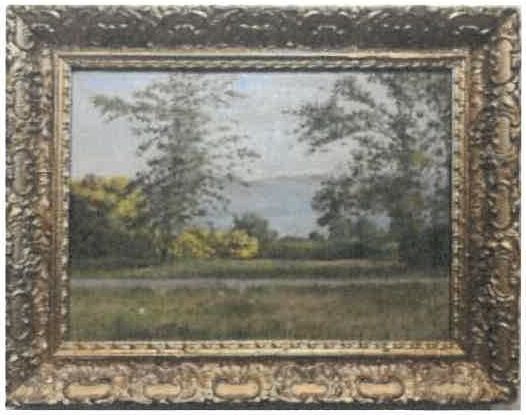
This landscape provides a view of Dallas Road In Victoria, B.C. looking across the Strait of Juan de Fuca in the Salish Sea. Some taller trees and bright Scotch Broom shrubbery frame the view to the ocean and distant mountains probably from Victoria’s Beacon Hill Park. Officially opened in 1882, the 200-acre park is one of downtown Victoria’s crown jewels and provides scenic vistas of the ocean and the Olympic Mountains of Washington state in the U.S.Type of Painting
EaselContext
Dallas Road is the city's southern boundary stretching about four km along the ocean front looking south to the Salish Sea and on to Washington state's Olympic Peninsula in the U.S. The city’s founders established the land between the road and the ocean as public parkland in perpetuity. The area is rich in history from First Nations Lekwungen settlements and early defensive sites at the three main ocean points, followed by further European settlement, trade , development, social change and more.
Today, the Dallas Road waterfront trail pathways are popular destinations with locals and tourists for transportation (walking, running, etc. with designated bike paths), adventure (such as hang- or para-gliding), sheer relaxation on a park bench or wild storm watching. The trail from just past Fisherman's Wharf on the south side of the James Bay Neighbourhood features beautiful views from the Ogden Point breakwater and pier on through Holland Point Park and Beacon Hill Park, past Finlayson Point to Clover Point and finally, the Ross Bay seawall. Beaches along the shoreline can be accessed at various points such near Cook Street, where there is the main entrance to the pebbly Spiral Beach below the steep coastal bluffs, or further along at the rockier Ross Bay.
Of note, Mile 0 of the Trans Canada Highway is located on Douglas Street at Dallas Road adjacent to Beacon Hill Park marking the start of the over 8,000 km Trans-Canada Highway that spans the entire length of Canada. Mile 0 is also home to a statue of Terry Fox, CC, OD. In 1980, with one leg having been amputated due to cancer, the young man embarked on an east-to-west cross-Canada run to raise money and awareness for cancer research. Sadly, Fox's journey ended early when he fell ill and passed away, resulting however, in a lasting, worldwide legacy. Since then, hundreds of millions of dollars have been raised in his name for cancer research.
___________________________________________
The name 'Beacon Hill' is derived from a hill upon which once stood navigational beacons to aid to mariners approaching Victoria’s inner harbour. The hill is culturally significant, having been a burial site for the Coast Salish people, the original inhabitants of the region.
The Olympic Mountains were originally called "Sun-a-do" by the Duwamish Indians; however, when the English explorer John Meares saw them in 1788, he thought he would honor the Greek explorer Juan de Fuca by naming the mountains after the mythical home of Greek Gods which is "Mount Olympus" in Greece. Juan de Fuca was a Greek navigator who sailed for Spain under a Spanish name. He is best known for his claim to have explored the Strait of Anián, known as the Strait of Juan de Fuca, now included in the Salish Sea between Vancouver Island and the Olympic Peninsula in northwestern Washington state.
___________________________________________
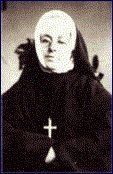
"The Sisters of St. Ann arrived in Victoria from Quebec in 1858 to establish education and health service for new settlers and Indigenous people. While many of their contributions are celebrated, in 2014 the Sisters acknowledged that their involvement in Canada’s Indian Residential Schools contributed to a form of cultural oppression that has had a lasting effect not only on those who attended the schools but also on subsequent generations." From HeritageBC, see Web Links below