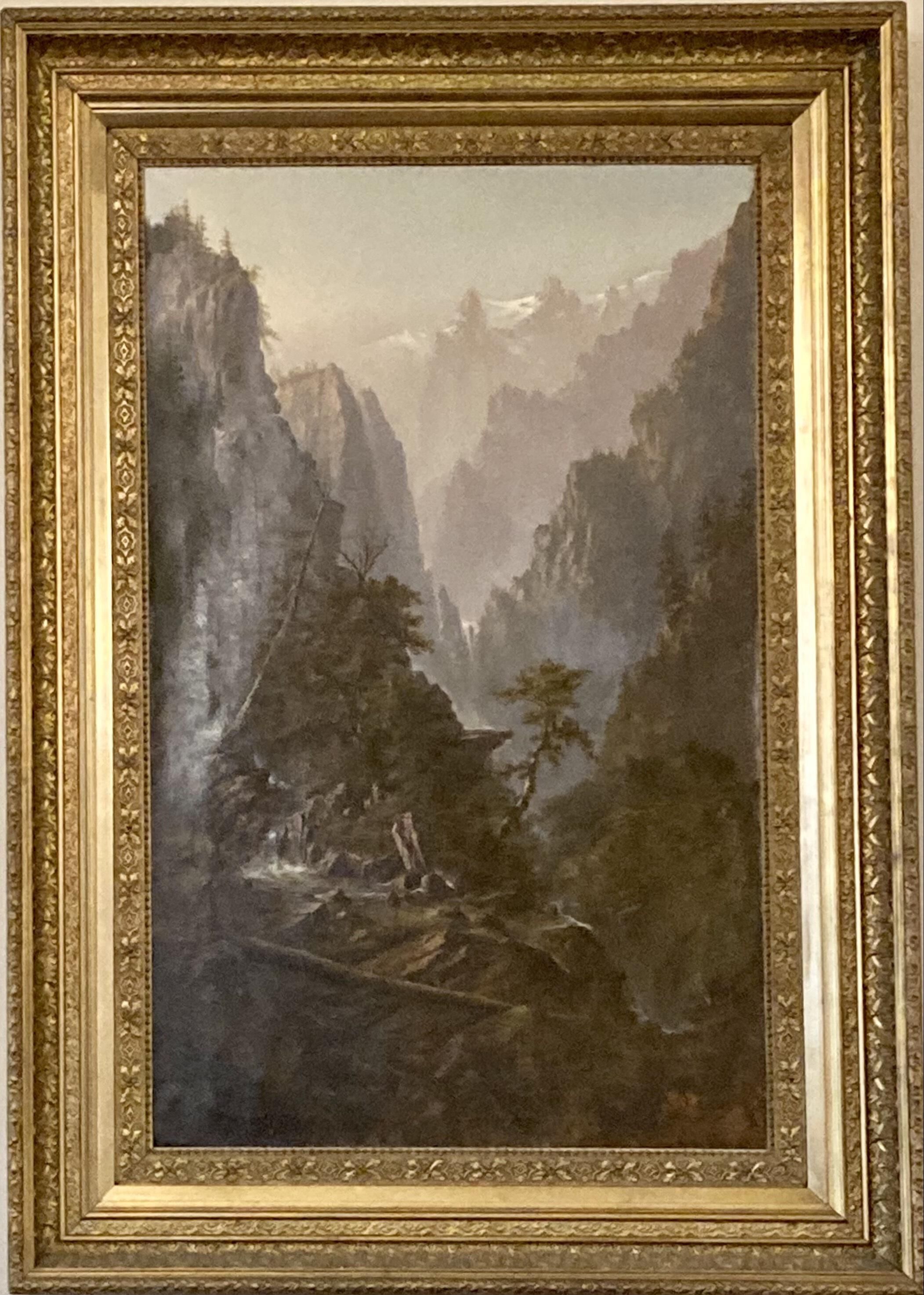
Description
Painting
This dark and dramatic landscape in the style of the Hudson River School depicts forested cliffs in a narrow valley looking towards further forested mountains. The painting seems almost reverential, a careful observation of a remote and untouched wilderness. The location is unknown.Type of Painting
EaselContext
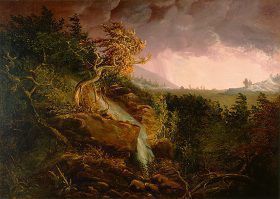
The name, "The Hudson River School" was coined to identify a loosely connected group of New York City-based landscape painters that emerged in the 1830s under the influence of the English emigrant Thomas Cole (1801-1848) regarded as the nation’s first major landscape artist and founder of the movement that flourished until the late 1800s. An outgrowth of European Romanticism, The Hudson River School was the first native school of painting in the U.S. As such, it was a proud celebration of the large and untamed American landscape linked to the symbolism of a promised prosperity and limitless resources, and tied to the desire of its artists to become independent of European schools of painting. These painters explored America, as well as Canada, returning to their studios to paint large-scale popular landscape works that celebrated nature, its awesome powers and sublime beauty.
One of the largest collections of paintings by Hudson River School artists is found at the Wadsworth Atheneum in Hartford, Connecticut including over 65 works by the movement’s noteworthy artists such as Thomas Cole, Frederic Edwin Church, and Albert Bierstadt.