Description
Print
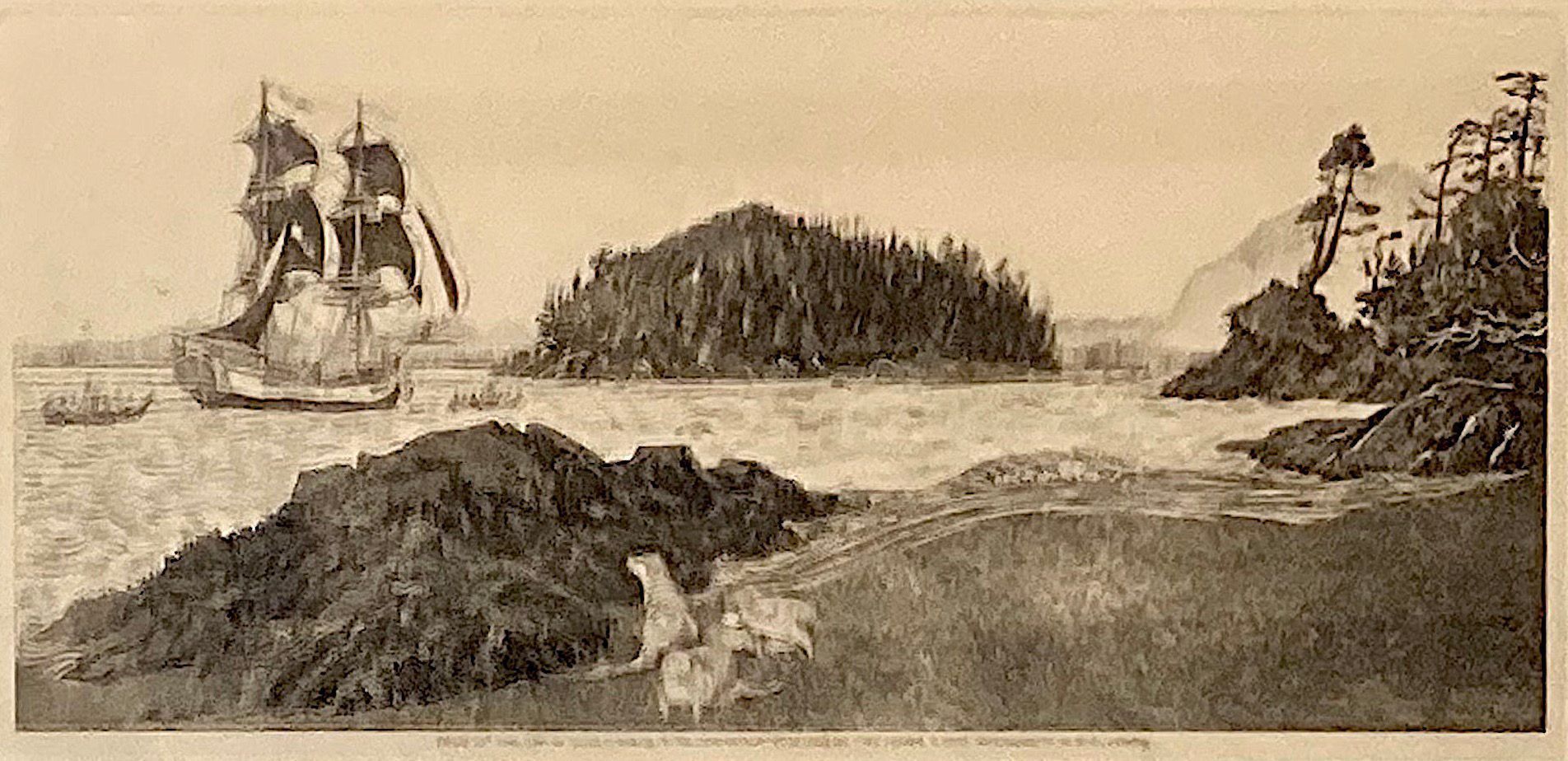
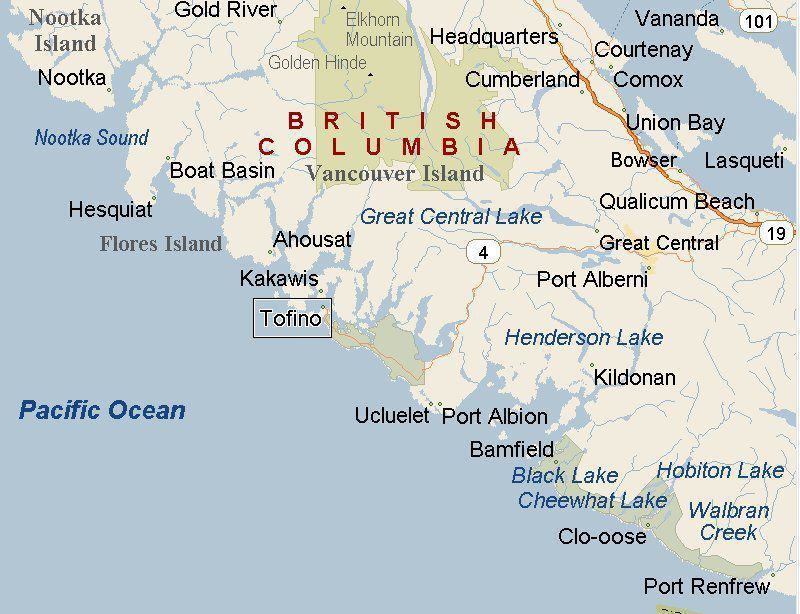
This image depicts English Captain John Meares standing with First Nations Nootka Chief Wickaninnish on the deck of one of his fur-trading vessels "Felice Adventurer" (also known as the "Felice Adventurero" sailing with false papers under the Portuguese flag), entering the harbour (later named Tofino) on Vancouver Island, B.C. on June 20, 1788. The scene is depicted from Tonquin Beach, showing Felice Island (west of current-day Tofino).Context
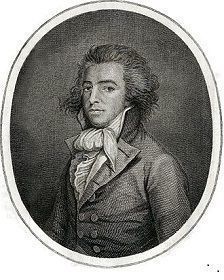
John Meares (c. 1756–1809) was an English navigator, explorer, and maritime fur trader, best known for his role in the Nootka Crisis. The Crisis was an international incident and political dispute amongst various groups jockeying for power and commerce as the era of the Northwest Coast maritime fur trade began. These included the Nuu-chah-nulth First Nation (west Vancouver Island); the Spanish Empire that claimed the coast from Mexico to Alaska; the Kingdom of Great Britain that had trading and political interests on the coast; and the fledgling United States that also had trading ships in the area. The Crisis was triggered by events in 1789 at the Spanish outpost in Nootka Sound (north of Tofino), B.C. Various disputes with and later ensuing events led to the seizure by the Spanish of a British subject and several British ships. War was averted with the Nootka Convention, a series of three agreements between the Kingdom of Spain and the Kingdom of Great Britain, signed in the 1790s. Many border-related issues were however left unresolved.
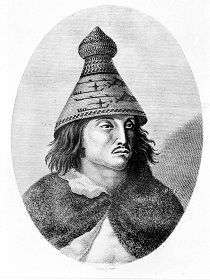
Chief Wickaninnish, meaning "Nobody sits or stands before him in the canoe", was the leading chief of the Tla-o-qui-aht First Nation of Clayoquot Sound north of Tofino, and likely the wealthiest and most powerful of the neighbouring chiefs. He was a dominant maritime fur trader, on what is now Vancouver Island, B.C. in the 1780s and 1790s, and at times rival of the well-known Chief Maquinna (Mowachaht First Nation of Nootka Sound) and others on the central west coast of the Island.
Excerpt - Robin A. Fisher, “Wikinanish" in "Dictionary of Canadian Biography", vol. 4:
"According to John Meares, an early visitor to the coast, “such was the power and extensive territory of Wicananish, that it was very much in our interest to conciliate his regard and cultivate his friendship.”
_____________________________
Shown in the foreground of the print are sea otters whose fur drove the maritime fur trade of the Pacific Northwest Coast from the 1780s to the mid-19th century. The most profitable furs were those of the northern sea otter, which inhabited the coastal waters between the Columbia River in the south to the Aleutian Islands in the north. Sea otters possess a thicker fur than any other mammal. By 1850, sea otters were virtually extinct throughout the Northwest Coast and found only in the Aleutian Islands and California. These mammals are currently 'listed as Threatened under the Canadian Species at Risk Act'.
The impacts of this fur trade on the First Nations of the Northwest Coast were many, such as material prosperity and access to technology as a result of increased trade. It also transformed inter-tribal relations, impacted on traditional cultural practices and unfortunately introduced epidemic disease.
____________________________
Of interest, two Spanish commanders named the inlet on the central west coast of Vancouver Island “Tofino” in 1792 in honour of Vicente Tofiño de San Miguel, a hydrographer who educated them. That inlet became the site of Tofino, the town.