Description
Painting
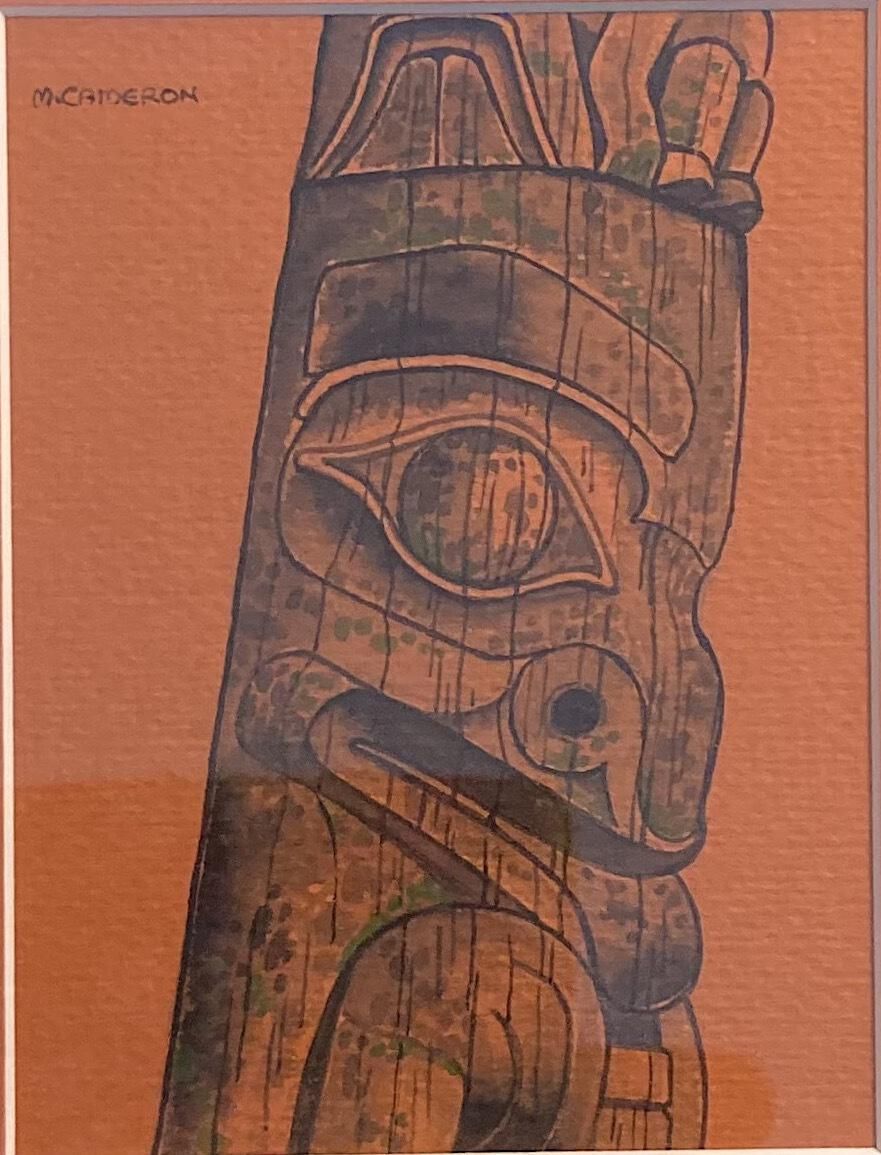
This image with its deep orange-red background depicts part of a Haida bear totem pole. The Haida are First Nations people who traditionally occupy Haida Gwaii, an archipelago off the B.C. coast. Haida art is particularly recognized for its monumental totem poles and sculptures, with the figures being deeply carved with large round eyes. Totem poles are a type of Northwest Coast art, consisting of monumental carved poles, posts or pillars. They can symbolize characters and events in mythology, or convey experiences of recent ancestors or living people.Context
The word 'totem' comes from Ojibwa, an Algonquian language spoken by First Nations around Lake Superior, for the word 'odoodem' or 'ototeman'. Specifically, totem refers to an emblematic depiction of an animal, plant or being that gives a family or clan its name and serves as a reminder of its ancestry.
The original totem poles were created by six First Nations of the Pacific Northwest: the Haida, the Nuxalt, the Kwakwaka'wakw, the Tlingit, the Tsimshian and the Coast Salish. These totem poles are carved and painted monumental poles (or posts or pillars) that feature different symbols or figures (birds, frogs, bears, people, supernatural beings and sea creatures). There are seven types of poles (memorials, grave markers, house posts, portal house poles, welcoming poles, mortuary poles and ridicule or shame poles). Similar to other forms of heraldry, they may function as crests of families or chiefs, recount stories owned by those families or chiefs, commemorate special occasions and more. The poles are usually made from large trees, mostly western red cedar, and their stories are usually read from the bottom of the pole to the top.