Description
Print
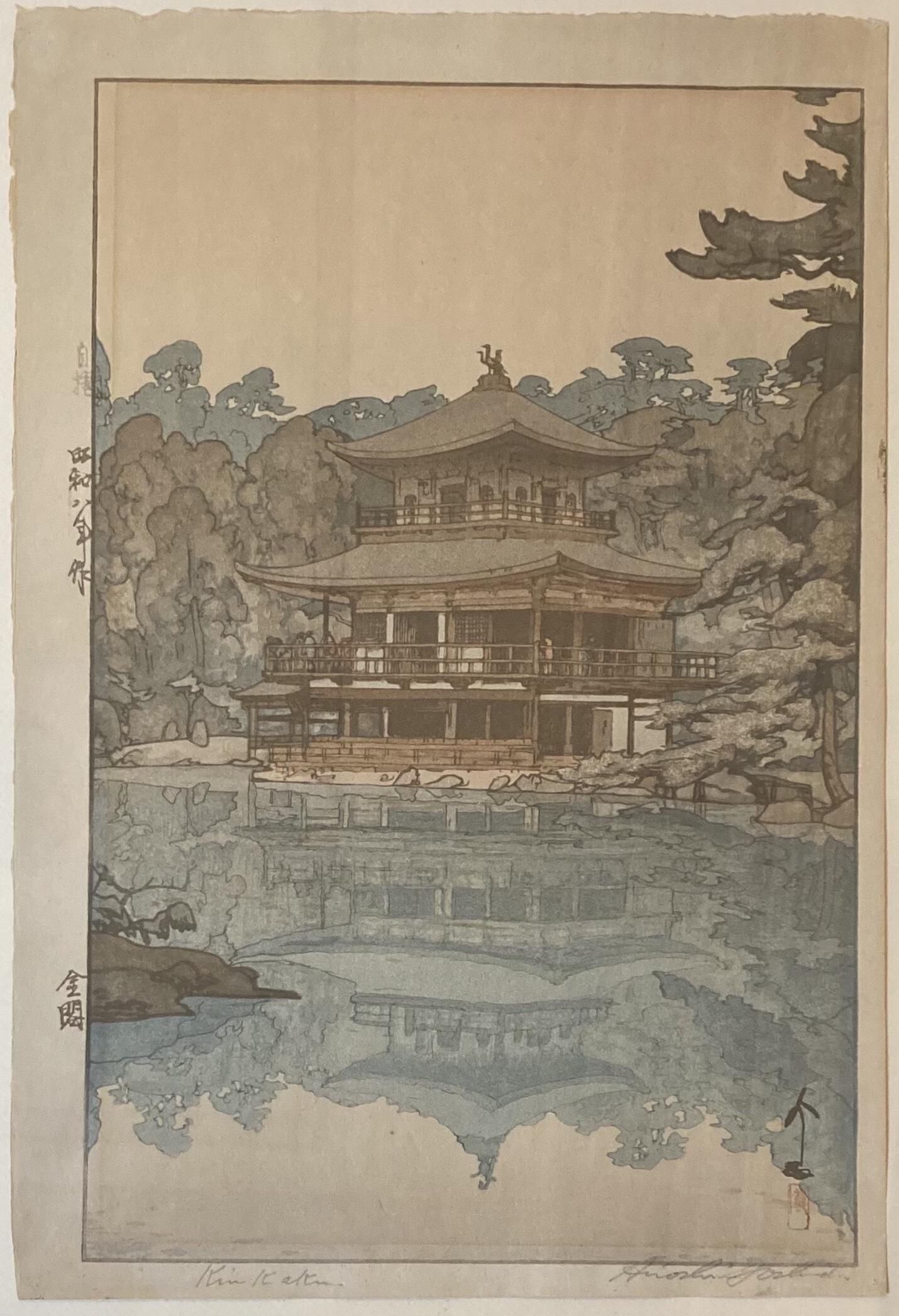
This image depicts Kinkaku-ji, ("Temple of the Golden Pavilion"), officially named Rokuon-ji ("Deer Garden Temple"), a Zen Buddhist temple in Kyoto, Japan. It was built in the 14th century, originally as a villa for a powerful shogun, with its two top levels completely covered in gold leaf. The temple is shown here with its reflection in the kyoko-chi, or Mirror Pond set at the foot of Kinugasa Hill in a Japanese strolling garden.Context
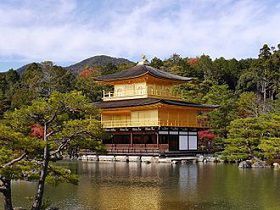
The name Kinkaku-ji, "Golden Pavilion", is derived from the gold-leaf covering and has symbolic meaning, with the gold intended to mitigate and purify fears and negative thoughts of death. The gold was also, of course, intended to create a visually beautiful effect with reflected sunlight on the temple itself and shimmering reflections in the mirror pond.
The present pavilion structure dates from 1955, when it was rebuilt following a devastating fire. It is a three-story building incorporating three distinct styles of architecture (shinden, samurai and zen), one style per floor. The reconstruction is said to be close to the original, although there is some doubt such an extensive gold-leaf coating was used on the original. Severely damaged gold-leaf was replaced some 30 years later, and the interior of the building and some contents, such as paintings, were also restored. The roof was restored in 2003.
The pavilion attracts many visitors and is designated as a National Special Historic Site, a National Special Landscape and is one of the 17 locations of the "Historic Monuments of Ancient Kyoto" which are all World Heritage Sites.