Description
Print
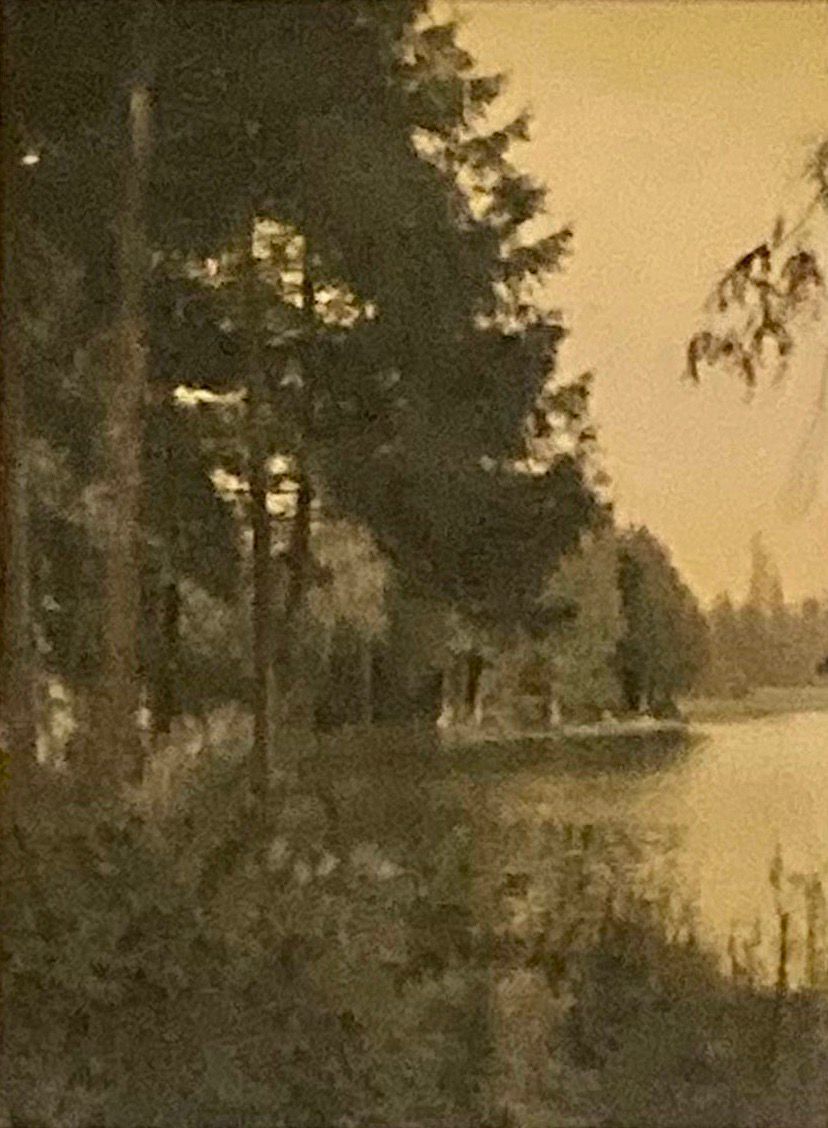
This image depicts the Lost Lagoon in Stanley Park, a 405-hectare public park in Vancouver, B.C. Vancouver is located on the traditional territories (unceded) of the Coast Salish peoples: the Sḵwx̱wú7mesh (Squamish), the xʷməθkʷəy̓əm (Musqueam), and the səlilwətaɬ (Tsleil-Waututh) First Nations. The land was later turned into Vancouver's first park with city incorporation in 1886. Opened in 1888, it was named after Lord Stanley, a British politician who had recently been appointed Governor General. One hundred years later in 1988, Stanley Park was designated a National Historic Site of Canada for "its splendid setting and through the relationship between its natural environment and its cultural elements developed over time, it epitomizes the large urban park in Canada."Context
Lost Lagoon is an artificial lake located near the entrance to Stanley Park. It was constructed in 1916, a project of considerable controversy from the outset and over the years, such as when a lit fountain was erected in the 1930s to commemorate the city's Golden Jubilee. It is a popular walking place for Park users and also a nesting ground to many species of birds. The name 'Lost Lagoon' comes from a poem written by Pauline Johnson (1861-1913), also known by her Mohawk stage name, Tekahionwake, who was an accomplished and popular Canadian poet, author, and performer in the late 19th and early 20th centuries. Johnson is buried in the Park.