Description
Painting
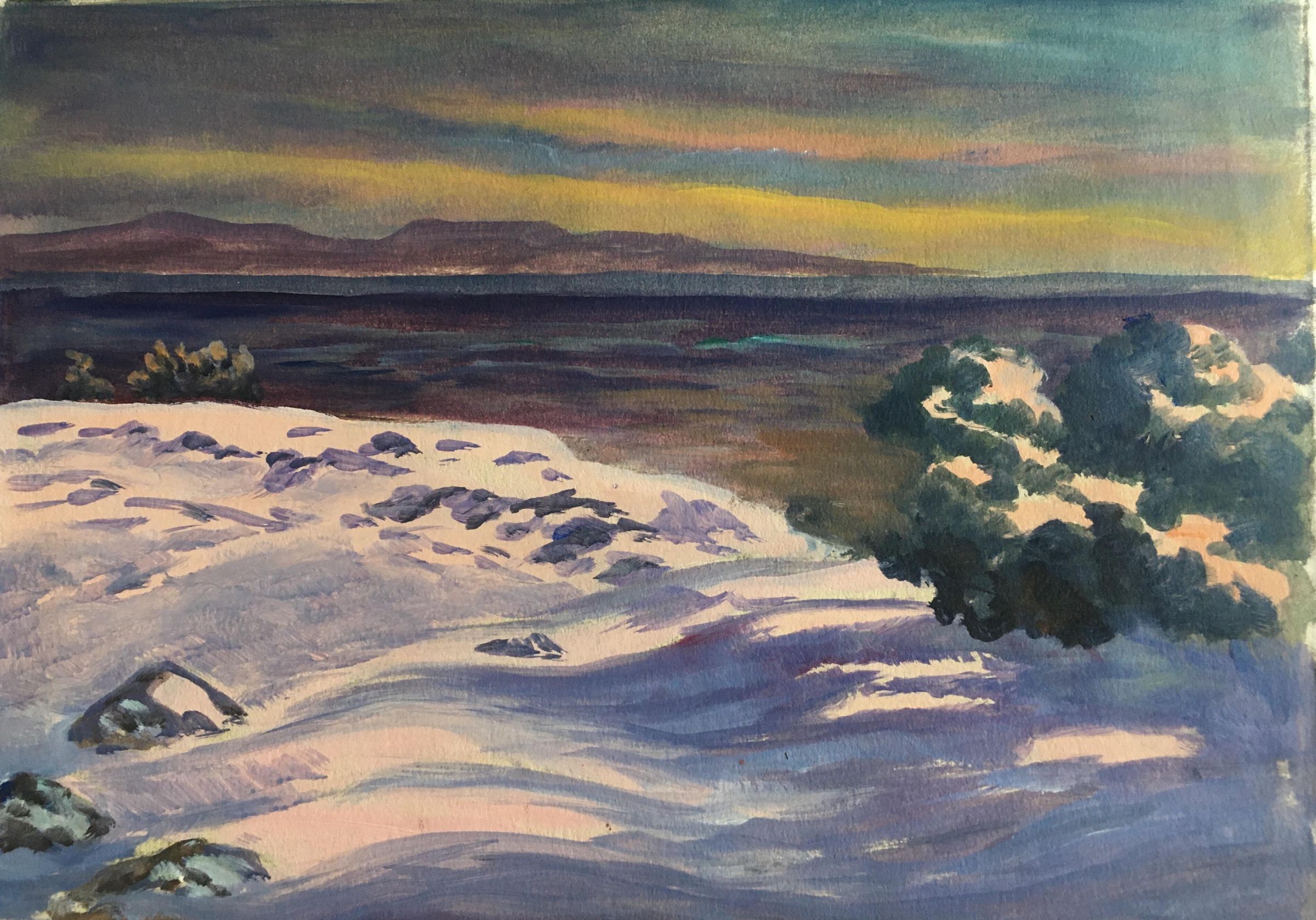
This marine view depicts a shoreline through to the ocean with islands in the distance. The beautiful "dancing" waves of coloured light in the sky suggest the northern lights (aurora borealis), and the shoreline seems covered in shadowed snow or spume from the waves. The location is unknown.Context
The northern lights, or aurora borealis, are a spectacular, colourful display of light seen in the night sky in the northern hemisphere. Auroras in the southern hemisphere are known as the southern lights, or aurora australis. The word "aurora" is derived from the name of the Roman goddess of the dawn, Aurora, who traveled from east to west announcing the coming of the sun. The words "borealis" and "australis" are derived from the names of the ancient gods of the north wind (Boreas) and the south wind (Auster) in Greek mythology.
Auroras are the result of disturbances in the magnetosphere caused by the solar wind, and appear as moving patterns of brilliant lights that appear as curtains, rays, spirals, or dynamic flickers covering the entire sky. The best time to see the northern lights in B.C., or Canada in general overall, is between September and March, as these months offer the longest hours of darkness. The essential requirements for successful viewing are a more northern climate, clear skies, and a location free of light pollution.