Description
Drawing
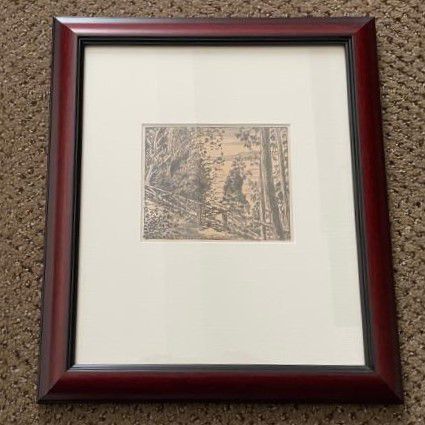
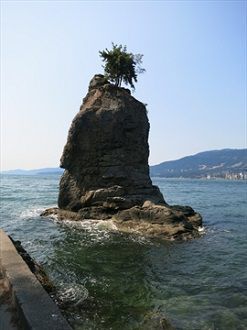
This image depicts Siwash Rock, also known by its First Nations Squamish name "Skalsh" or "Slhx̱í7lsh", a famous sea outcropping in Vancouver, B.C.'s Stanley Park viewed from the pathway above on the park's seawall. Located at a sharp bend between Third Beach, Prospect Point and the Lions Gate Bridge, Siwash is a rocky outcrop, known as a seastack, with a tough, twisted handful of Douglas Firs sprouting on top. This is a grisaille, a painting executed in shades of grey and other neutral greyed colours.Context
The Siwash Rock sea stack is an ocean landform formed due to wave erosion and wind, and in this case due to the nature of the rock itself, an igneous basalt that is resistant to erosion. The stack has the shape of a steep column, created as the softer sedimentary rock joining the stack to the mainland eroded and later collapsed, leaving the column standing alone.
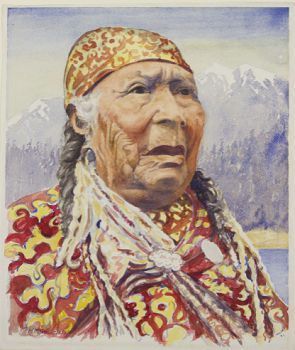
In her book "Legends of Vancouver" (1911), the poet Pauline Johnson (1861-1913) relates a legend by Squamish First Nations Chief Joe Capilano of how a man was transformed into Siwash Rock as an indestructible monument to dedicated fatherhood. Johnson, also known by her Mohawk stage name, Tekahionwake, was an accomplished and popular Canadian poet, author, and performer in the late 19th and early 20th centuries. Johnson is buried in Stanley Park.