Description
Sculpture
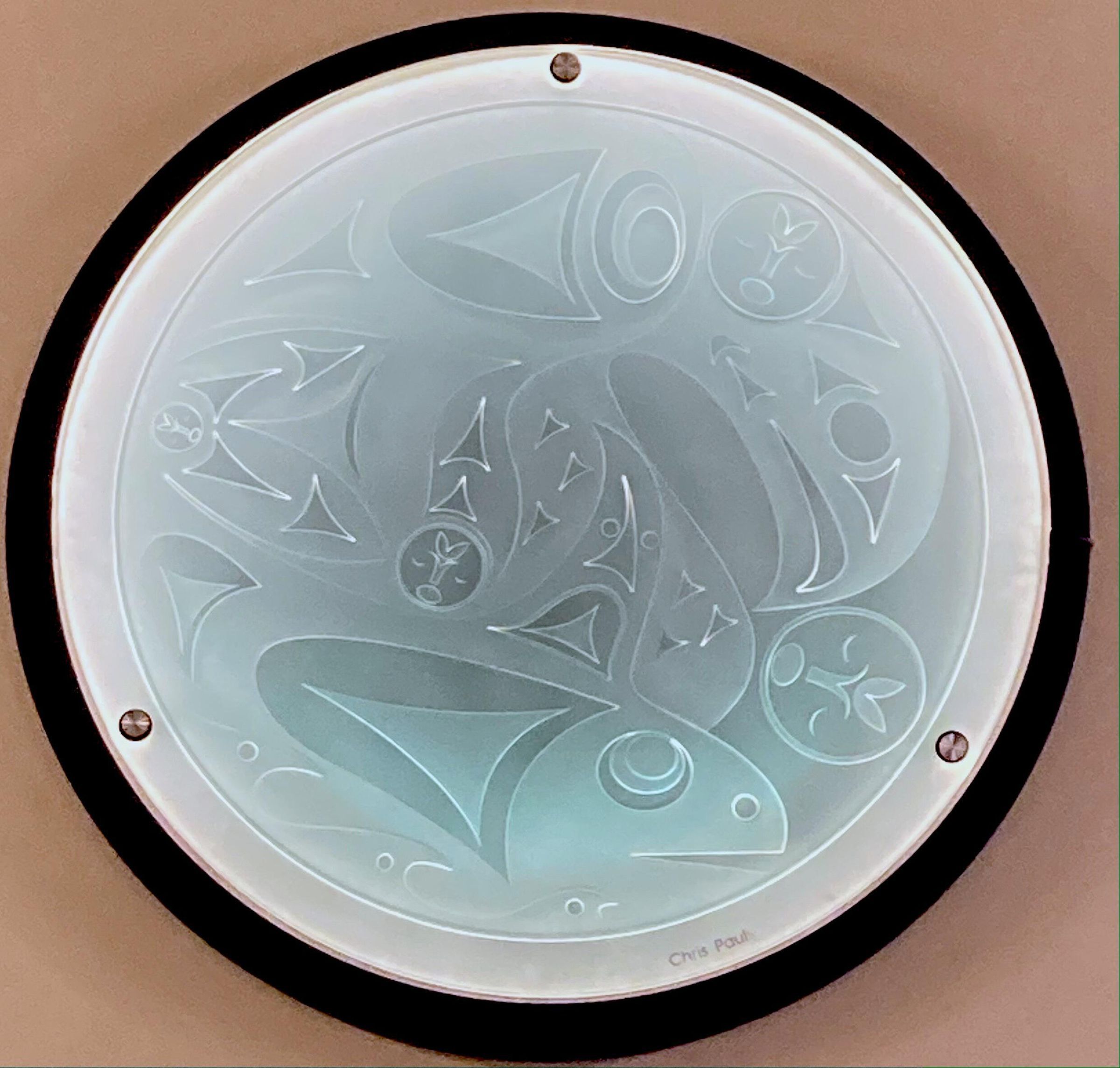
This carving explores the Pacific Northwest Coast First Nations myth of the epic struggle between the Thunderbird, a benevolent supernatural being, and the Killer Whale. The three-dimensional carved images almost appear to be suspended in mid-air in the circular design in the form of a spindle whorl. The carving was commissioned by the Union Club of B.C.
The sculpture is done in 'formline', a Pacific Northwest Coast First Nations art system that is unique, based on a traditional set of principles that govern how a design is organized and presented. Crafted in sand-carved glass and mounted on red cedar, the sculpture has been created with great attention to detail and powerful imagery.Type of Sculpture
ReliefContext
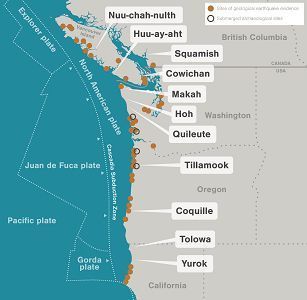
The stories of the Thunderbird and the Whale battle may vary across different First Nations peoples; however, they typically describe a shaking earth with water inundating the land and uprooting trees. It is believed that these mythical stories have basis in fact and are tied to earthquakes and tsunamis along the Cascadia subduction zone (the long fault boundary between the North American and Juan de Fuca tectonic plates) off the Pacific Northwest Canadian and U.S. coast, and specifically the Cascadia 8.7-9.2 magnitude earthquake and subsequent tsunami of 1700.
The Cascadia event occurred mid-evening on January 26, as documented by the oral traditions and art of First Nations on Vancouver Island (e.g. Huuayaht - Nuuchahnulth, Kwakwaka'wakw and Cowichan) and down the U.S. coast to northern California (e.g. Makah, Tillamook and Yurok), written records in Japan and scientific studies, such as those done on the "ghost" forests along the coasts of the states of Oregon and Washington - coastal forests that are believed to been instantly killed by some 12 m of salt floodwater, the remains of which are visible as stumps sticking up above the sand at low tide. The Cascadia earthquake and tsunami altered forever the coast and peoples of northwestern North America and then sent a tsunami across the Pacific Ocean to Japan. The so-called "orphan tsunami" that arrived in Japan at midnight on January 26 without warning (no earthquake was felt at the time) would not be linked to its parent Pacific Northwest earthquake until the middle 1990s, and new research indicates that this may have been one of a series of earthquakes.
___________________
This sculpture was specially commissioned by the Union Club in 2019 with the intention of increasing representation and visibility of the art and culture of First Nations on Vancouver Island, B.C., in this case the Tsartlip. "The Beginning" was formally unveiled at the Club in January 2020.