Description
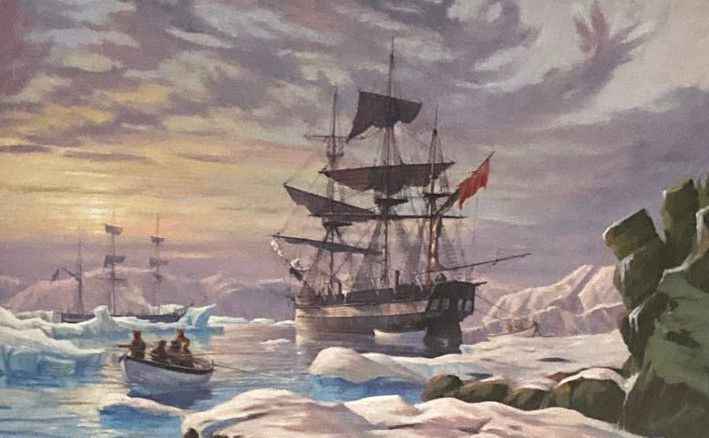
Giclée canvas reproduction print (ca. 2020) after 2015 oil painting by John Horton.
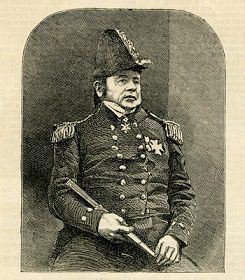
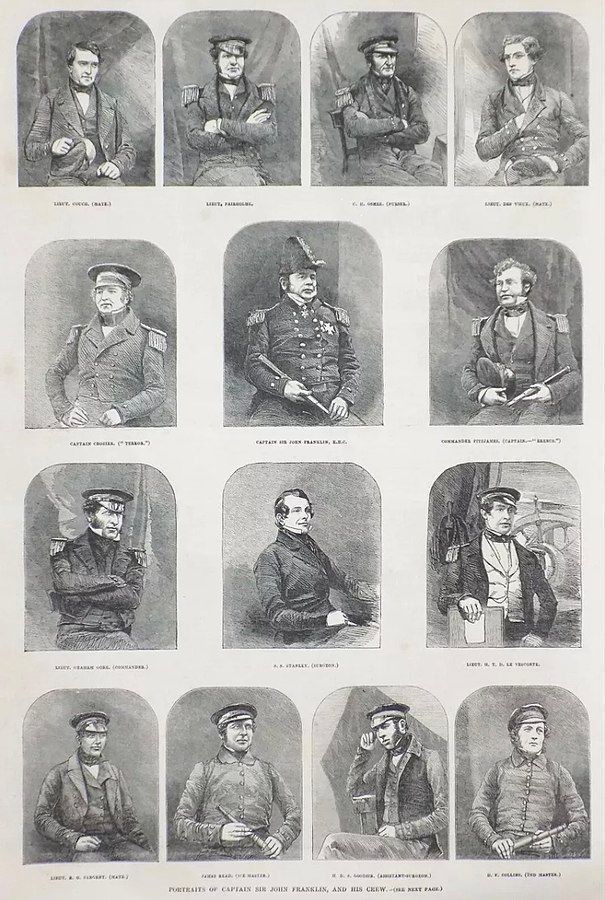
This image depicts an historical mid-19th century scene of the doomed British Naval Northwest Passage Expedition's or Franklin Expedition's HMS Erebus and Terror, both reinforced bomb ships selected for work in polar ice. In 1845, the naval officer and explorer Sir John Franklin (1786-1847) set sail from England with these two ships in search of a Northwest Passage to serve as a trading shortcut between Europe and Asia, across what is now Canada's Arctic. This is a portrayal of the ships in a frozen landscape, with some sailors in a life boat and other boats being launched. The sky is ominous and the scene is shown in an foreboding northern light.Context
The Franklin Expedition met with disaster after both ships and their crews, totaling 129 officers and men, became icebound in what is today the Canadian territory of Nunavut. After being icebound for more than a year the ships were abandoned in 1848. By then, Franklin and some two dozen others had died. The survivors set out for the Canadian mainland, all perishing from starvation and hypothermia, as well as other maladies.
Many searches were undertaken throughout the 19th and 20th centuries, both official and unofficial, involving family, navy personnel, explorers, journalists, and local guides and interpreters, some making good use of Inuit oral histories. However, it was not until 2014 that a Canadian search team led by Parks Canada located the wreck of the Erebus in an area that had been identified by Inuit in the eastern portion of Queen Maud Gulf that lies between the northern coast of the mainland and the southeastern corner of Victoria Island in Nunavut. Two years later, the Canadian Arctic Research Foundation found the wreck of the Terror south of King William Island. Research is undertaken every year at the wreck sites, now protected as a combined Canadian National Historic Site, the first such site to be co-managed by the Inuit and Parks Canada. This includes a summer Indigenous Guardians Program for the wrecks of HMS Erebus and HMS Terror which began in 2017, based on an Australian model of land protection and management. Public access to the Wrecks of HMS Erebus and HMS Terror National Historic Site is not yet allowed.
Of note, the wrecks of the Erebus and Terror were designated as a National Historic Site of Canada in 1992, despite no one at that time knowing where they were.