Description
Painting
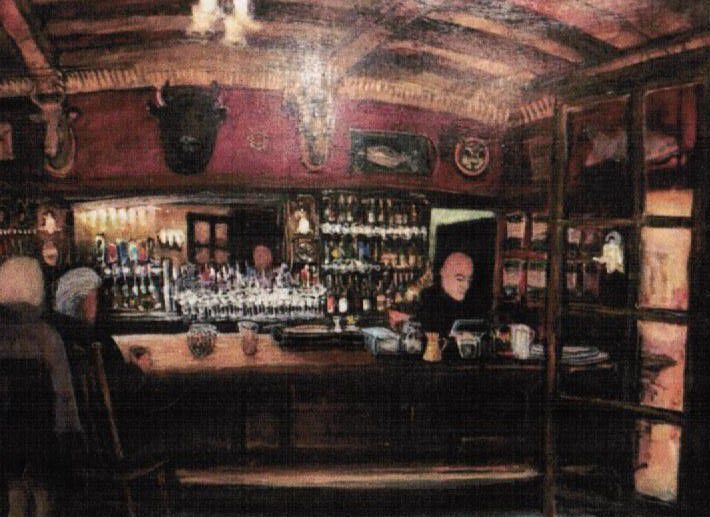
This image depicts the wood-paneled Union Club McGregor Bar through the open glass doors of the adjacent lounge. A bartender is at work to the right, with patrons to the left. Liquor bottles and glasses are arrayed behind, as well as taxidermy specimens on the wall above.
Founded in 1879, The Union Club of British Columbia is a landmark institution in the heart of downtown Victoria., B.C., whose members represent a legacy of leadership and who have been at the heart of the business, social and cultural life of Victoria and beyond from its early beginnings. The Gordon Street building housing the Bar is the third clubhouse venue.Context
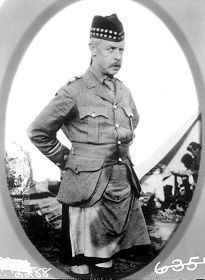
Captain James Herrick McGregor (1869-1915) was the ninth president of the Union Club, 1914-1915. He was a highly respected provincial land surveyor, serving as an Oak Bay City Councillor, 1909-1914, until he enlisted in the Army to fight for Canada in World War I. He served with the 16th Battalion of the Canadian Scottish, Canadian Expeditionary Force, and was killed in action during the 1915 battle of St. Julien. The Union Club's McGregor Lounge including the Bar is proudly named after him.
_____________________
This Union Club building on Gordon Street at Humboldt was recognized as nationally significant in 1995 by the joint federal, provincial and territorial administered registry, Canada’s Historic Places. And in 2017, The Union Club of British Columbia was declared a National Historic Site by the Government of Canada. The Union Club, completed in 1913, earned the prestigious status for its important early history and outstanding architecture of Beaux-Arts Italian Renaissance Revival Style.
Designed by noted San Francisco architect Loring P. Rixford (1870-1946), plans for the building were drawn up with the help of prominent Victoria architect Francis Mawson Rattenbury (1867-1935). Of note, in addition to the building's elegant design, is it's juxtaposition with The Empress Hotel (1908), a nationally significant Château-style hotel, built for the Canadian Pacific Railway and the Belmont Building (1912), significant for its early use of concrete frame construction and as a gatepost to Victoria's commercial core. Together these buildings form a backdrop of historic places in the northeast corner of the Inner Harbour, and mark the entrance to Victoria's Old Town District.
In 2017, an extensive $4 million five-year building renovation project was completed, including exterior restoration. The restoration of the exterior terracotta was documented and the photographs now form part of the Club's collection. See 2018.06.01 - 2018.06.15.