Description
Painting
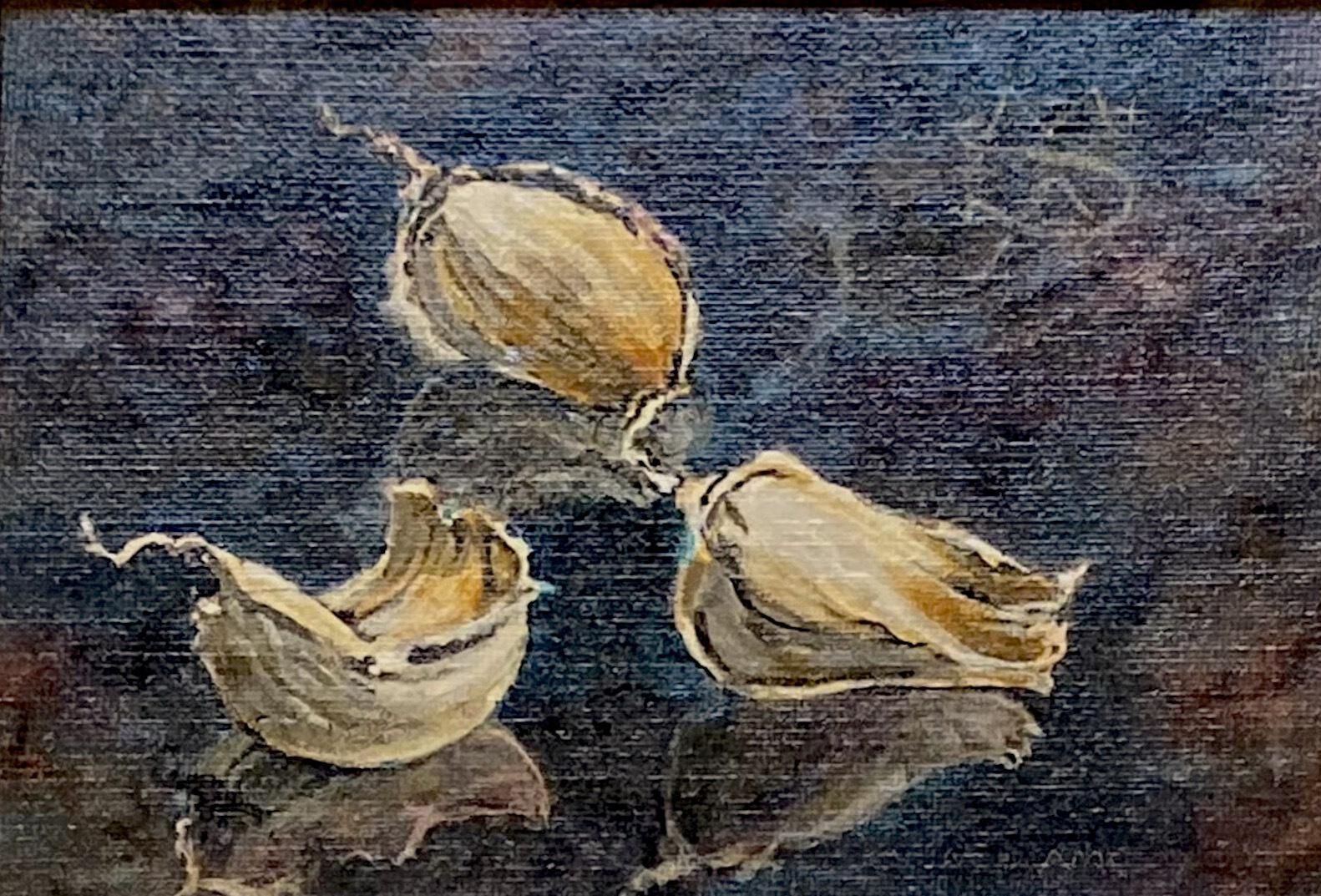
This small still-life depicts three garlic cloves sitting on a dark reflective surface. The individual cloves are covered in a thin and papery tan and whitish skin, and they all have subtle reflections of themselves, emphasizing their irregular but familiar shape.Context
Part of the lily or alium family, of which onions and shallots are also members, garlic is one of the most popular ingredients used in cuisines and traditional medicines worldwide. Garlic is also a potent and ancient symbol with a long history of use in magic and spirituality. It also considered a symbol of good luck and potent protection against poisons, spells and evil spirits in many cultures, including defense against vampires.
__________________________
With origins in Ancient Egyptian and Greco-Roman art, still-life painting emerged as a distinct genre and professional specialization in Western painting by the late 1500s, and has continued to evolve across the centuries attracting artists and patrons alike.
Be it a painting or drawing or other form of visual art, a still-life focuses on still objects. The subject matter is inanimate, typically with a focus on commonplace household objects, flowers or fruits. Other types of objects from daily life may also be depicted such as books, medicines, tools, dead game and more. Still-lifes can be done in any art style, not just as realistic art. And still-lifes may be full of symbolic meanings or may simply represent the artist's experimentation with shape, texture, colour, lighting, and placement. Still-life art can also portray complex themes.