Arm Guard (Manica)
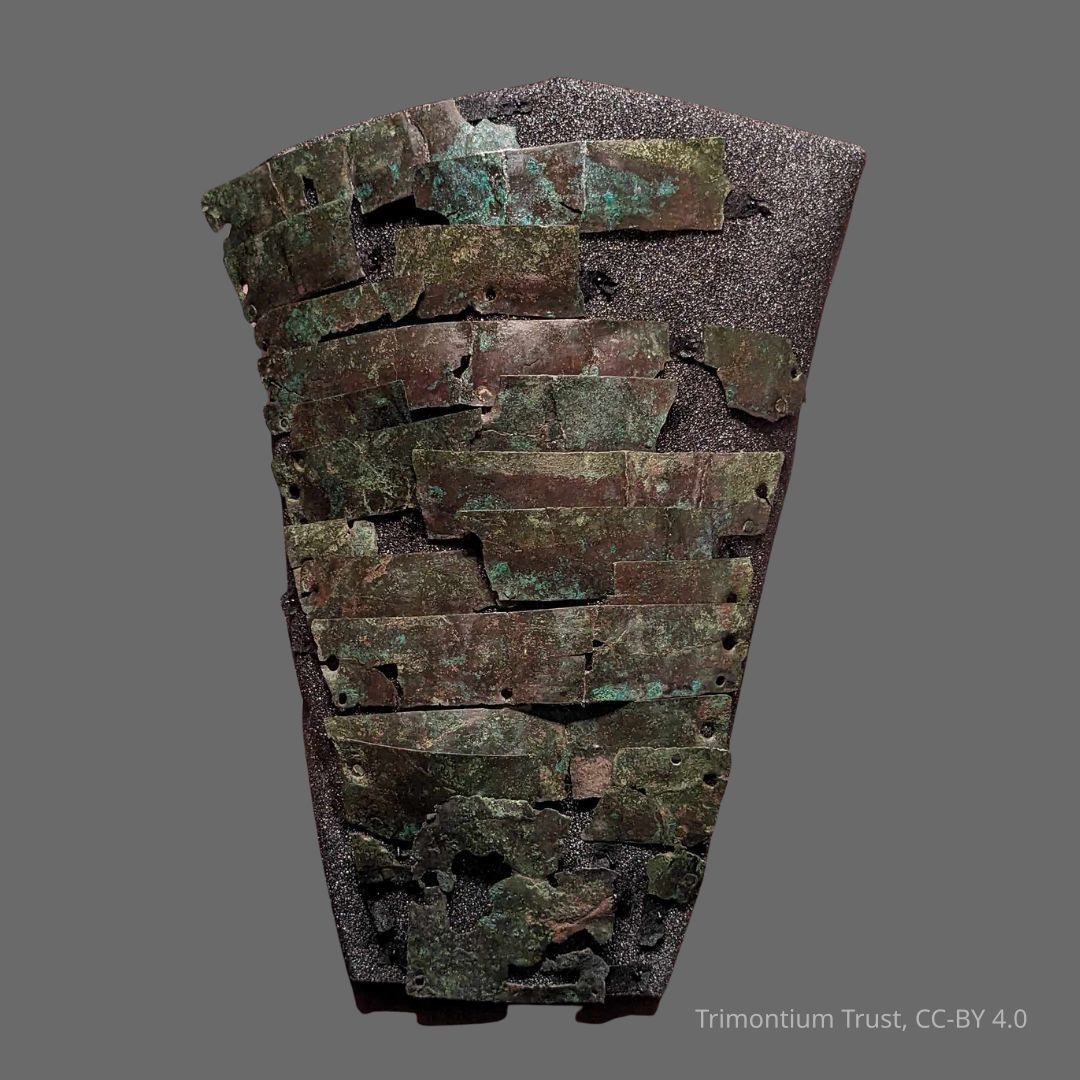
Photo ©National Museums Scotland
Overview
Description
22 fragments of lamellar (laminated) arm guard (manica), bronze, from the Roman site at Newstead (Trimontium), Roxburghshire. 80 - 180 AD. Lorica segmentata armour, also known as a segmental cuirass, designed to move with the body, consisted of overlapping metal strips covering the soldier's shoulders and torso, that were held together by buckles, hinges and leather straps.Context
Found in the Principia in Chamber 5, three types of scale armour were found, the arm guard included. The pieces of bronze would have been tied together with leather. A single bronze scale was found near the Baths. Record split to allow for separate details for X.FRA 116.1-3 (Lower part of the arm guard).Collection
National Museums Scotland, Newstead CollectionUse
Used for body protection from sharp and blunt force trauma, and for ceremonial purposes. Manicae were used by gladiators as well as legionaries.
Category
Armour
Military Dress & Armour
Acquisition
Accession
X.FRA 116.2Source or Donor
National Museums of ScotlandAcquisition Method
LoanSource (if not Accessioned)
National Museums of ScotlandNotes
LoanMade/Created
Time Period
1st - 2nd Century ADEthnography
Cultural Region
Continent
EuropeCulture/Tribe
Romano British
Lexicon
Nomenclature 4.0
Nomenclature Secondary Object Term
Guard, ArmNomenclature Primary Object Term
Guard, WeaponNomenclature Sub-Class
Armament AccessoriesNomenclature Class
ArmamentsNomenclature Category
Category 05: Tools & Equipment for Science & TechnologyGetty AAT
Concept
bracersOther Names and Numbers
Other Names
Name Type
Trimontium Loan NumberOther Name
L.2021.31Other Numbers
Number Type
Previous Accession NumberOther Number
XII 14-145Materials
Bronze
Colors
Brown, Green
Condition
Overall Condition
GoodRelationships
Related Person or Organization
Person or Organization
James CurleNotes
ExcavatorProvenance
Provenance Detail
1905 - 1911 ExcavationsAcquisition Method
FoundExhibitions
Permanent Exhibition