Lorica Plumata
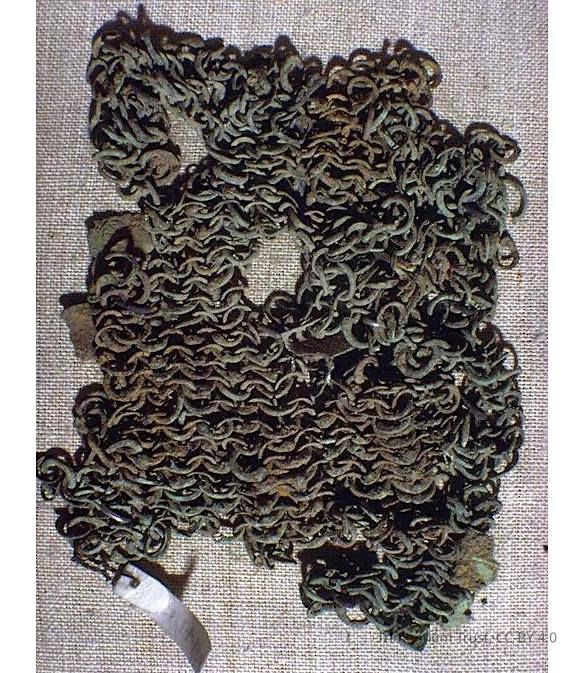
Image © National Museums Scotland
Overview
Description
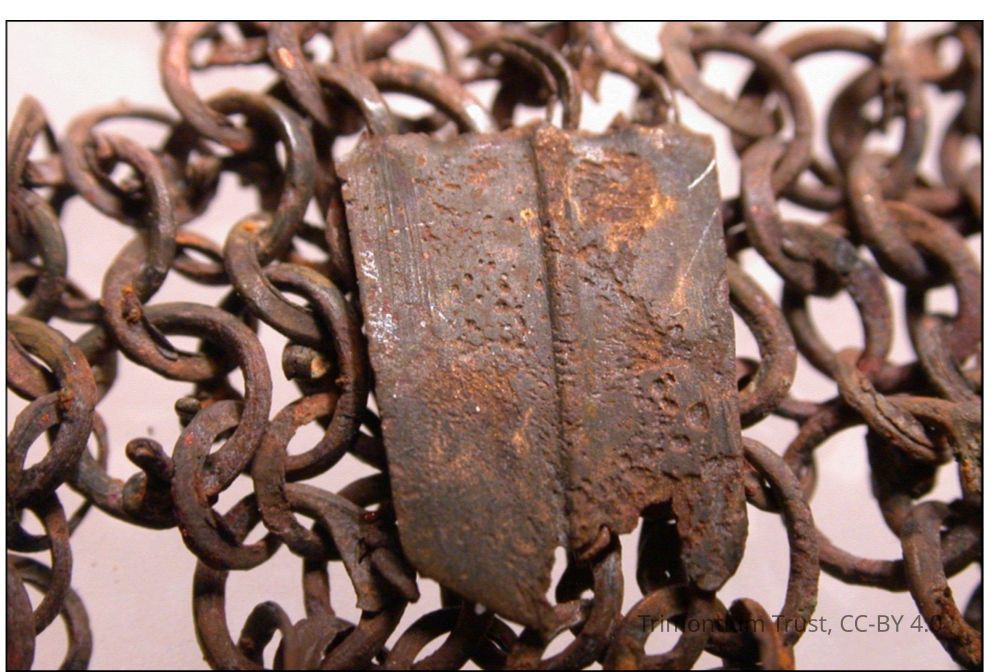
Fragments of fine chain-mail of bronze, lorica plumata. From the Roman site at Newstead (Trimontium), Roxburghshire. 80 - 180 AD. Lorica plumata was made from rings of two sizes attached together in alternate rows. At places the rings were attached to small bronze scales.Context
Part of Newstead Collection. Found in Pit 1 in the fort's Principia. Remains of bronze chain armour. R.B.K Stevenson. notes: small fragments. [National Museums Scotland List, Warfare, II.4.1, October 1997 - Non Specific (legionary or auxiliary); Armour; Lorica plumata, Newstead]. Updated from SCRAN full data set. [National Musems Scotland description] Roman military equipment » Legionary or auxiliary » (25) Fine chain mail with scales, Newstead. 80 - 180 AD.Collection
National Museums Scotland, Newstead CollectionUse
Armour was used to protect the body from both blunt and sharp force trauma
Category
Armour
Military Dress & Armour
Acquisition
Accession
X.FRA 120Source (if not Accessioned)
National Museums of ScotlandMade/Created
Time Period
1st - 2nd Century ADEthnography
Cultural Region
Continent
EuropeCulture/Tribe
Romano British
Lexicon
Nomenclature 4.0
Nomenclature Primary Object Term
ArmorNomenclature Primary Object Term
FragmentNomenclature Sub-Class
Body ArmorNomenclature Class
ArmamentsNomenclature Category
Category 05: Tools & Equipment for Science & TechnologyNomenclature Category
Category 10: Unclassifiable ObjectsGetty AAT
Concept
mail (metal fabric)Other Names and Numbers
Name Type
Register NumberOther Name
X.XII.14.154Name Type
Previous Accesssion NumberOther Name
X.1997.253Materials
Bronze
Colors
Gray, Black