Felling Axehead
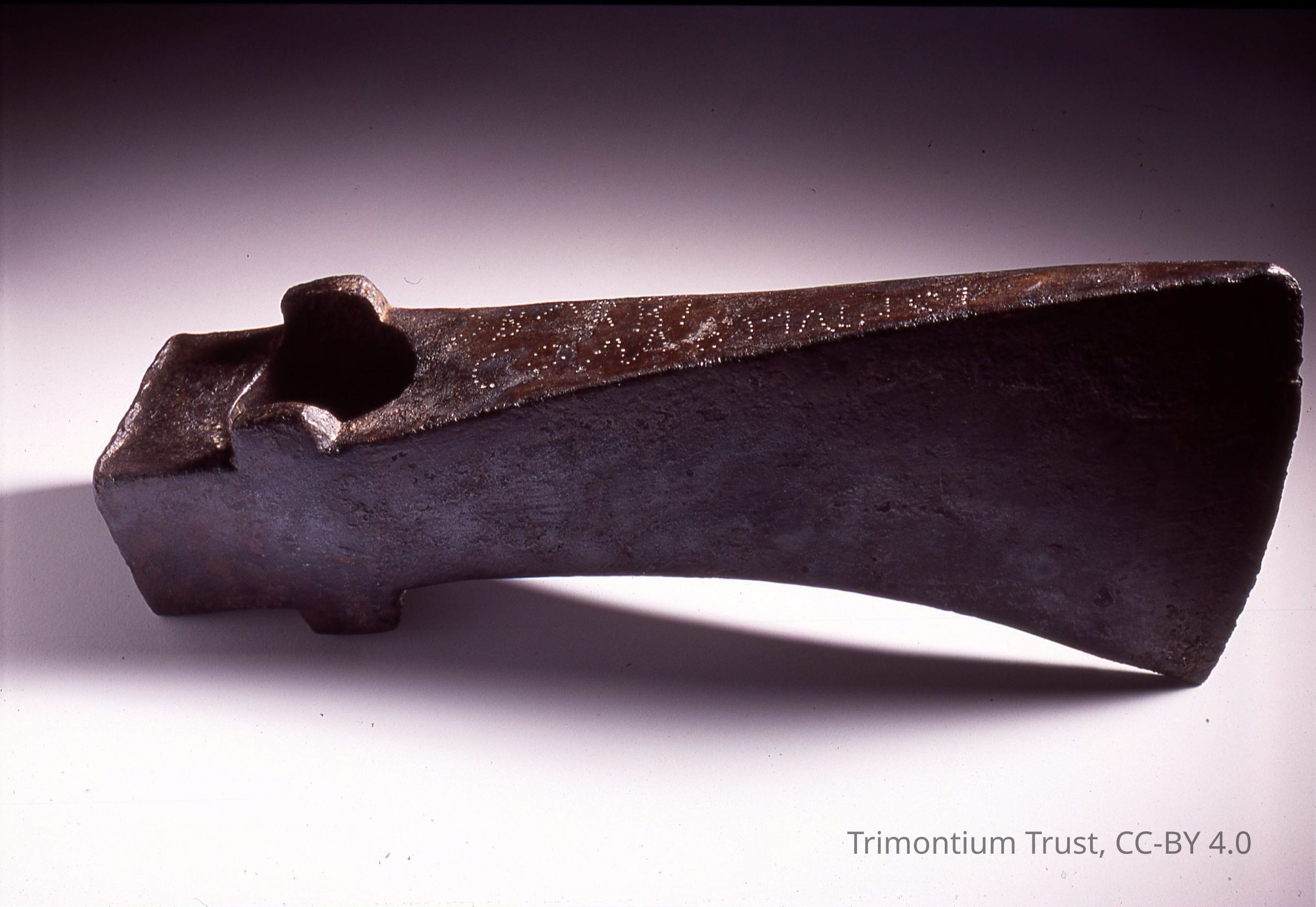
©National Museums Scotland. Digitised from a positive on film by The Trimontium Trust
Overview
Description
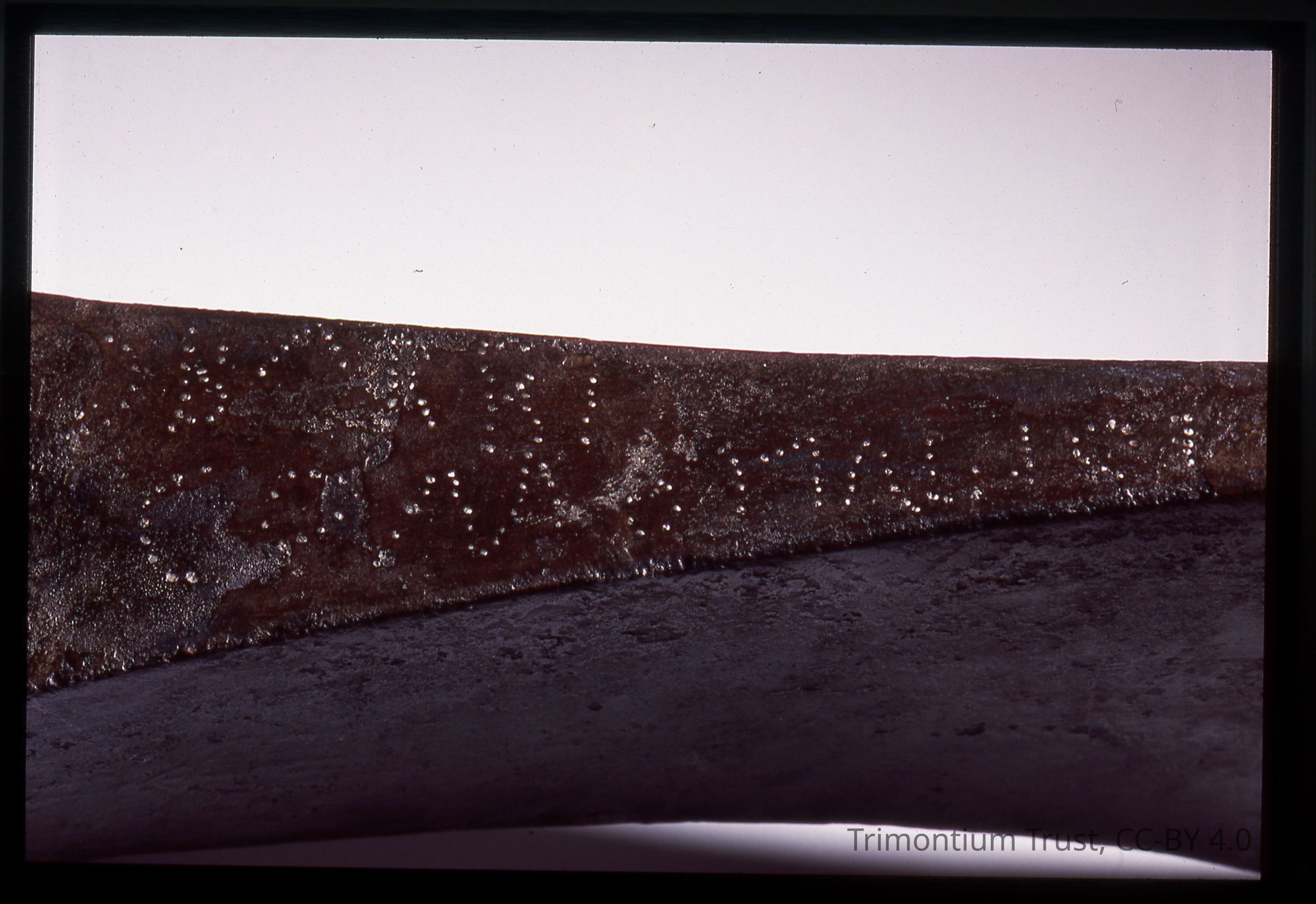
Heavy axehead of iron, for felling or shaping. Inscribed with both owner's inscription and maker's mark. from the Roman site at Newstead (Trimontium), Roxburghshire. 80 - 100 AD. The axehead was made by forging a solid piece of iron, the eye having been punched out. On the lower side of the square end is impressed a stamp with the letters L.G.R. On the upper edge it bears a punched-dot inscription in two lines, the first consists of a centurial mark followed by 'BARRI'. The second line reads 'COMPITALICI'. 'BARRI COMPITALICI' can be translated as 'Property of Compitalicus in the century of Barrus'.Context
Part of Newstead Collection. Axe, 10 inch long, weight 6 lbs, inscribed with centurial mark and "Barri," in the second line "Compitalici." Updated from SCRAN full data set, December 1998. [National Museums Scotland description] Letters of authority » Literacy in Scotland - a weapon of the Roman state » Literacy among the soldiers » (27) Axehead, Newstead - BARRI COMPITALICI '(Property) of Compitalicus in the century of Barrus'. 80 - 100 AD. [Scran caption] This iron axehead was found at the site of the Roman fort at Newstead in Roxburghshire. It was used between 80 to 100 AD. The axehead was made by forging a solid piece of iron. It bears the punched-dot inscription 'BARRI COMPITALICI' which can be translated as 'Property of Compitalicus in the century of Barrus'. Roman soldiers were builders as well as fighters. On the march, they built temporary ramparts and ditches around their camps. Once an area had been conquered, the army built forts and permanent barracks of wood or stone.Collection
National Museums Scotland, Newstead CollectionUse
Felling axes were used to chop down trees. Roman soldiers were builders as well as fighters. On the march, they built temporary ramparts and ditches around their camps. Once an area had been conquered, the army built forts and permanent barracks of wood or stone.
Category
Axe
Tools
Acquisition
Accession
X.FRA 236Source (if not Accessioned)
National Museums of ScotlandMade/Created
Date made
80 - 100Time Period
1st - 2nd Century ADEthnography
Cultural Region
Continent
EuropeCulture/Tribe
Romano British, Roman
Inscription/Signature/Marks
Type
InscriptionLocation
Upper part of the axe headTranscription
BARRI COMPITALICILanguage
LatinTranslation
Property of Compitalicus in the Century of BarroMaterial/Technique
Inscribed, punchedLexicon
Nomenclature 4.0
Nomenclature Secondary Object Term
Ax, FellingNomenclature Primary Object Term
Ax, TimberNomenclature Class
Forestry T&ENomenclature Category
Category 04: Tools & Equipment for MaterialsGetty AAT
Concept
axes (tools)Other Names and Numbers
Name Type
Previous Accesssion NumberOther Name
I 15-181Dimensions
Length
250 mmWeight
6 lbMaterials
Iron
Colors
Brown