Bead

Object/Artifact

Object ID: X.FRA 908

Trimontium Museum

©National Museums Scotland

Image: trove.scot
Overview

Description

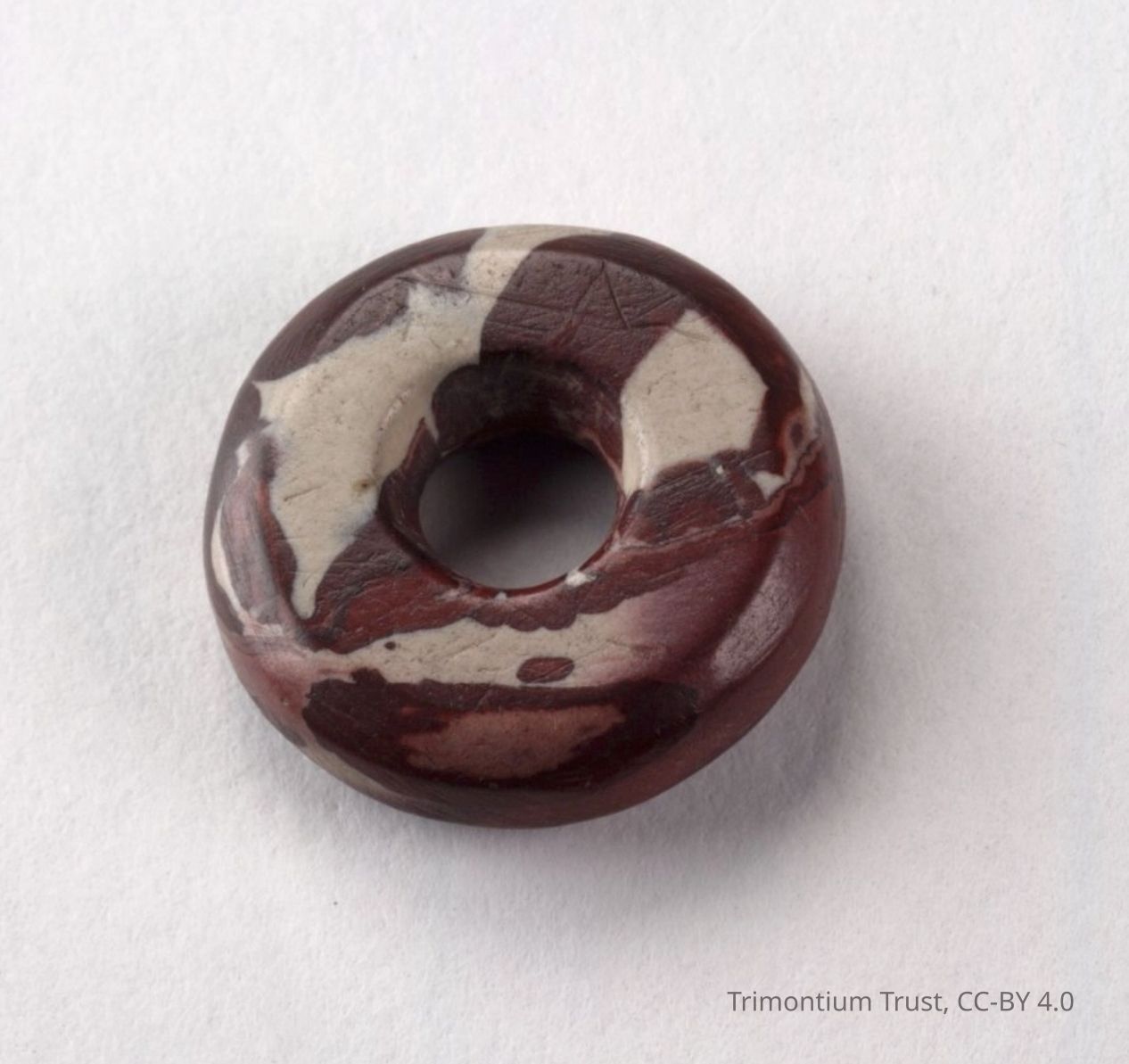
Red and white veined bead from the Roman site at Newstead (Trimontium)

Context

The history of the glass bead in the Roman empire began as a status symbol for the wealthy and elite, however by the time the Romans established Trimontium in the late 1st century CE, glass ware was more commonly available and manufactured in large scale. Therefore, it could be procured by different sectors of the population. There were simple pieces widely available and also very specialized types of luxury glass.

Collection

National Museums Scotland

Use

May have been used for personal decorative jewellery, such as necklaces or earrings.

Category

Bead
Jewellery

Acquisition

Accession

X.FRA 908

Source (if not Accessioned)

National Museums of Scotland

Made/Created

Time Period

1st - 2nd Century AD

Ethnography

Cultural Region

Continent

Europe

Culture/Tribe

Roman

Lexicon

Nomenclature 4.0

Nomenclature Secondary Object Term

Bead

Nomenclature Primary Object Term

Notion

Nomenclature Sub-Class

Needleworking Equipment

Nomenclature Class

Textileworking T&E

Nomenclature Category

Category 04: Tools & Equipment for Materials

Getty AAT

Concept

beads (pierced objects)

Other Names and Numbers

Other Numbers

Number Type

Previous Accession Number

Other Number

II.15.408

Materials

Material

Lithomarge, Marble

Material Notes

Previously identified as lithomarge and interpreted as an amulet. However, the material characteristics suggest a harder decorative stone (likely marble), and any amuletic function remains unproven. "It was possibly used as an amulet. The bead dates between 80 and 180 AD. Lithomarge bead from Newstead The Romans were superstitious, and used amulets and pictures of the gods to ward off evil. Lithomarge, with its attractive, marbled appearance, was used by the Romans as charmstones." - SCRAN data from trove.scot

Relationships

Related Person or Organization

Person or Organization

James Curle

Notes

Excavator

Provenance

Provenance Detail

1905 - 1911 Excavations

Acquisition Method

Found

Notes

James Curle

Research Notes

Research Type

Reference

Notes

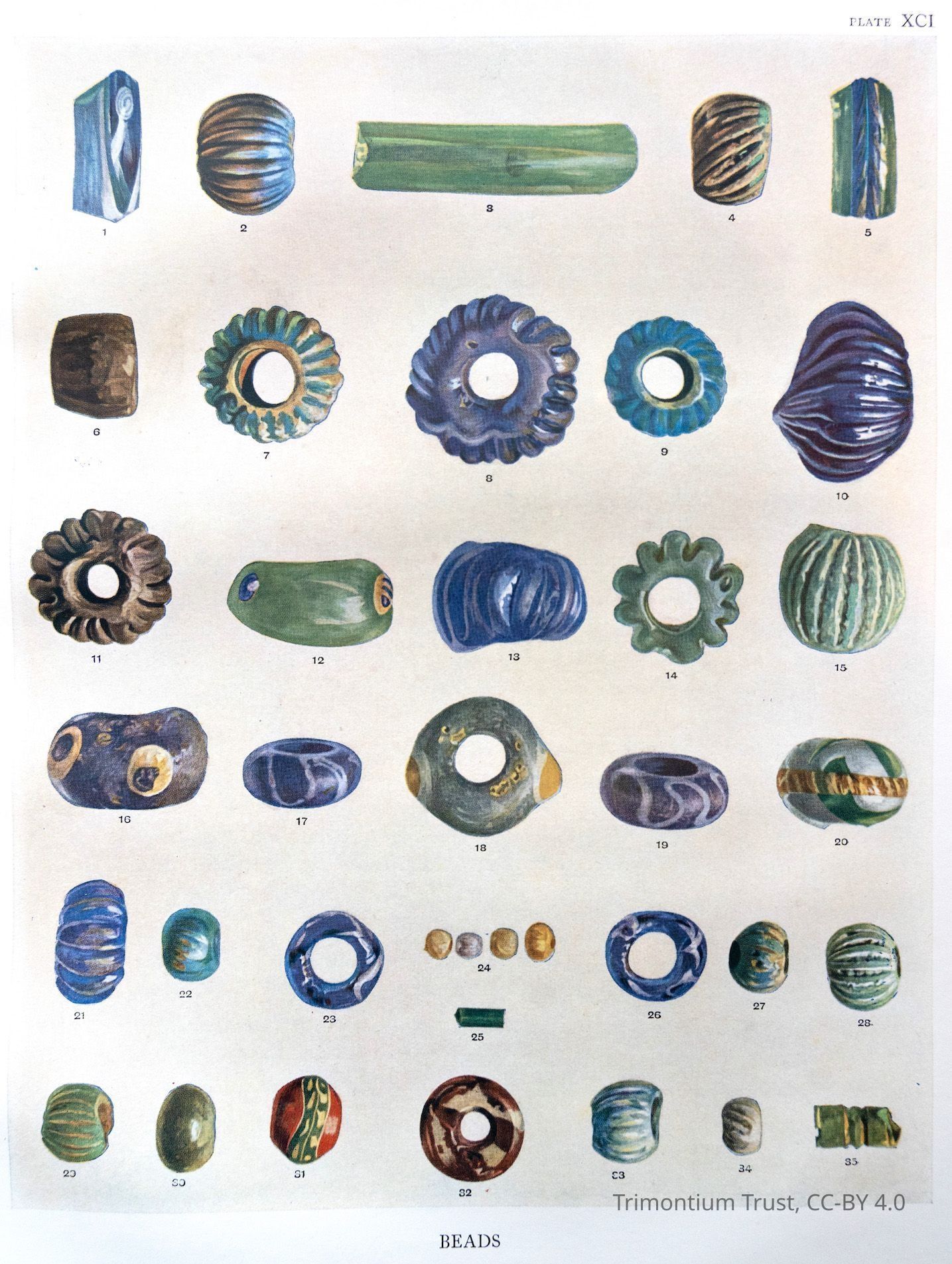
"Other beads which may be mentioned as of less common occurrence are of clear green glass (Fig. 14), of emerald green, very tiny (Fig. 25), of amber, of bronze (Fig. 30), of jet (Fig. 6), and of red and white veined marble (Fig. 32). The last named was found in Block XIV, near the remains of a human skeleton, along with coins of Trajan and Hadrian." - "A Roman Frontier Post and Its People" p. 337