Bridle Bit / Snaffle / Harness
©National Museums Scotland
Overview
Description
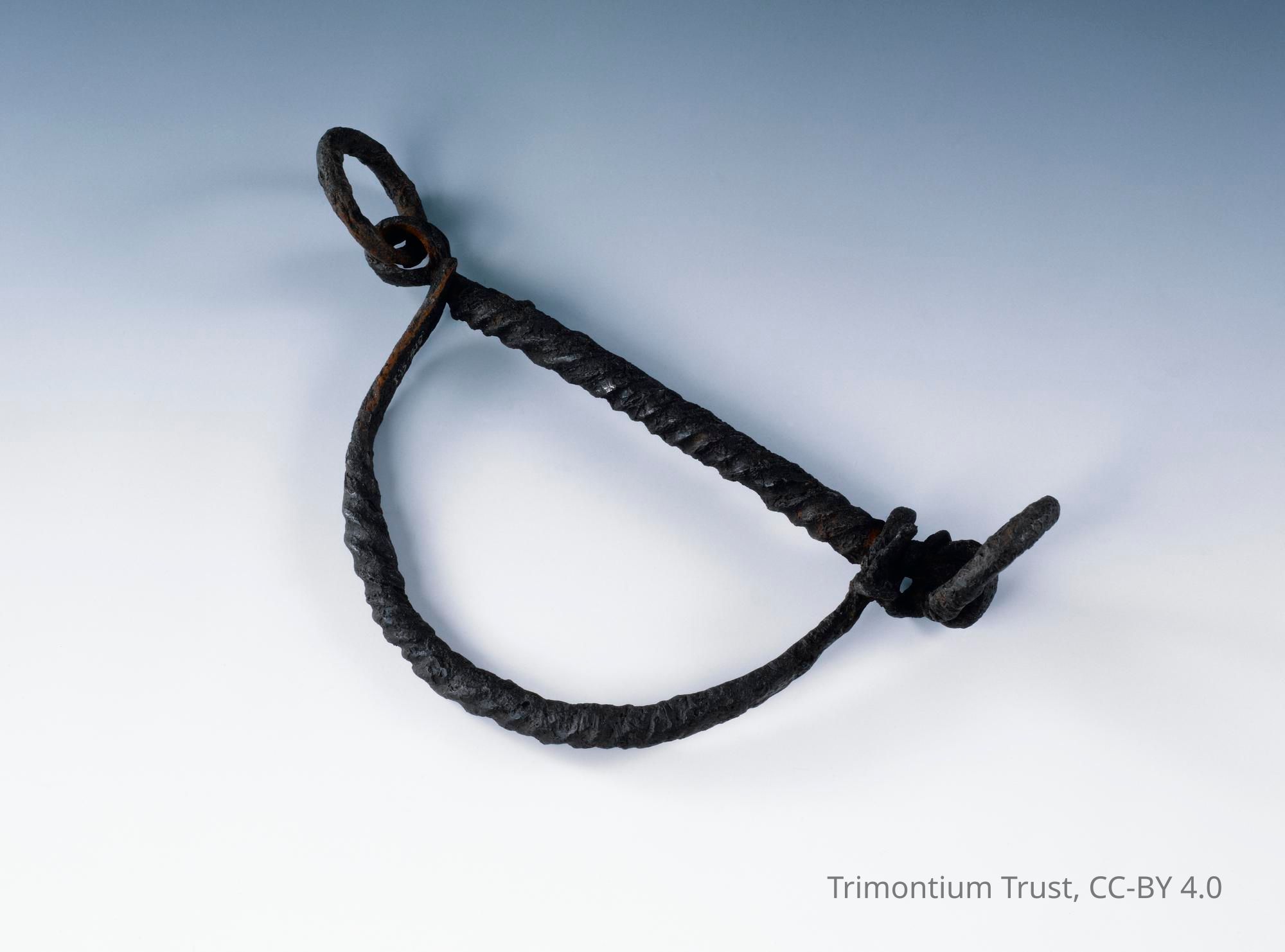
Roman snaffle bit of iron, one of two, from the Roman site at Newstead (Trimontium), 80 - 100 ADContext
Found in pit XXII during the excavation of James Curle.Collection
National Museums ScotlandUse
This was used to help steer the horse with the help of the harness.
"The bridle bit is unusually well preserved. It is a type known as a snaffle bit. It fitted in a horse's mouth and reins were attached to the rings.
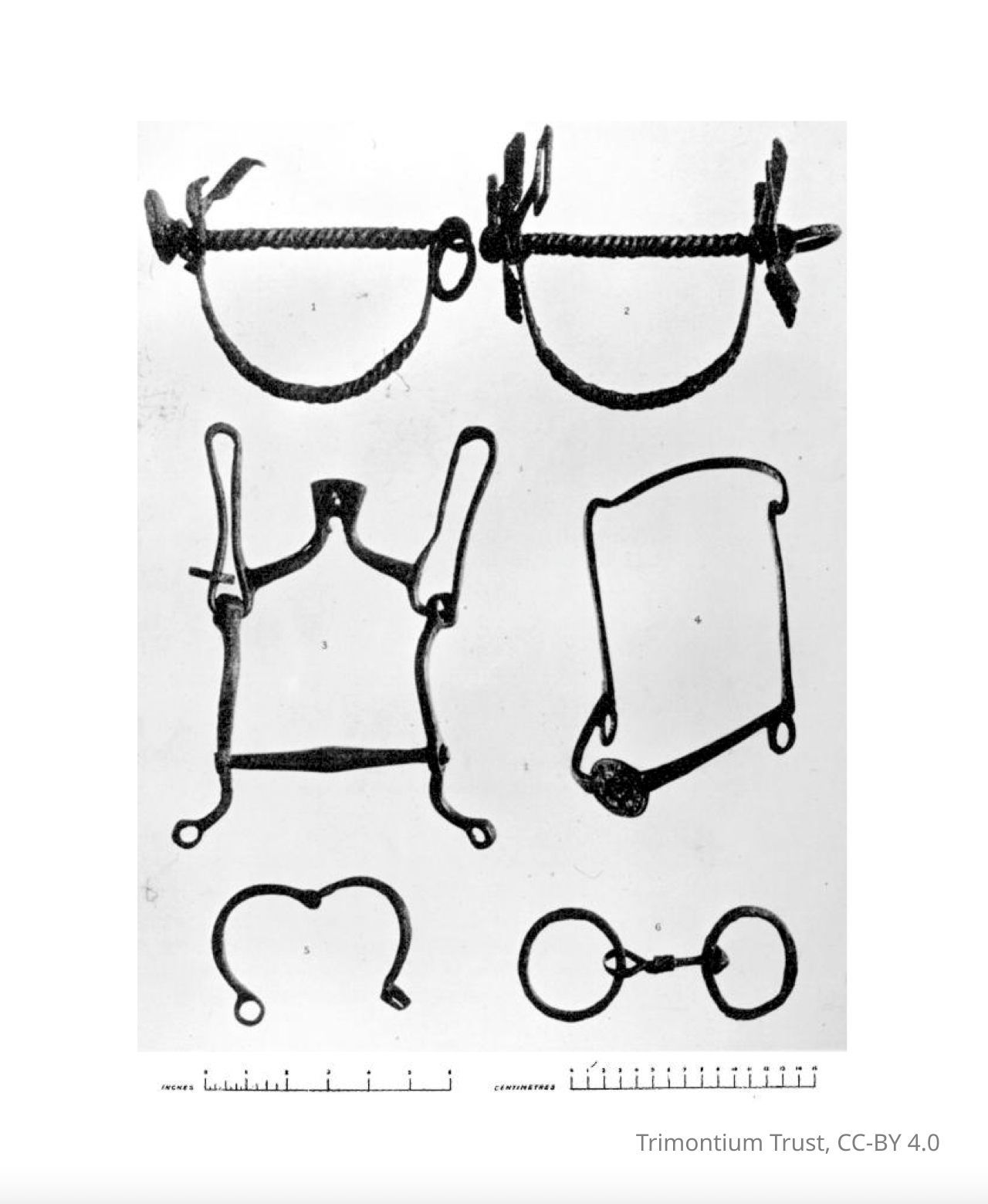
The Romans used several types of horse bits. Some were used for riding, some for pulling carts and wagons, while some others could serve both purposes." - From NMS Scran
Category
Horse Equipment, Cavalry Equipment
Acquisition
Accession
X.FRA 496.1Source (if not Accessioned)
National Museums ScotlandMade/Created
Date made
80 - 100Time Period
Late 1st centuryEthnography
Cultural Region
Continent
EuropeCulture/Tribe
Romano British, Roman
Lexicon
Nomenclature 4.0
Nomenclature Secondary Object Term
Bit, BridleNomenclature Primary Object Term
Tack, AnimalNomenclature Sub-Class
Land Transportation AccessoriesNomenclature Class
Land Transportation T&ENomenclature Category
Category 07: Distribution & Transportation ObjectsGetty AAT
Concept
bits (animal work equipment), bridles (animal work equiment)Other Names and Numbers
Other Numbers
Number Type
Previous Accession NumberOther Number
I.15.419Materials
Iron
Colors
Black, Brown