Coin Mould
©National Museums Scotland. Digitised from a positive on film by The Trimontium Trust
Overview
Description
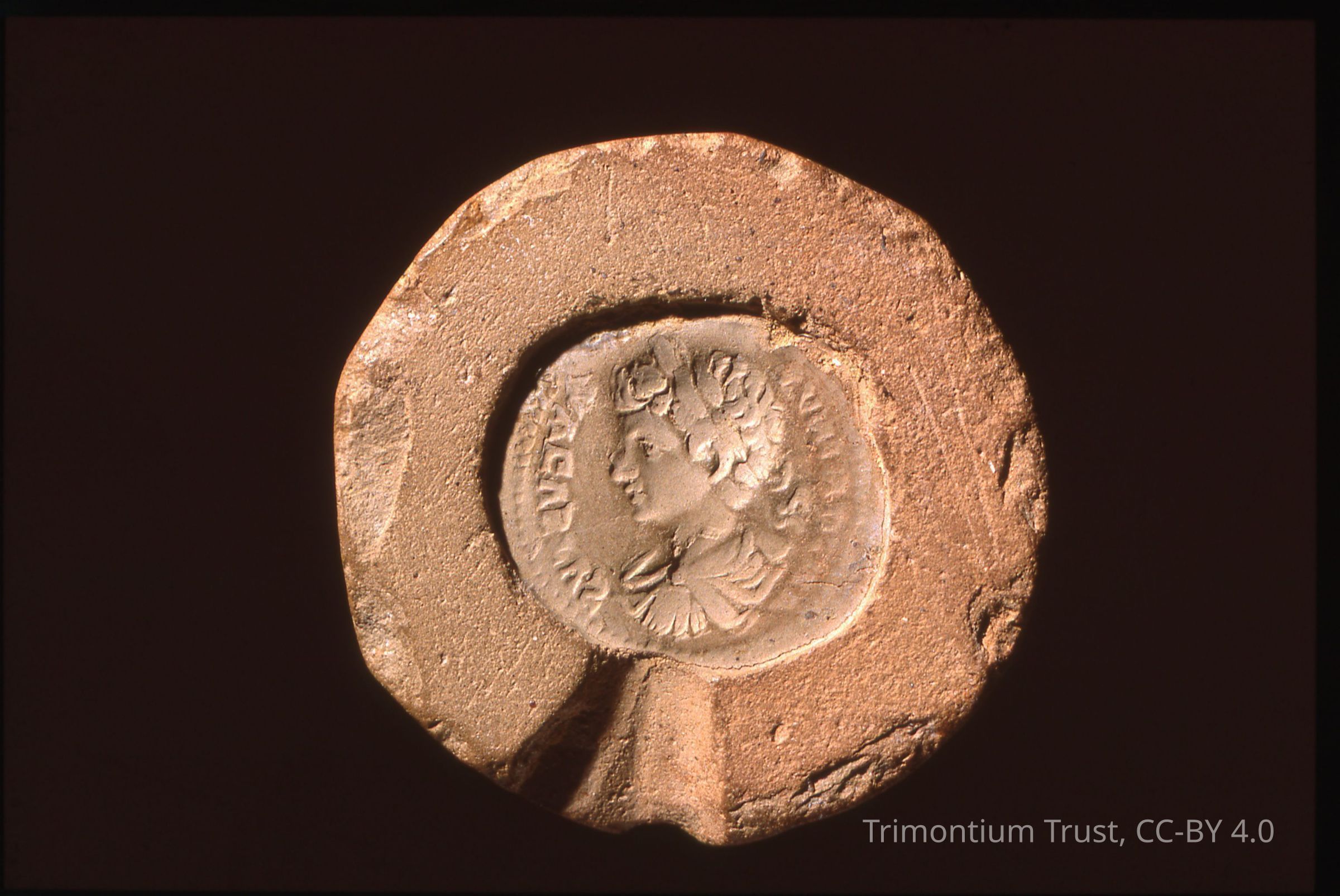
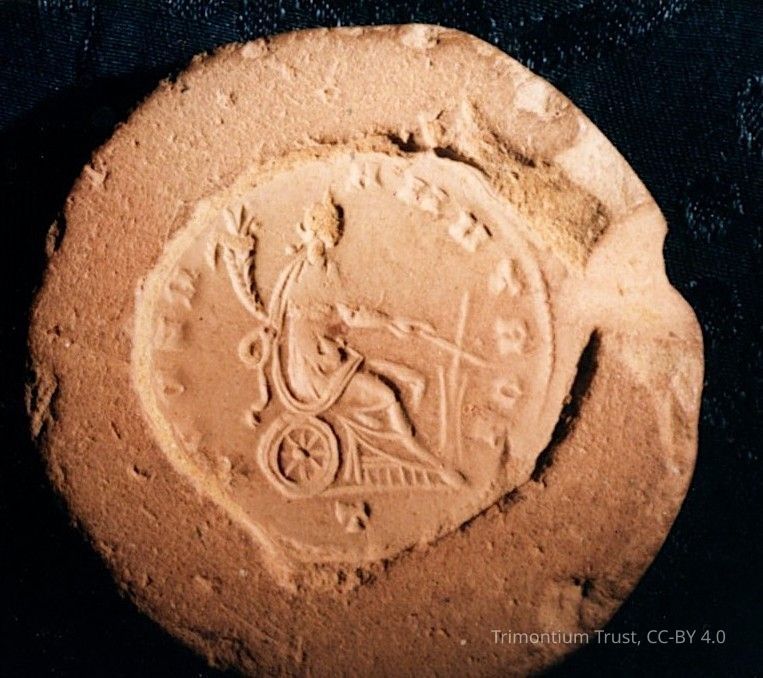
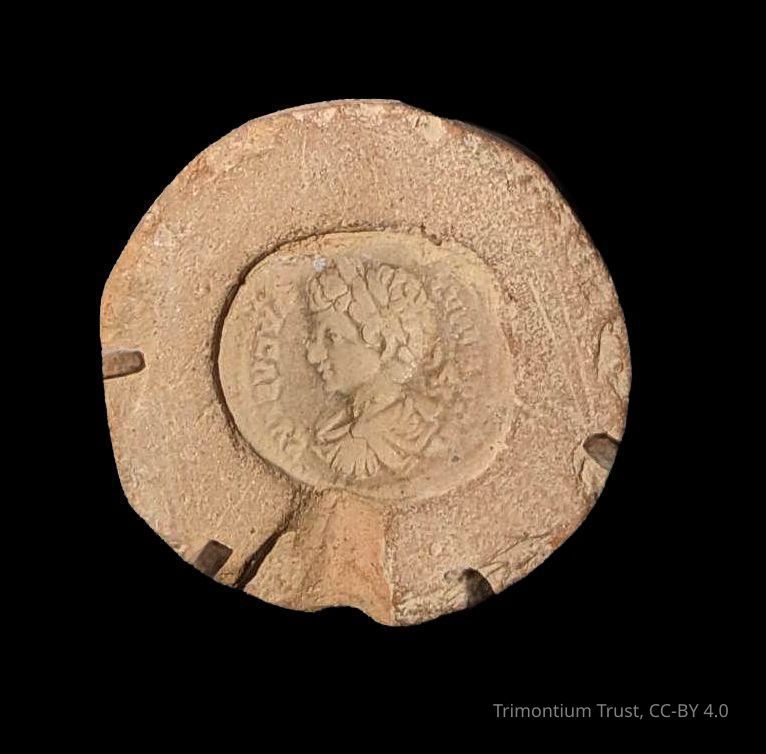
Counterfeit coin mould for a denarius of Caracalla c. AD199 on one side, place back to back with the reverse of an antoninianus of Aurelian minted 70 - 75 years later at Milan c. AD270 - 5. Found at Trimontium in 1940. ANTONINVS AVGVSTVS; laureate draped cuirassed bust to right. FORTVNA REDVX; Fortuna seated to right, holding rudder and cornucopiae; wheel beneath seat; T in exergue. An obverse impression from a denarius of Caracalla placed back to back with the reverse of an antoninianus of Aurelian, minted at Milan during the period AD270–5. There are chips at the entry hole from opening of the mould.Context
Hot, liquid metal would have been poured into the mould, and then once cooled and solidified, the metal would be extracted from the mould to make the coin. Found on the site of Trimontium around 1940 by Mr Keith Allison, then of Newton St Boswells, who subsequently took it to Australia. After reading about the Trimontium Trust in a magazine, he donated the mould to the Trust in 1998.Collection
Trimontium TrustUse
This mould would have been used to make counterfeit Roman coins.
Category
Coin mould
Numismatics
Acquisition
Accession
TT0279Made/Created
Time Period
3rd centuryEthnography
Cultural Region
Continent
EuropeCulture/Tribe
Romano British
Lexicon
Nomenclature 4.0
Nomenclature Primary Object Term
Mold, CastingNomenclature Class
Metalworking T&ENomenclature Category
Category 04: Tools & Equipment for MaterialsGetty AAT
Concept
casting moldsDimensions
Diameter
33 mmMaterials
Ceramic
Colors
Orange
Condition
Overall Condition
GoodProvenance
Provenance Detail
Donated by Mr Keith AllisonOwner/Agent
Mr Keith AllisonAcquisition Method
DonationAcquisition Date
1998Disposition Method
Gift/DonationExhibitions
Permanent Exhibition