Hanging Lamp
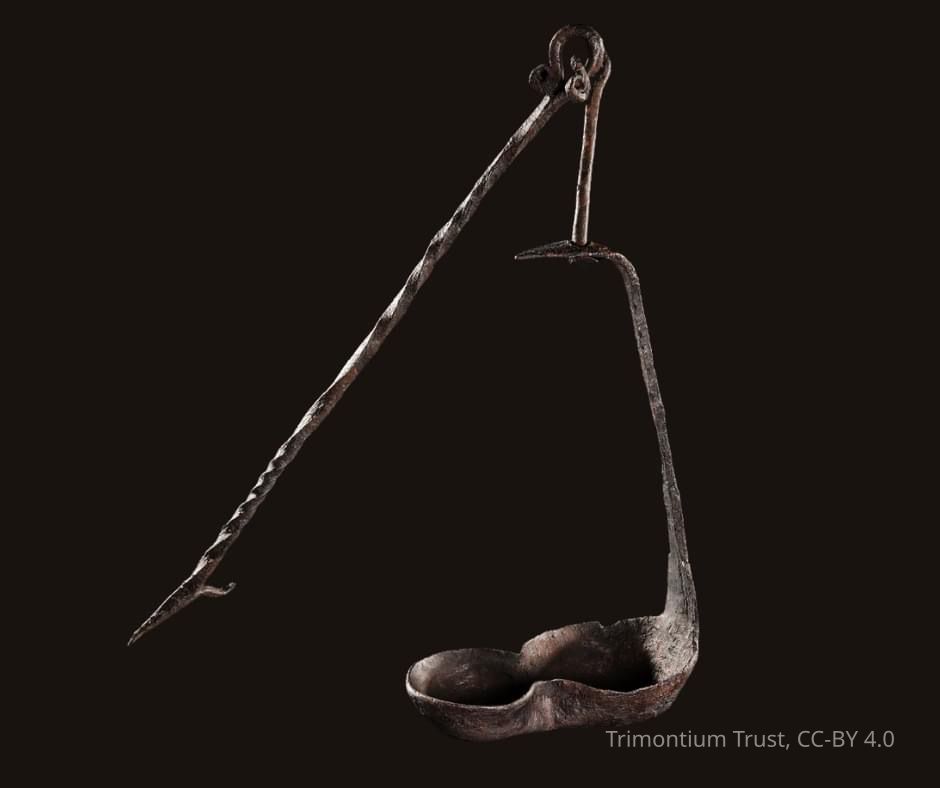
Photo ©National Museums Scotland
Name/Title
Hanging LampEntry/Object ID
L.2021.115Description
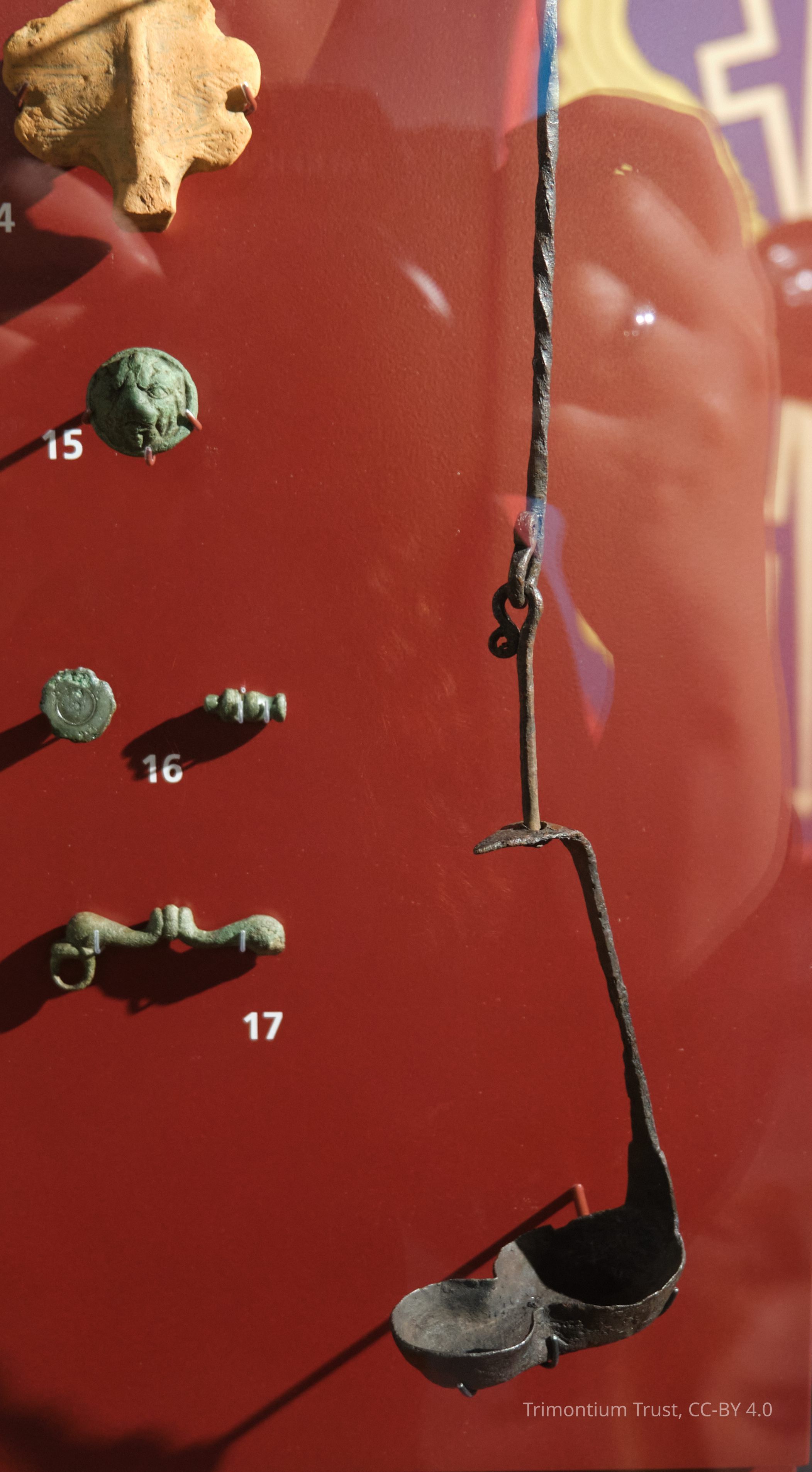
Crusie-type lamp of iron; the single pan is flat bottomed with a straight side, in a figure of eight shape, the front half smaller than the back; the stem is narrow and bent forward almost at right angles near the top; it tapers to a point and is pierced for a suspension loop (a long closed hook terminating in a curl with a stud end) to which is linked a twisted suspension rod terminating in a spike and a returning hook, from the Roman site at Newstead (Trimontium).Use
Used to provide light in the evenings or dark winter daysContext
This iron hanging lamp was found during excavations at the site of the baths in the Roman fort at Newstead in Roxburghshire. It was used sometime between 80 and 180 AD. The shape of the lamp resembles a crusie, a type of lamp which was used in Scotland into the 20th century. It has an iron pan which held oil. The iron stem rises and is attached to a swivel. The long rod attaching to the end of the swivel is broken. The Romans used oil lamps, candles and lanterns to provide lighting inside. Most surviving oil lamps are pottery, although metal examples are also known. Some metal lamps, like this one, were made to be suspended. SCRAN 'when' data: Between 80 and 180 AD.Collection
National Museums ScotlandCategory
Lamp
Lighting
Acquisition
Accession
X.FRA 1108Source (if not Accessioned)
National Museums ScotlandNotes
Loan. Trevor Cowie notes, 26..6.2014: this lamp seems to have been found unregistered in the museum in 1974 and was catalogued as a crusie lamp (H.MGF 29) but it in fact forms part of the Newstead collection (from which it had been recorded as missing for some time); it therefore reverts to its original catalogue number X.FRA 1108. The accession number H.MGF 29 which it had been allocated is now redundant.Made/Created
Time Period
1st - 2nd centuryEthnography
Cultural Region
Continent
EuropeCulture/Tribe
Romano British