Harness, horse / bridle bit, curb
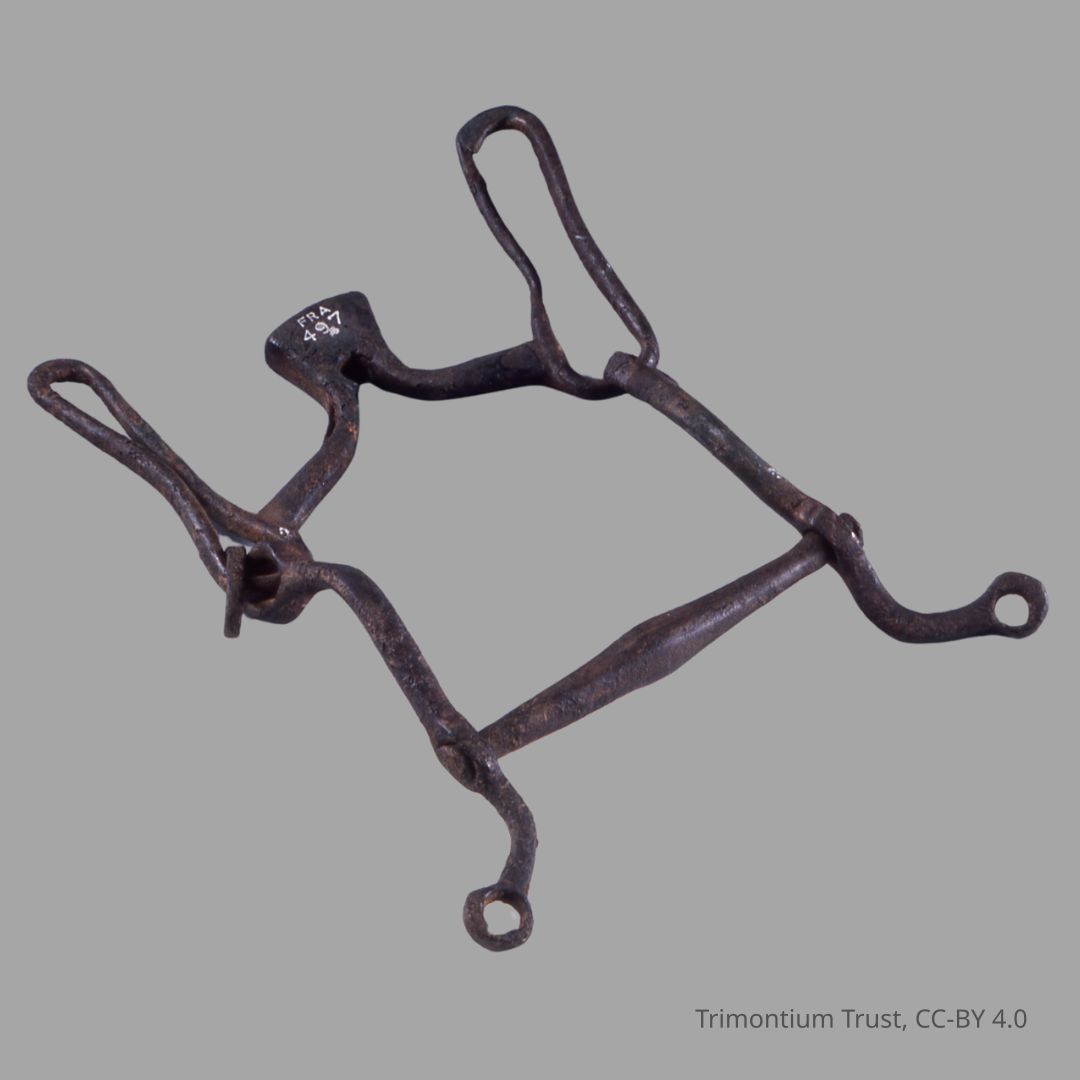
Image edited from an original positive on film by ©National Museums Scotland. Digitised and edited by The Trimontium Trust.
Overview
Description
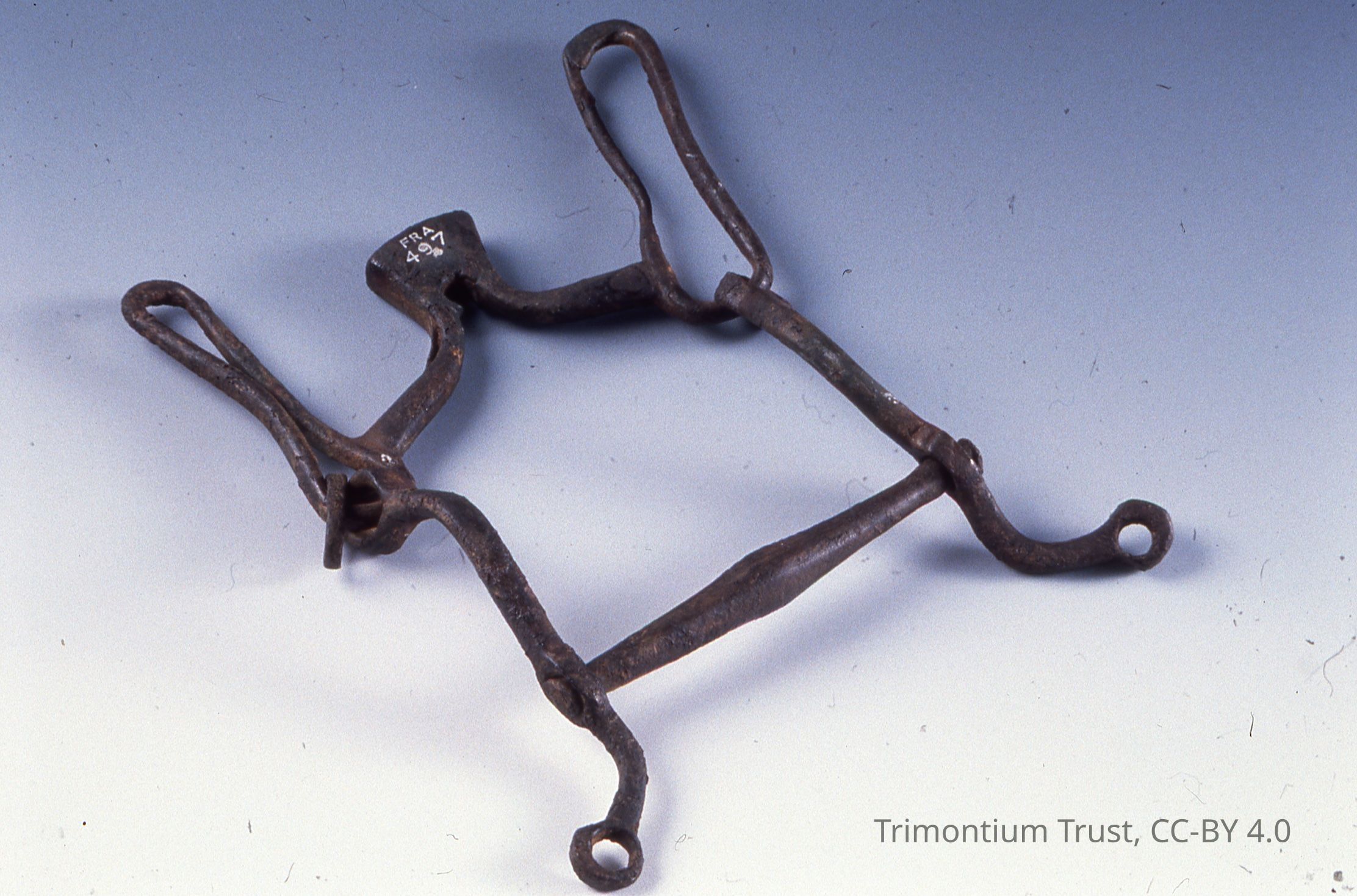
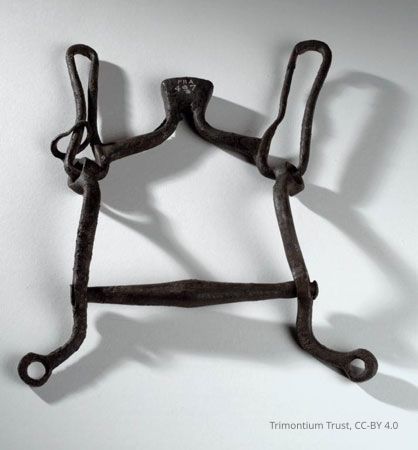
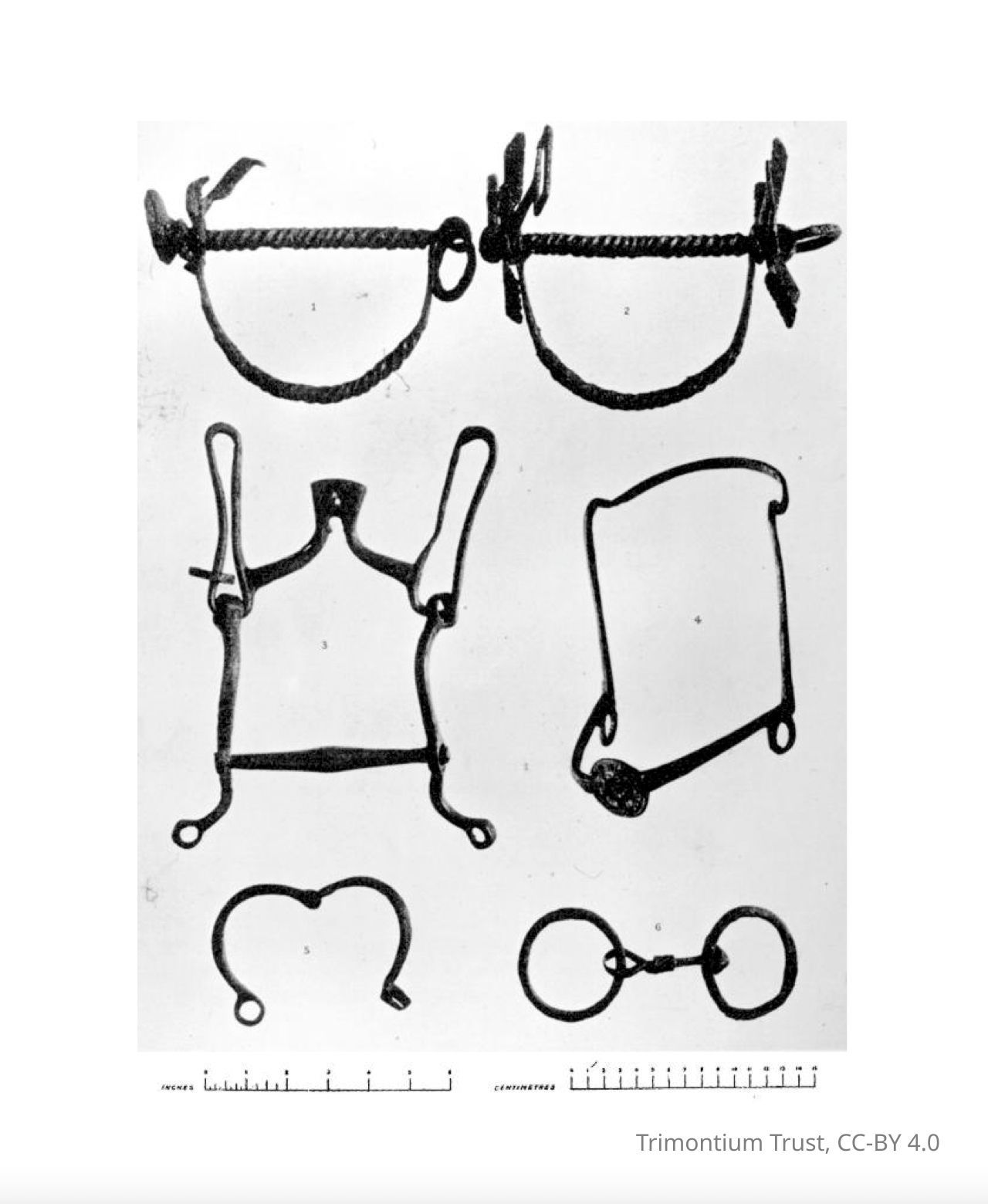
Roman curb bit of iron, from the Roman site at Newstead (Trimontium), 140 - 180 AD. Unusually well preserved. A type known as a curb bit: the projecting bar fits in the horse's mouth while the straight bar fits under its chin. The reins attach to the loops at the side.Context
Trimontium had a large cavalry presence, and the cavalry was the longest standing military force at the fort. Numerous pieces of horse-related items have been found at the fort. Horses would have been used for military purposes as well as for transportation and for working.Collection
National Museums ScotlandUse
A bridle bit is used to control a horse.
The Romans used several types of horse bits. Some were used for riding, some for pulling carts and wagons, while some others could serve both purposes.
Category
Horse Harness Equipment, Horse Equipment
Acquisition
Accession
X.FRA 497Source (if not Accessioned)
National Museums ScotlandMade/Created
Date made
140 - 180Time Period
2nd centuryEthnography
Cultural Region
Continent
EuropeCulture/Tribe
Romano British, Roman
Lexicon
Nomenclature 4.0
Nomenclature Tertiary Object Term
Harness, HorseNomenclature Secondary Object Term
Harness, AnimalNomenclature Primary Object Term
Tack, AnimalNomenclature Sub-Class
Land Transportation AccessoriesNomenclature Class
Land Transportation T&ENomenclature Category
Category 07: Distribution & Transportation ObjectsGetty AAT
Concept
harness hardware, bridles (animal work equiment)Other Names and Numbers
Other Numbers
Number Type
Previous Accession NumberOther Number
I.15.421Materials
Iron
Colors
Brown, Black