Lorica Segmentata Fittings
Overview
Description
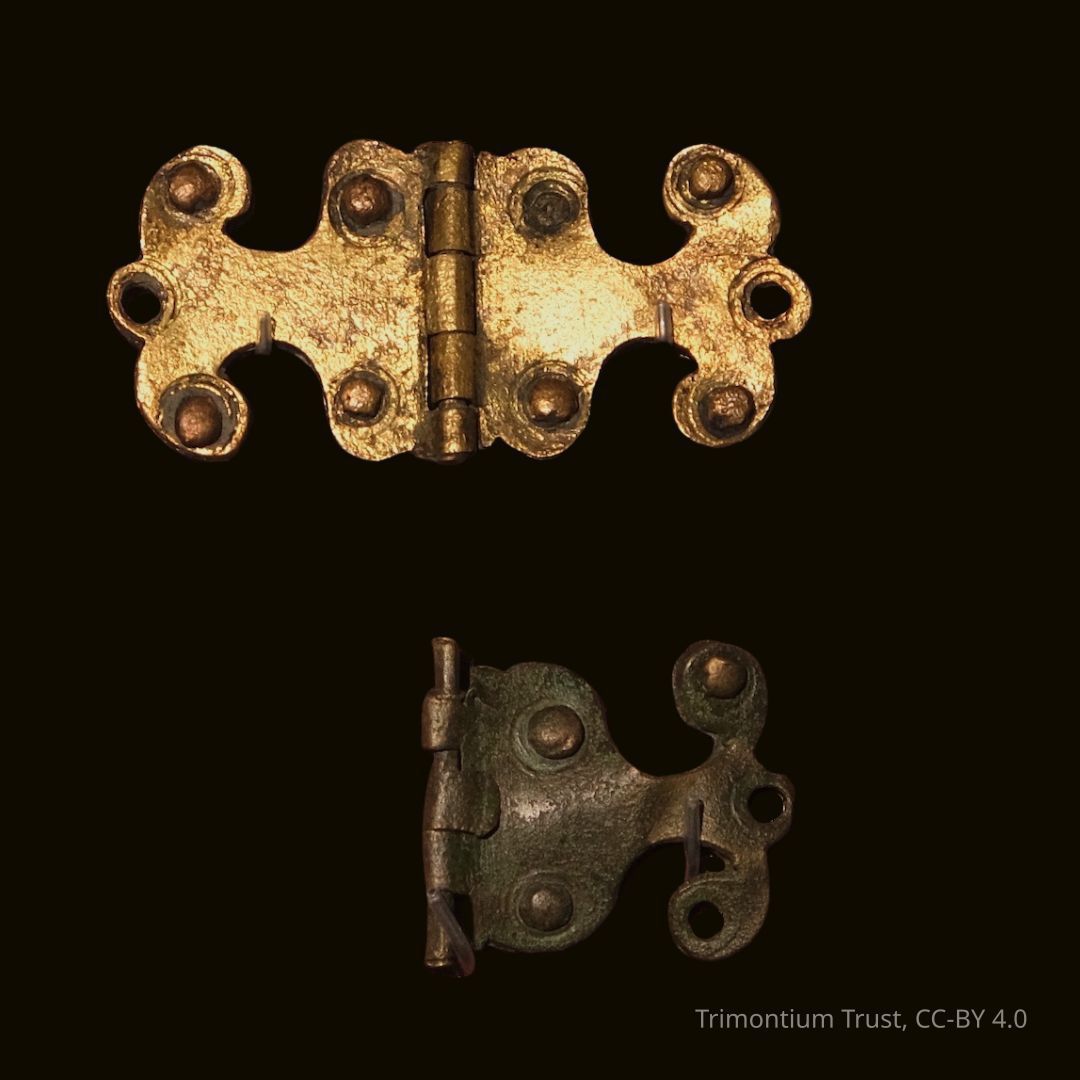
Two Lorica segmentata lobate armour fittings. Lorica segmentata armour, also known as a segmental cuirass, designed to move with the body, consisted of overlapping metal strips covering the soldier's shoulders and torso, that were held together by buckles, hinges and leather straps.Context
The presence of the hinges allows further dating for the armour found. There are three notable stages of the style, composition, and usage of the hinges that have been used over the course of the history of the Romans. This particular style was popular during the late 1st century CE.Collection
HvGUse
These hinges would have been used on armour to help secure the armour in place, as well as help to dress and remove the armour.
Category
Armour
Military Dress & Armour
Acquisition
Source (if not Accessioned)
Private CollectionNotes
LoanEthnography
Cultural Region
Continent
EuropeCulture/Tribe
Romano Germanic
Lexicon
Nomenclature 4.0
Nomenclature Secondary Object Term
Hinge, StrapNomenclature Primary Object Term
HingeNomenclature Sub-Class
Finish HardwareNomenclature Class
Building ComponentsNomenclature Category
Category 01: Built Environment ObjectsGetty AAT
Concept
armor (protective wear)Materials
Bronze, Brass
Colors
Brown, Gold
Condition
Overall Condition
GoodProvenance
Notes
From a Rhine river deposit in Mainz 1971Exhibitions
Permanent Exhibition