Pioneer's Pickaxe
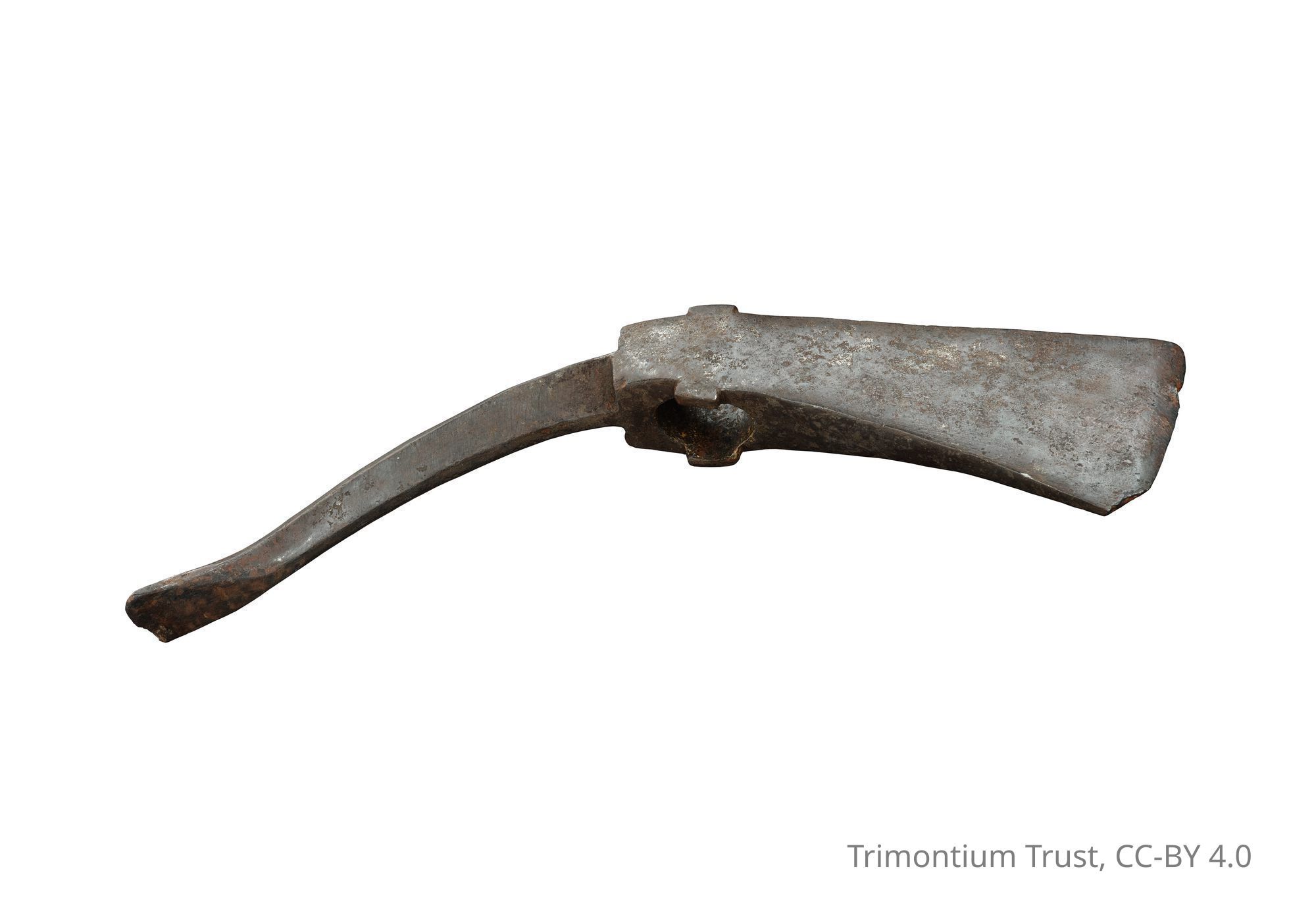
Image © National Museums Scotland
Overview
Description
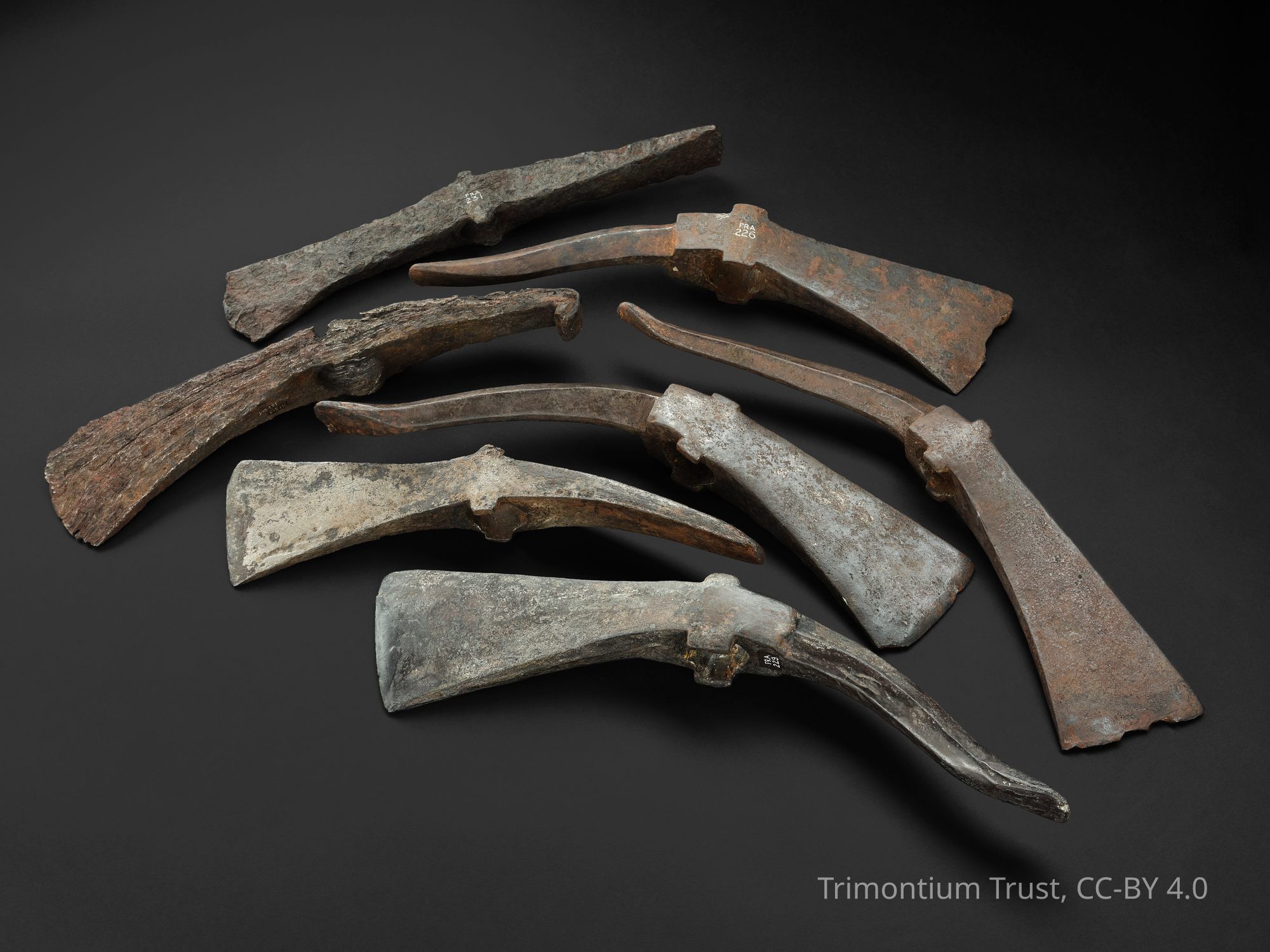
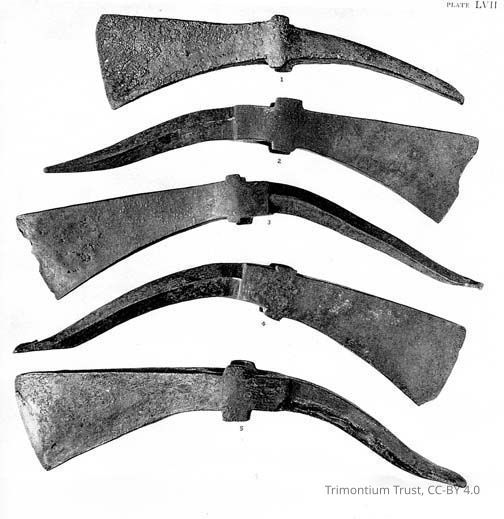
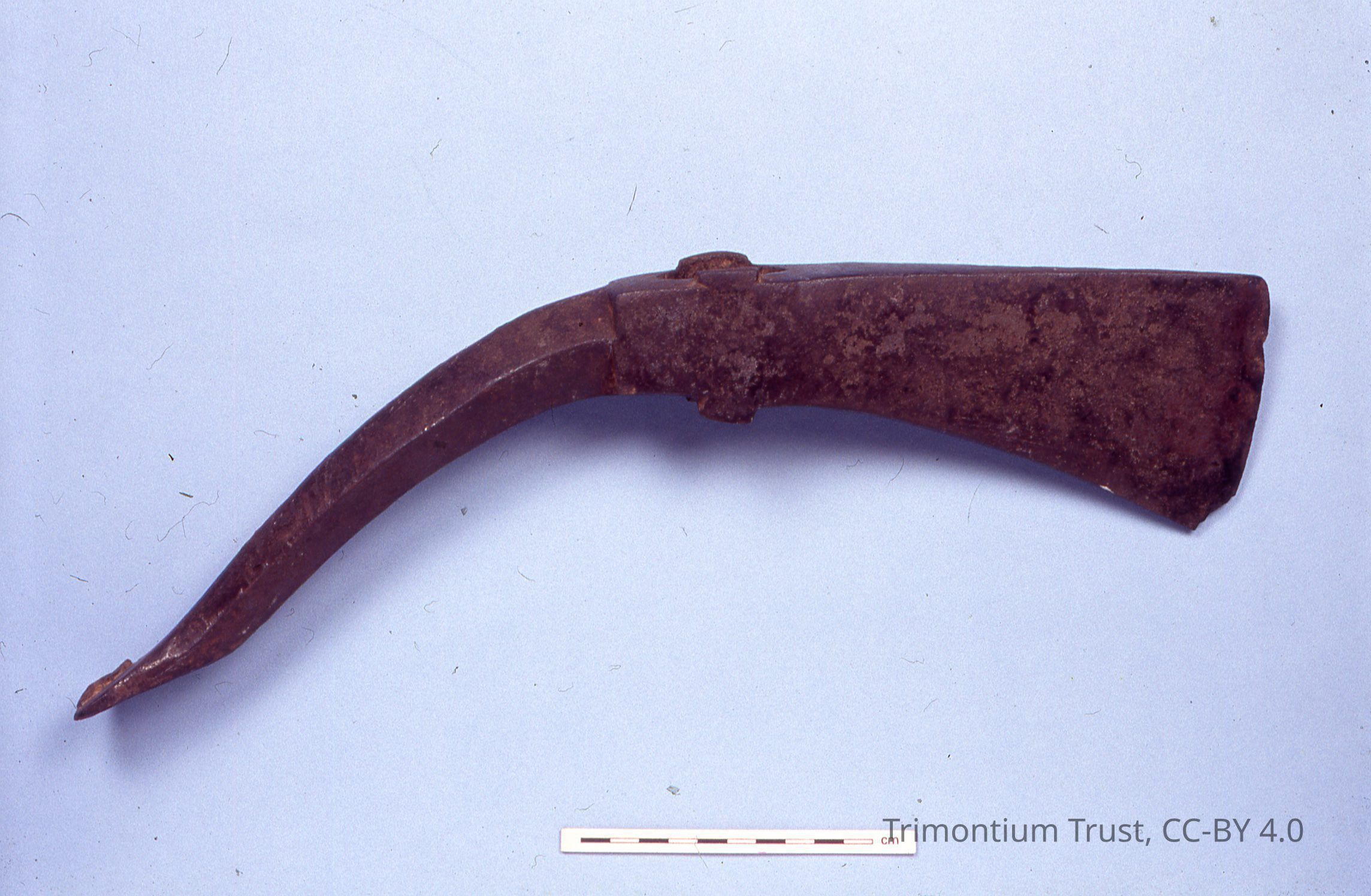
Pioneer's pickaxe or dolabra of iron. It has a broad blade at one end, narrowing to a curved pick at the other end. It has a central hold for the shaft, from the Roman site at Newstead (Trimontium), Roxburghshire. 80 - 180 AD. A pick axe (Dolabra) is a military ground-breaking or entrenching tool.Context
Part of Newstead Collection. Found in Pit XVI with three others. Updated from SCRAN full data set, December 1998. Roman soldiers were builders as well as fighters. On the march, they built temporary ramparts and ditches around their camps. Once an area had been conquered, the army built forts and permanent barracks of wood or stone. Numerous pickaxes were found at Trimontium.Collection
National Museums Scotland, Newstead CollectionUse
Used for digging trenches and cutting timber for temporary camps when out on campaign. It was also used for breaking ground and building Trimontium.
Category
Axe
Tools
Acquisition
Accession
X.FRA 228Source (if not Accessioned)
National Museums ScotlandMade/Created
Date made
80 - 100Time Period
1st - 2nd Century ADEthnography
Cultural Region
Continent
EuropeCulture/Tribe
Roman, Romano British
Lexicon
Nomenclature 4.0
Nomenclature Secondary Object Term
Pick, Double-PointedNomenclature Primary Object Term
Pick, MiningNomenclature Primary Object Term
AxNomenclature Class
Mining & Mineral Harvesting T&ENomenclature Class
Woodworking T&ENomenclature Category
Category 04: Tools & Equipment for MaterialsGetty AAT
Concept
pickaxesOther Names and Numbers
Name Type
Previous Accesssion NumberOther Name
I 15-129Dimensions
Weight
5 lbMaterials
Iron
Colors
Brown, Gray