Pin
Overview
Description
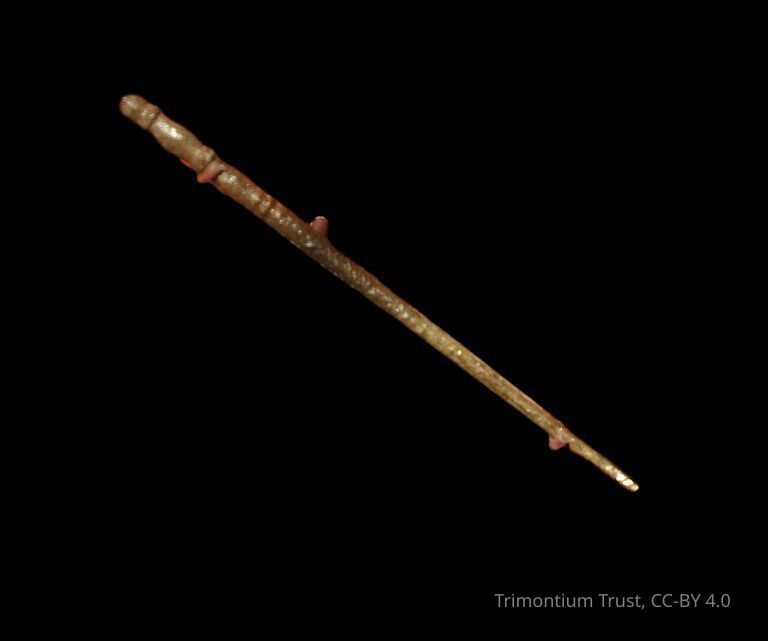
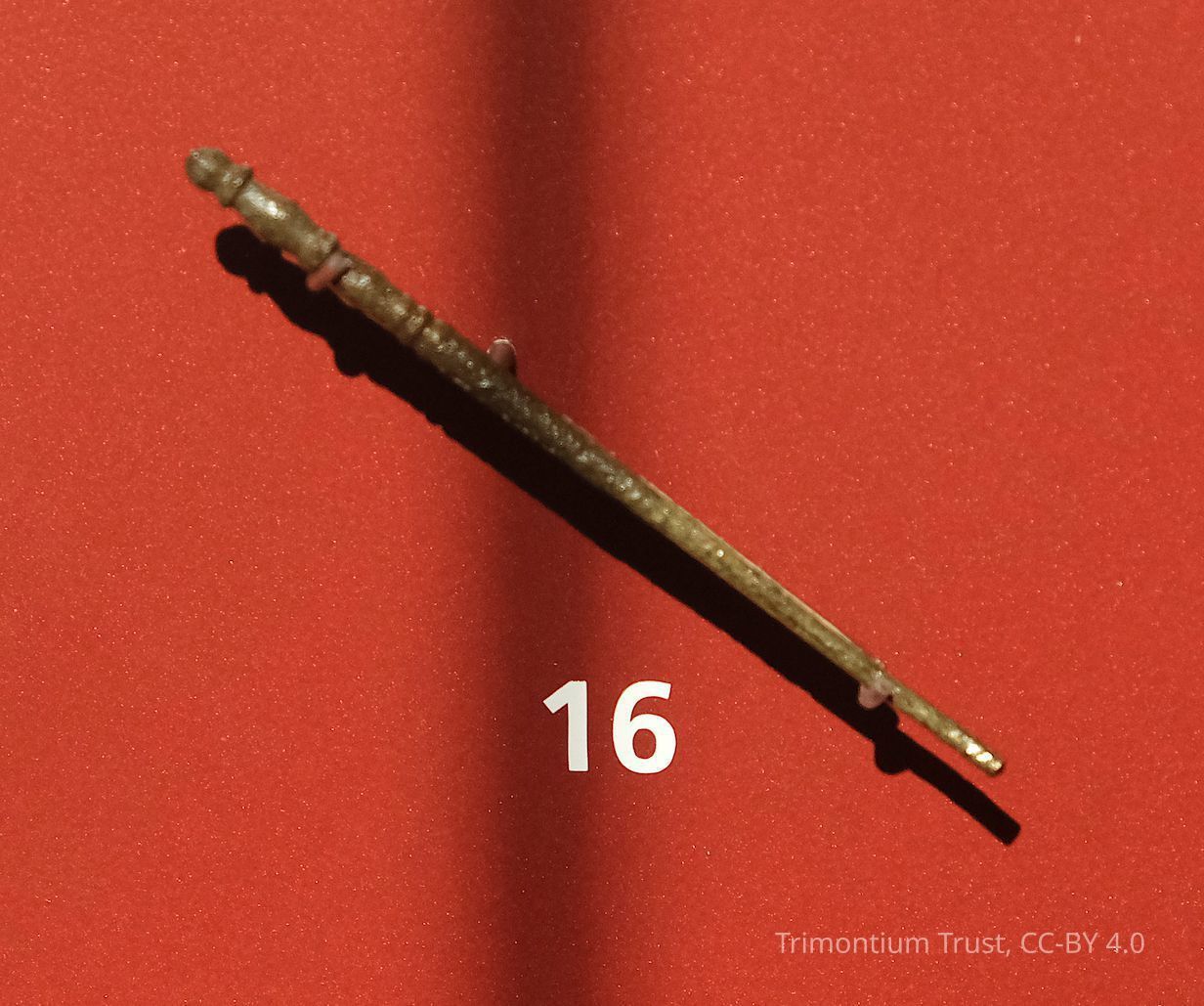
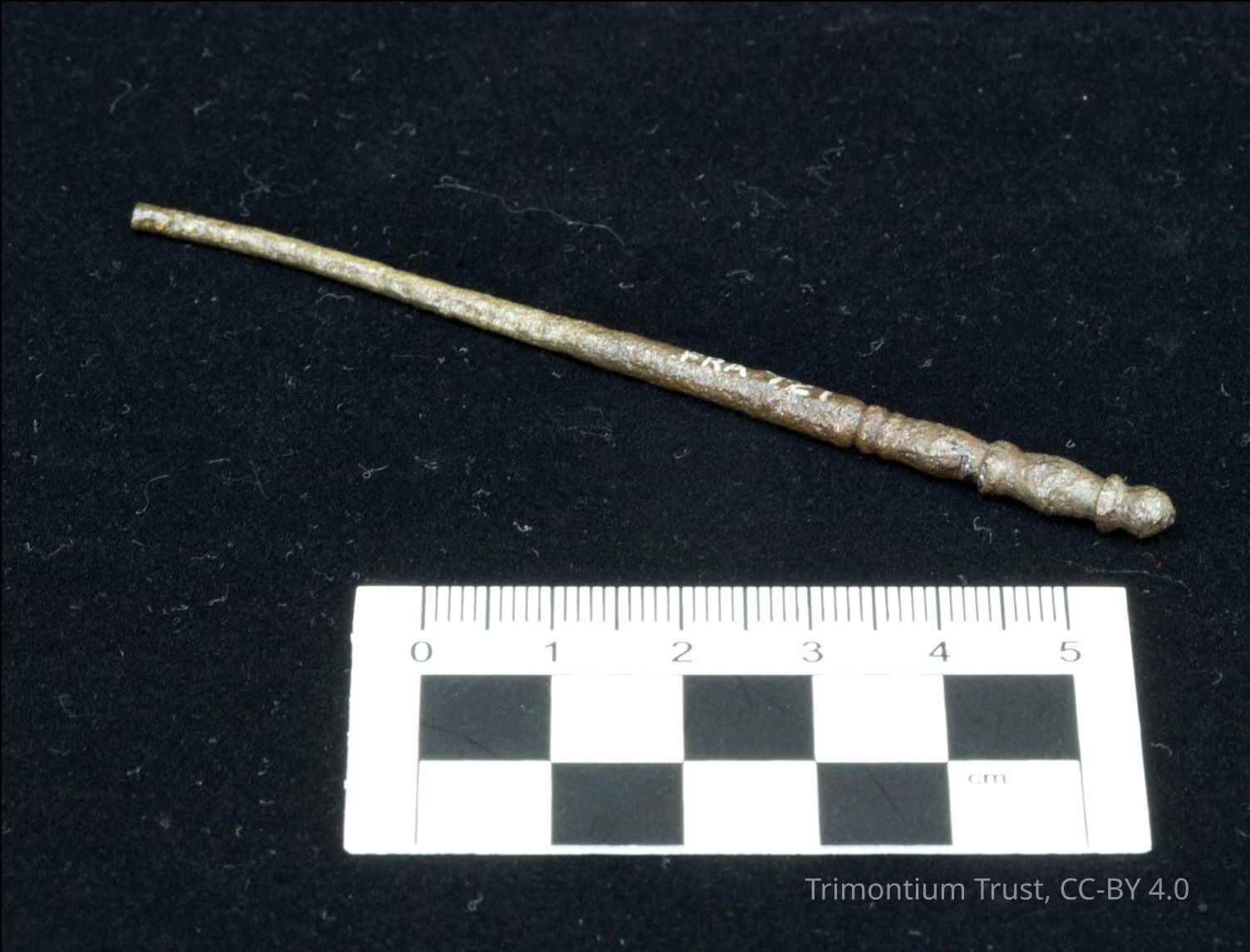
Pin of bronze with baluster head and mouldings on its upper part, from the Roman site at Newstead, Roxburghshire, 80-180 ADContext
One of several pins found during James Curle's excavations. Found near the Baths at Trimontium.Collection
National Museums ScotlandUse
Accessory likely used to tie back and style hair or to fasten clothing.
Roman pins were used primarily for hair and dress. They are found in a wide variety of materials. They often feature some type of decoration ranging from simple designs to having highly decorative heads.
Category
Pin
Jewellery
Acquisition
Accession
X.FRA 721Source (if not Accessioned)
National Museums ScotlandNotes
LoanMade/Created
Time Period
1st - 2nd Century ADEthnography
Cultural Region
Continent
EuropeCulture/Tribe
Romano British
Lexicon
Nomenclature 4.0
Nomenclature Secondary Object Term
HairpinNomenclature Primary Object Term
Ornament, HairNomenclature Sub-Class
Hair AdornmentsNomenclature Class
AdornmentNomenclature Category
Category 03: Personal ObjectsOther Names and Numbers
Other Numbers
Number Type
Previous Accession NumberOther Number
III.15.94Dimensions
Length
3-11/16 inMaterials
Bronze
Colors
Brown, Green
Condition
Overall Condition
GoodExhibitions
Permanent Exhibition