Shoe/Calceus
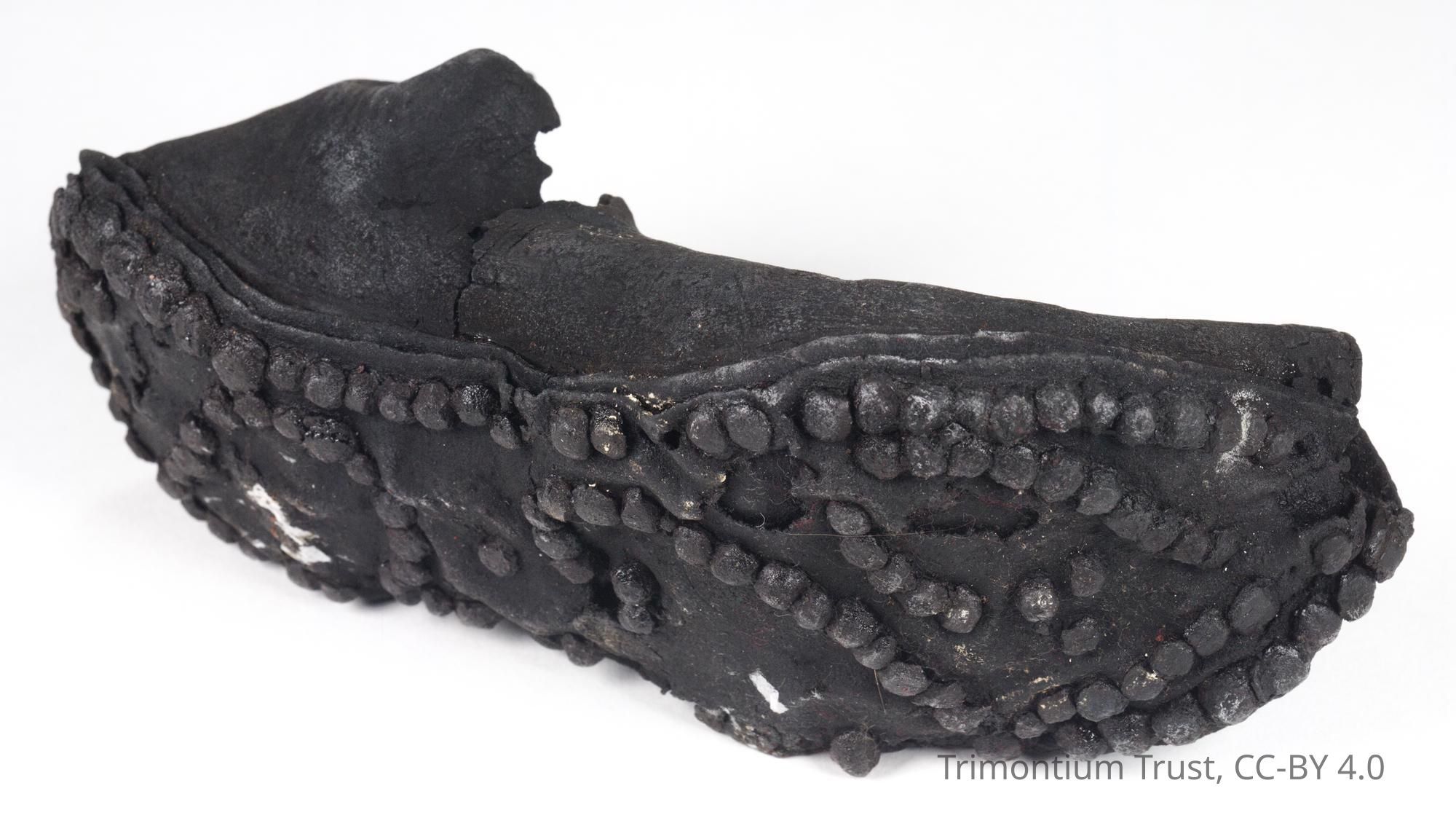
Image © National Museums Scotland
Overview
Description
Roman shoe or calceus of leather, with elaborate hobnail pattern, from the Roman site at Newstead (Trimontium), Roxburghshire. 80-180 AD. A calceus (single), calcei (plural) were closed shoes, protecting and enclosing the wearer’s ankle.Context
Part of Newstead Collection. Shoe with heart-shaped holes for the latchet + a circular tab at the back, nails set in pattern on sole. [National Museums Scotland description] Skins off their backs » Making things from leather » Making shoes » (5) Multi-piece shoe, Newstead. 80 - 180 AD. [Scran caption] This leather shoe with iron hobnails was found during excavations at the site of the Roman fort of Newstead in Roxburghshire. It is a type known as a calceus or caliga, and dates from between 80 and 180 AD. The nails used to attach the soles to the layers have been hammered in an elaborate pattern. On some shoes the patterns appear to be designed to allow comfortable walking. There is a heart-shaped hole for the latchet and a circular tab at the back. The Roman calceus and caliga were made from three pieces of leather - an upper, a sole and an insole - nailed together with hobnails. The caliga, the legionary sandal, had an upper consisting of many thongs. The upper of the calceus was tied by thongs.Collection
National Museums Scotland, Newstead CollectionUse
Used for both fashion and practical purposes. Shoes were used to protect the wearer's feet from the ground and the elements.
Category
Leather
Acquisition
Accession
X.FRA 94Made/Created
Time Period
1st - 2nd Century ADEthnography
Cultural Region
Continent
EuropeCulture/Tribe
Romano British
Lexicon
Nomenclature 4.0
Nomenclature Primary Object Term
ShoeNomenclature Sub-Class
FootwearNomenclature Class
ClothingNomenclature Category
Category 03: Personal ObjectsGetty AAT
Concept
lace-up shoesOther Names and Numbers
Name Type
Previous Accesssion NumberOther Name
XII 14-100Dimensions
Length
25.4 cmRelationships
Related Person or Organization
Person or Organization
James CurleNotes
ExcavatorProvenance
Provenance Detail
1905 - 1911 ExcavationsAcquisition Method
FoundExhibitions
Permanent Exhibition