Shoe/Carbatina
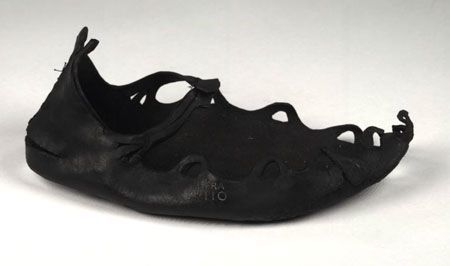
Image © National Museums Scotland
Overview
Description
Roman shoe or carbatina of leather, with two long latchet tabs at the instep, from the Roman site at Newstead (Trimontium), Roxburghshire. 80 - 180 AD. A carbatina (single), carbatinae (plural) were sandals made from a single piece of leather, wrapped and tied to the foot with straps.Context
Part of Newstead Collection. Updated from SCRAN full data set, December 1998. [National Museums Scotland description] Skins off their backs » Using skins » Widespread use of skins » (2) Shoes, Newstead. 80 - 180 AD. [Scran caption] This leather shoe was found during excavations at the site of the Roman fort of Newstead in Roxburghshire. It dates from between 80 and 180 AD, providing evidence of decorated footwear of Roman soldiers. This type of shoe, called by the Romans a carbatina, was cut from one piece of leather, wrapped around the foot and secured with thongs which tied through holes on the sides. A variety of shoes have been found in Roman Britain, included examples where the soles were nailed or stitched to several layers, sandals and one-piece shoes. Surviving where conditions are favourable, they show changing fashions over time.Collection
National Museums Scotland, Newstead CollectionUse
Used for both fashion and practical purposes. Shoes were used to protect the wearer's feet from the ground and the elements.
Category
Shoe, Leather
Clothing
Acquisition
Accession
X.FRA 110Source (if not Accessioned)
National Museums of ScotlandMade/Created
Time Period
1st - 2nd Century ADEthnography
Cultural Region
Continent
EuropeCulture/Tribe
Romano British