Tent Gable Top
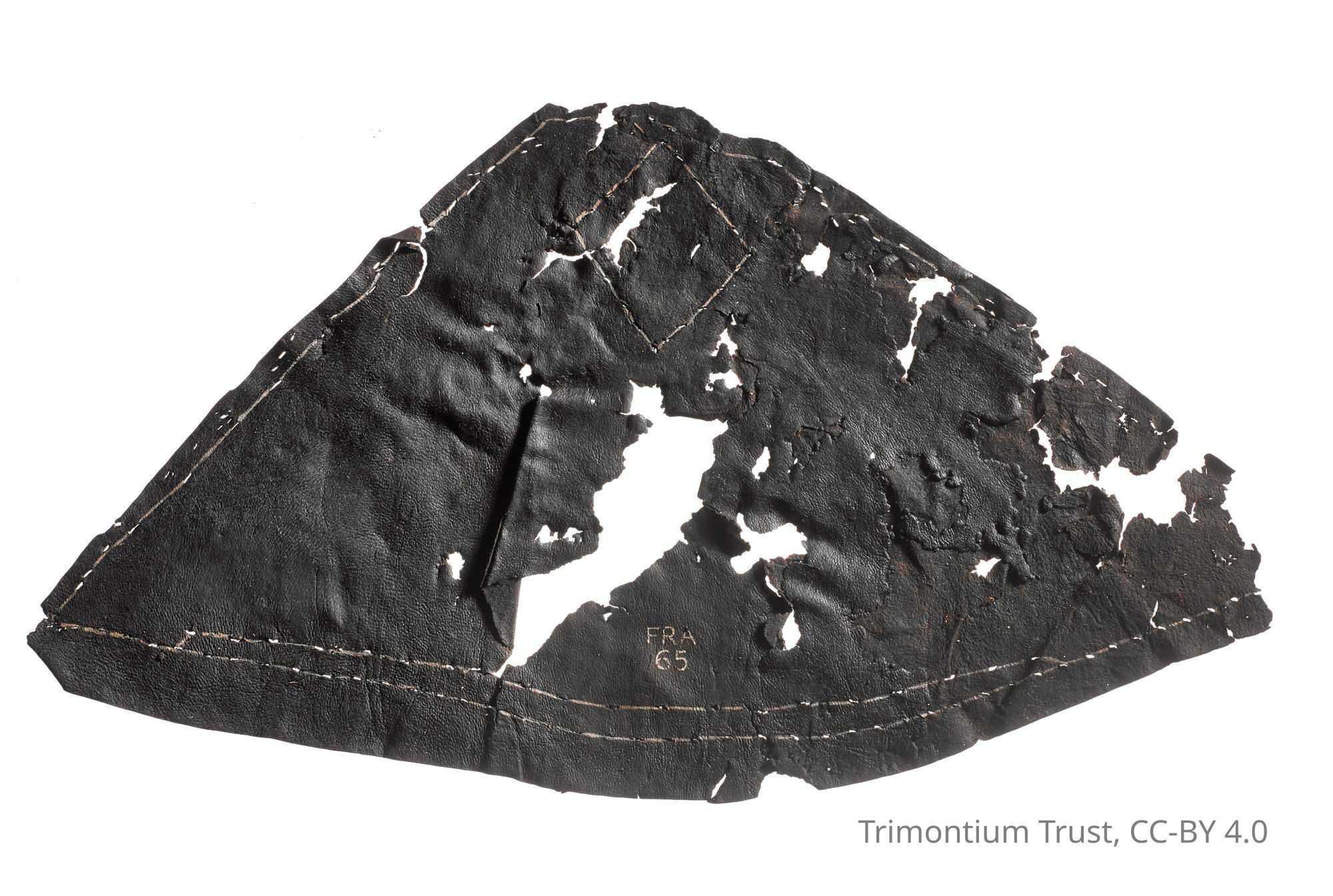
Image © National Museums Scotland
Overview
Description
Leather panel used as a tent gable top, one of two, from the Roman site at Newstead (Trimontium), Roxburghshire. 80 - 180 AD.Context
Part of Newstead Collection. Object similar to XII 14-133 (X.FRA 64) of leather. Grid. Ref: NT57E33N. SD note, July 1999: Edited from SCRAN full data set. TENT GABLE TOPS FROM NEWSTEAD, ROXBURGHSHIRE Ref: X.FRA 64, 65 INTRODUCTION - These two leather panels, used as gable tops for tents, were found during excavations at the site of the Roman fort at Newstead in Roxburghshire. They were used between 80 and 180 AD. DESCRIPTION - Some of the stitch marks survive, as well as marks for patches near the top. BACKGROUND - The Roman army was based in barracks in permanent forts, but on the march soldiers built temporary fortifications each night and slept in leather tents. Many tents were required: men slept eight to a tent, and the army in Scotland was some 15,000 strong.Collection
National Museums Scotland, Newstead CollectionUse
Used at the top of the tent where the three points of the tent poles would meet. It was used as a extra layer of protection against the elements. Tents were used as temporary, and long term accommodation for travelling soldiers and officers.
Category
Leather
Acquisition
Accession
X.FRA 65 AMade/Created
Time Period
1st - 2nd Century ADEthnography
Cultural Region
Continent
EuropeCulture/Tribe
Romano British
Lexicon
Nomenclature 4.0
Nomenclature Primary Object Term
TentNomenclature Sub-Class
Other StructuresNomenclature Class
StructuresNomenclature Category
Category 01: Built Environment ObjectsGetty AAT
Concept
tent roofsOther Names and Numbers
Name Type
Previous Accesssion NumberOther Name
XII 14-134Materials
Leather
Colors
Black, Brown