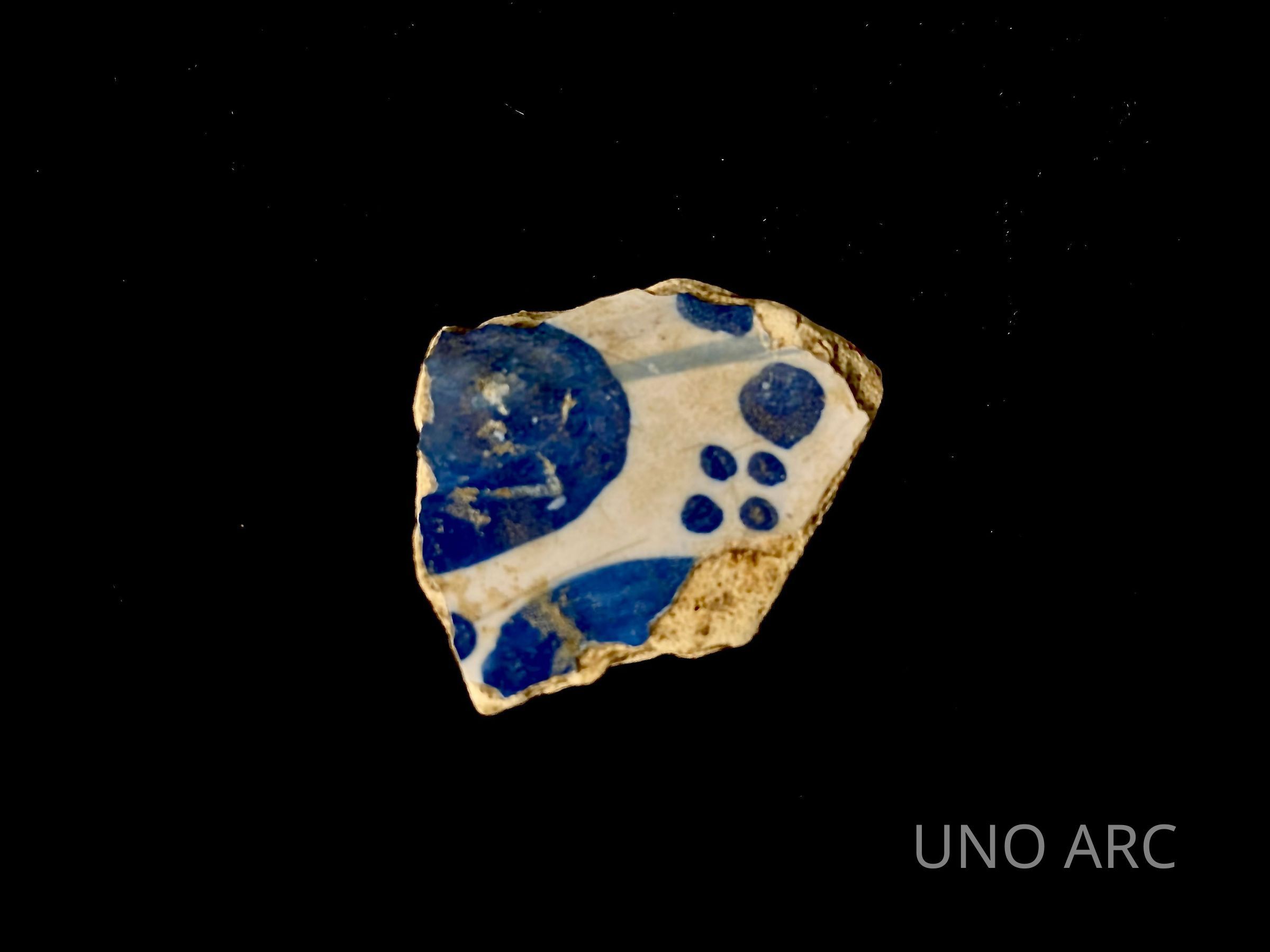
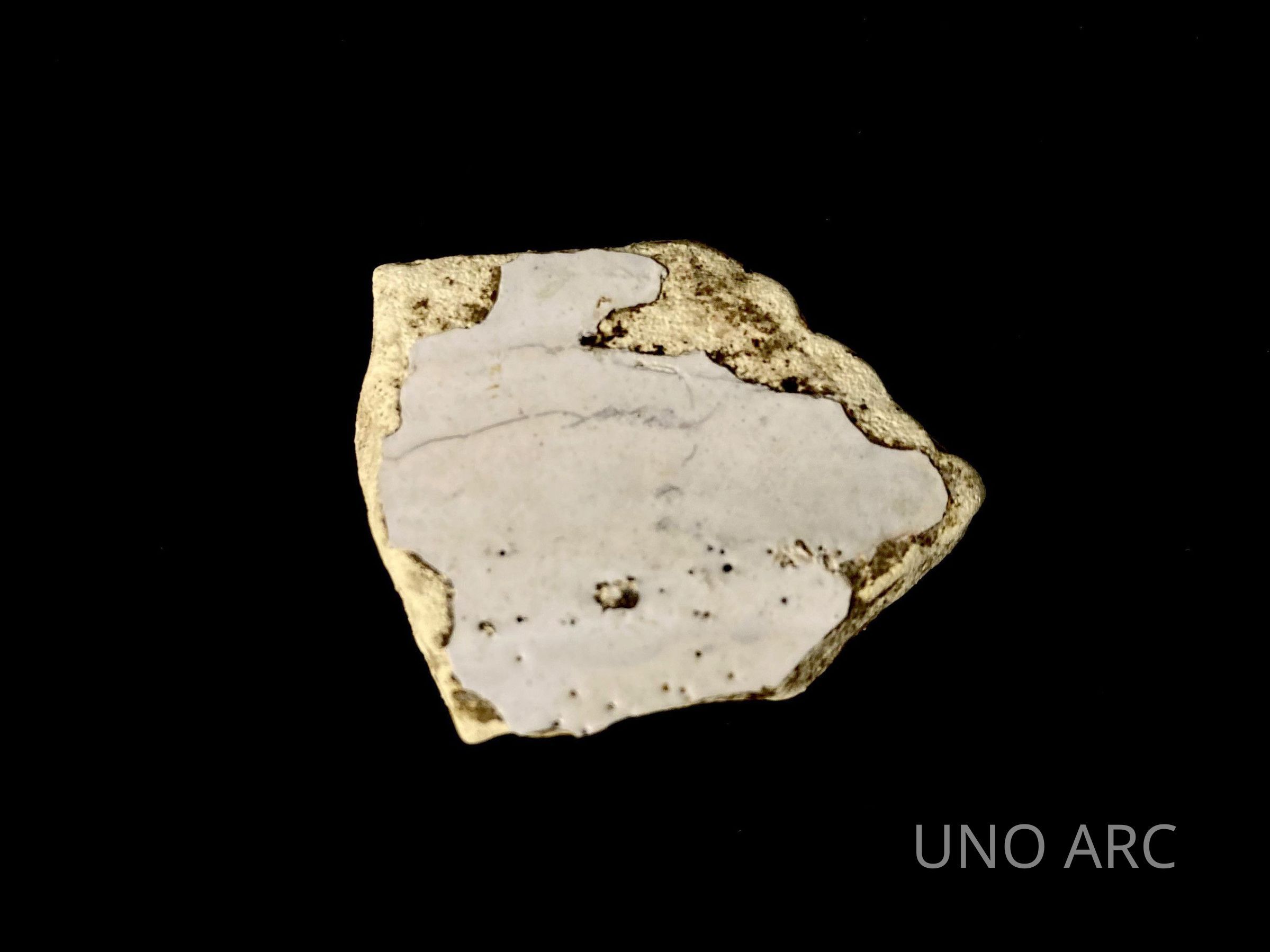
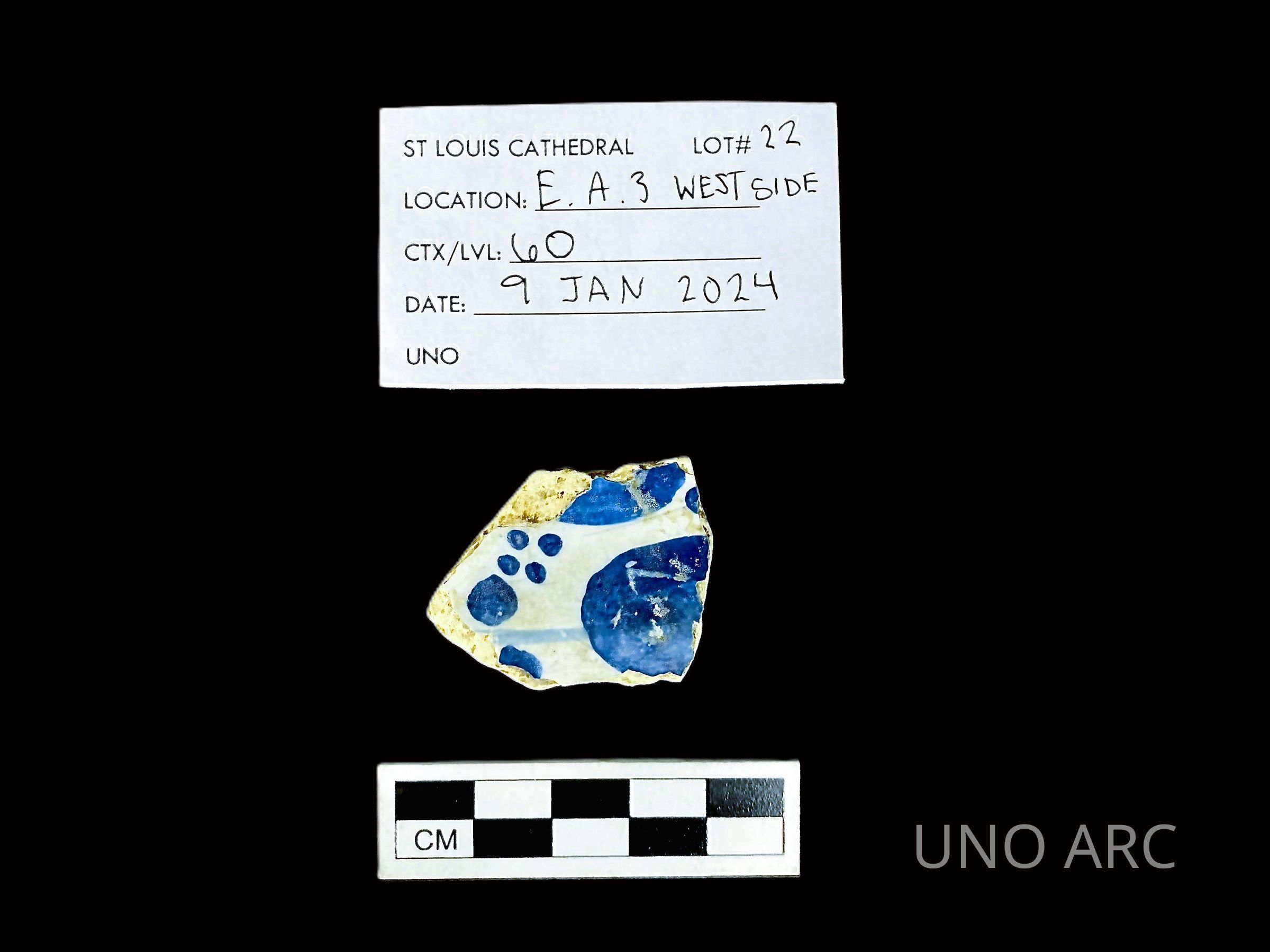
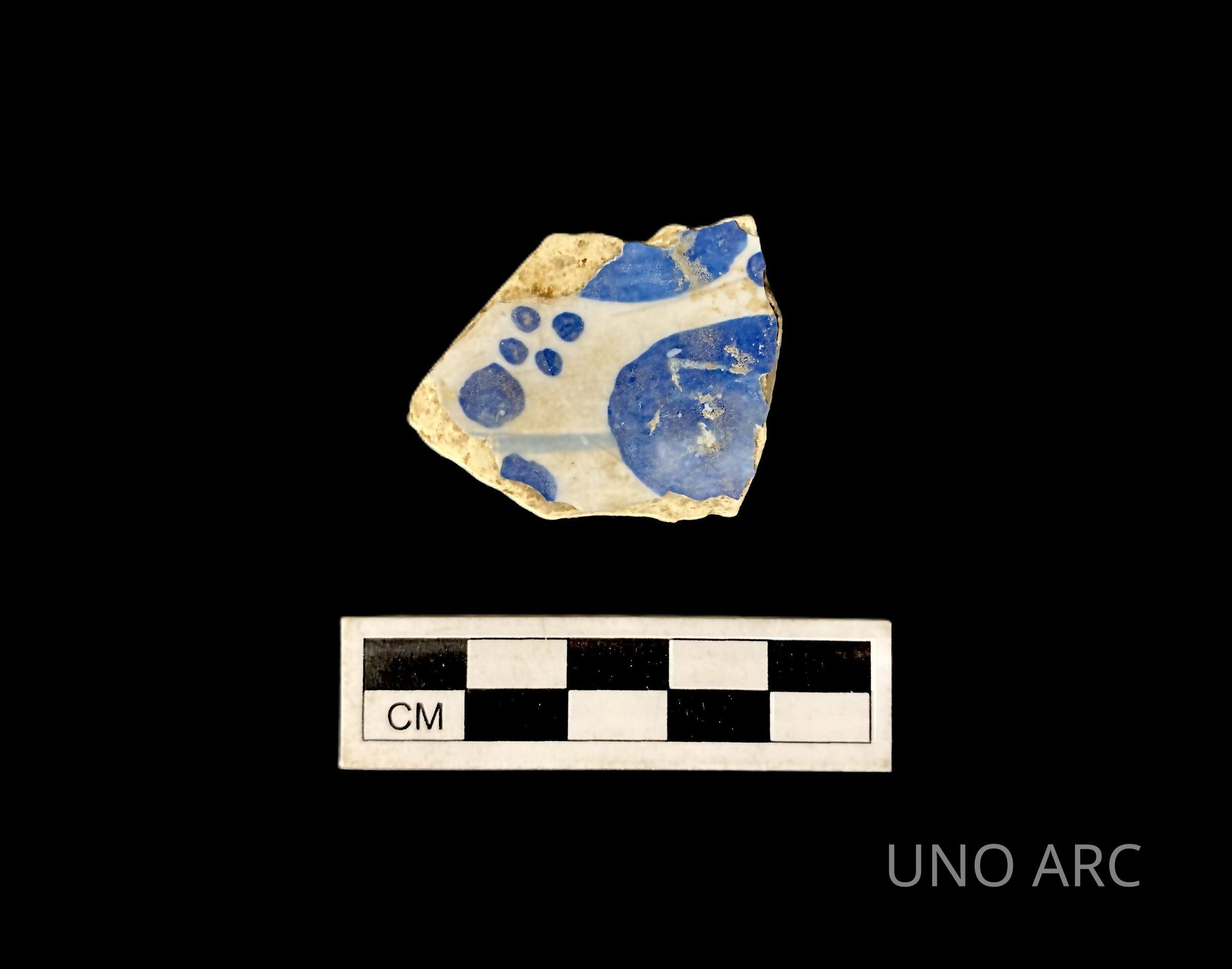
Fragment of hand painted blue and white tin glazed Majolica
Context
St. Louis Cathedral Excavation, Lot 22, Location: EA3 WEST SIDE, CTX/LVL: 60, 9 JAN 2024
Collection
UNO Collections
Cataloged By
James Roth
Category
Ceramics
Research Notes
Person
James Roth
Notes
Tin-glazed pottery is earthenware covered in lead glaze with added tin oxide[1] which is white, shiny and opaque (see tin-glazing for the chemistry); usually this provides a background for brightly painted decoration. The decorated tin-glaze of Renaissance Italy is called maiolica, sometimes pronounced and spelt majolica by English speakers and authors. The word maiolica is thought to have come from the medieval Italian word for Majorca, an island on the route for ships that brought Hispano-Moresque wares to Italy from Valencia in the 15th and 16th centuries, or from the Spanish obra de Mallequa, the term for lustered ware made in Valencia under the influence of Moorish craftsmen from Malaga.
Source: Wikipedia:https://en.wikipedia.org/wiki/Tin-glazed_pottery