Black Na'ani Dress, Thobe al-Na'ani (1930s-1940s)
Name/Title
Black Na'ani Dress, Thobe al-Na'ani (1930s-1940s)Entry/Object ID
2022.021Tags
On ViewDescription
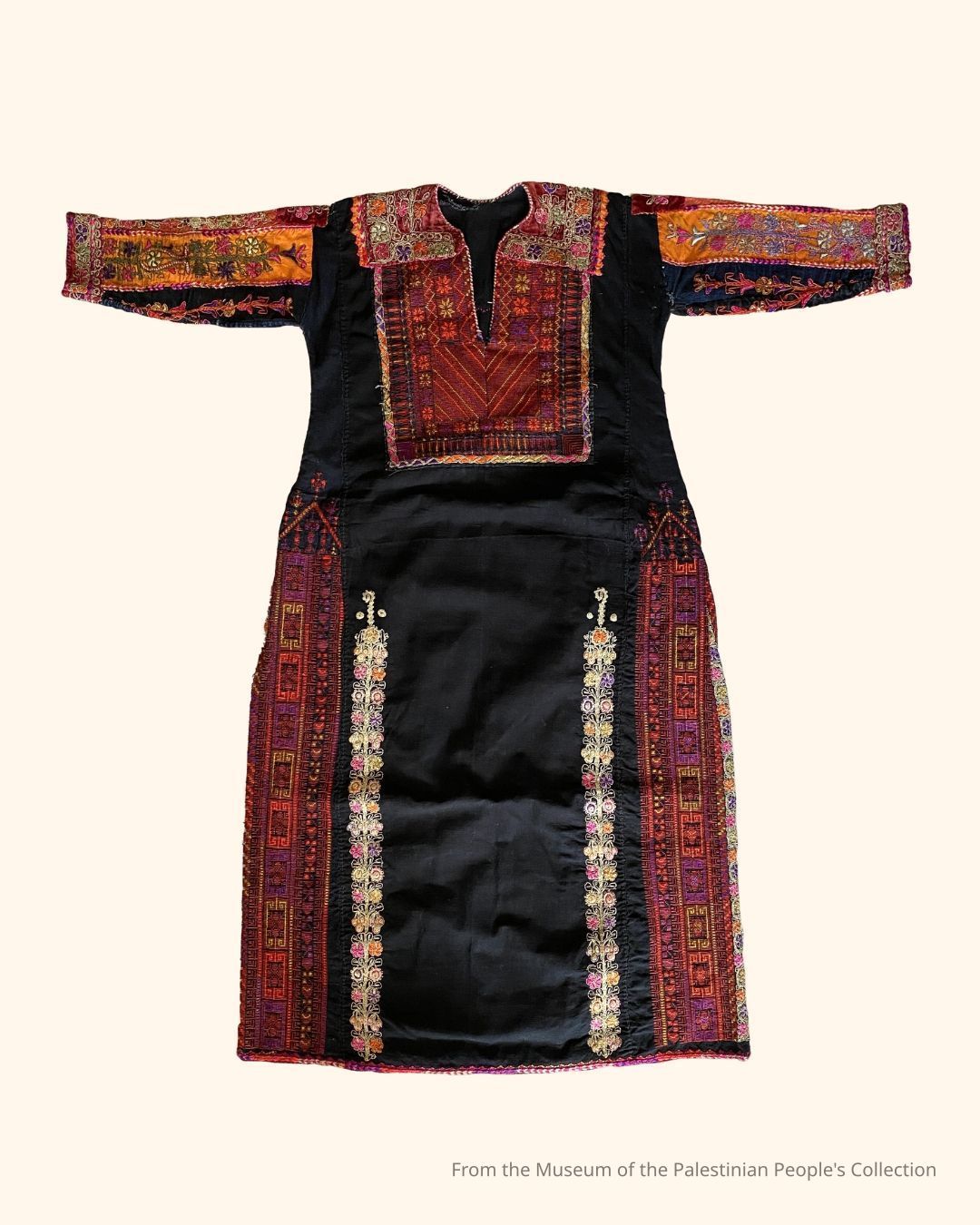
This dress represents one of the principal styles worn in Bayt Dajan during the 1930s and 1940s. Known as the Na'ani dress (thobe al-Na'ani), it is identified by the arrangement of embroidered motifs in the shinyar, the central lower back panel. Here, alternating upright and inverted cypress trees and amulet motifs are arranged in horizontal bands. Among the main dress styles worn in the Yaffa region during this period, the black Na'ani dress was regarded as the highest-ranking style, earning the title shaykh al-thobe ("the chief dress"). The dress reflects important changes in regional fashion. Earlier striped Syrian silk shoulder yokes were replaced with rich red velvet, while the tailored silhouette features a cinched waist and fitted cuffs characteristic of the period. The square chest panel is embroidered in cross-stitch using pearl cotton thread, while metallic couching outlines the chest panel, sleeves, and shoulder yokes. Although couching embroidery was historically associated with Bethlehem and Jerusalem during the nineteenth century, the technique spread to Bayt Dajan after the embroiderer Maneh Hazboun relocated there in the 1920s. Her family's move, connected to the purchase of orange groves by her brother Anton Hazboun, contributed to the transmission of this distinctive embroidery tradition to the village.Collection
Permanent CollectionCataloged By
Wafa GhnaimCategory
Ethnographic Collection