Untitled (circa 1990s)
Overview
Tags
On ViewDescription
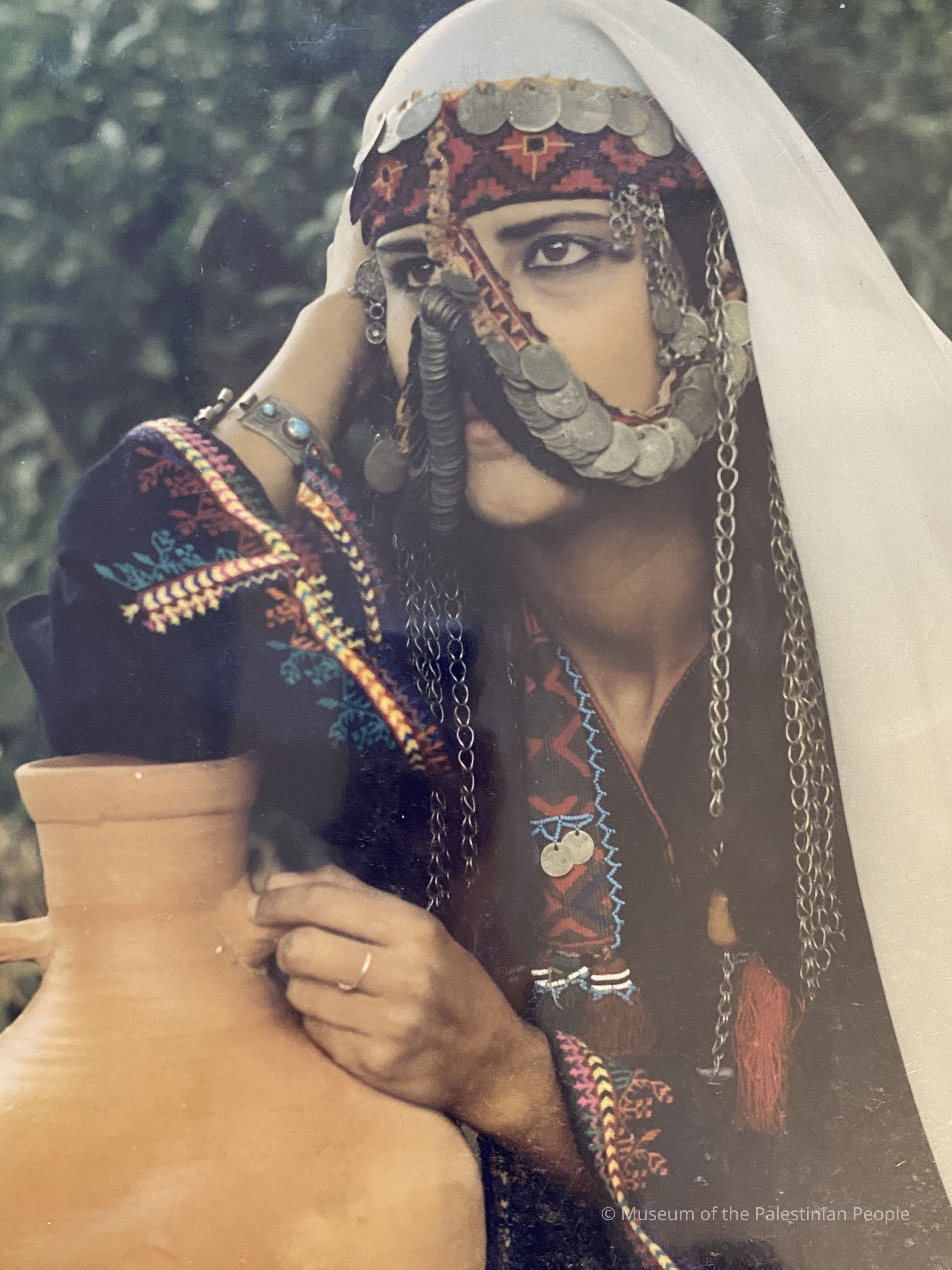
For more than two centuries, artists, photographers, and travelers depicting the so-called "Holy Land" repeatedly portrayed Palestinian women carrying clay jugs on their heads, transforming an everyday task into one of the region's most recognizable visual motifs. Bandak references this familiar composition, but instead depicts the woman resting with the clay jug tucked beneath her arm. The jarrah, a traditional clay vessel used primarily for carrying and storing water, was an essential part of daily life in rural Palestine. Smaller vessels were used for drinking, while larger jugs were carried from village wells and springs to supply the household. Collecting water was traditionally women's work, and women often traveled together while singing folk songs about their daily routines, such as this one: "Oh girl coming from the spring! / Why won't you quench my thirst with water from the jarrah?/ I swear by your eyes, oh tanned one, / I'll never be with anyone but you!" The jarrah was also used in a folk dance in which women would balance it on their heads while dancing. The woman wears the face veil (burqaʿ) and embroidered dress (thobe) associated with Bir Saba in the al-Naqab region of southern Palestine. The face veil is adorned with coins suspended from an embroidered forehead band, reflecting family lineage, social status, and tribal association. The Bir Saba thobe is distinguished by its oversized cut, which provided both modesty and ventilation in the desert climate. Its generous proportions allowed air to circulate around the body, demonstrating how Palestinian dress traditions reflect, in a small way, local environmental conditions. This photograph is part of a two-part set. Its companion photograph is cataloged as object no. 2022.153b, which is not currently on view.Collection
Permanent CollectionCataloged By
Wafa GhnaimPhotograph Details
Subject Place
Continent
Category
Photographs